Schools Still Leave Dyslexic Students Behind
As Schools Across Europe Promise Inclusion, Dyslexic Students Remain Trapped in Classrooms Built Around Rigid Standards, Limited Support, and Outdated Ideas of Learning.
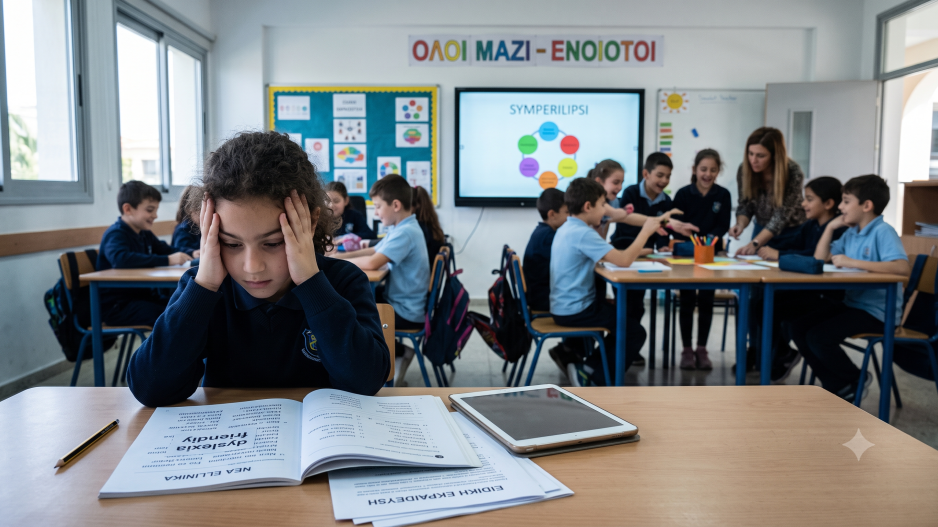
As a new school year approaches, the persistent failure to convert systemic academic standards into real classroom inclusivity leaves thousands of dyslexic students sidelined across Europe and Cyprus.
The modern educational system is facing a crisis of accessibility. While terms like "inclusivity" dominate administrative guidelines, the actual lived experience of dyslexic students reveals a profound mismatch between bureaucratic assumptions and functional classroom reality. Dyslexia, a neurodivergent processing style affecting language, reading, and writing, is frequently treated as a deficit to be accommodated through standardized allowances like "extra time," rather than a distinct cognitive profile requiring a complete rethink of traditional pedagogical approaches. By continuing to enforce a rigid, text-heavy instructional and testing model, our broken educational framework inadvertently penalizes natural neurodiversity, transforming a normal cognitive variance into a systematic barrier to student success.
The Inclusivity Deficit: Rigid Structures vs. Classroom Reality
Across many contemporary educational systems, the implementation of special educational support agreements remains fundamentally flawed. According to a landmark study published by the European Trade Union Committee for Education (ETUCE), there is a severe "systemic implementation gap" across member states. The report underscores that while national legislation technically mandates inclusive classrooms, schools are plagued by extreme shortages of specialized personnel, unmanageable teacher workloads, and administrative structures that prioritize compliance over child-centered learning.
Rather than reshaping the core curriculum, the prevailing model forces dyslexic children into a "deficit-and-remedy" cycle. Students are often pulled out of regular classes or given minimal text accommodations that fail to address how they decode information. This creates a secondary psychological burden, inducing chronic school anxiety and low self-esteem, while teachers are left without the practical initial training or ongoing professional development required to manage diverse learning profiles effectively.

European Alternatives: Moving Beyond the Deficit Model
To understand what can be done, we must look to shifting models across the European continent that reject the traditional, text-heavy paradigm in favor of flexible instructional choices, closely aligned with global frameworks established by UNESCO.
-
The Portuguese Shift: Following its sweeping legislative reforms on inclusive education, Portugal abolished formal "special needs categories" in favor of a multi-tiered system of universal design. Instead of labeling a student as "dyslexic" before offering aid, schools are structurally required to provide digital tools, multi-sensory teaching, and flexible oral or visual evaluations to all students from day one.
-
The Nordic Approach: In Finland and Sweden, early screening and immediate, non-stigmatizing intervention are embedded into the school culture. Rather than waiting for a formal diagnostic bottleneck that can take years, students who struggle with phonological processing are immediately paired with co-teachers and speech-language specialists within the mainstream classroom, ensuring that reading delays never compound into lifelong academic exclusion.
Where Cyprus and Europe Stand
The scale of neurodivergent learners across the continent is significant, yet diagnostic and support frameworks vary drastically.
|
|
|
|
|
|
|
|
|
|
|
|

The Structural Transition:
Recognizing these rigid gaps, the Ministry of Education in Cyprus, in consultation with international experts, has prioritized a major reform path. According to official dispatches from the European Agency for Special Needs and Inclusive Education (EASNIE), the agency's director has presented the "Ten Pillars Shaping the Future of Inclusive Education in Cyprus" to systematically phase out the outmoded 1999 Special Education Law.
Roadmap for Reform: Building an Accessible Future
To transition from a broken framework to an authentic model of educational equity, the system must undergo three structural shifts:
-
Mandate Multi-Sensory and Differentiated Testing: Testing must be decoupled from pure reading speed and writing stamina. Educational boards must normalize oral examinations, visual presentations, and the standard use of assistive technology (text-to-speech, dictation tools, and dyslexia-friendly typography) across all formal assessments, removing the baseline penalty on language-processing speeds.
-
Embed Universal Design (UDL) in Teacher Training: Exceptionalities training cannot be an optional elective. Initial teacher education programs must train all incoming educators to build flexible lesson plans that present information through multiple media (auditory, kinetic, and visual), making specialized learning tools accessible to the entire classroom without isolating specific children.
-
Decentralize Immediate Support Capital: The lengthy, bureaucratic medical-diagnostic pipeline must be replaced by immediate, school-based resource allocation. Funding must go directly toward scaling classroom co-teachers and digital tool suites, allowing immediate adjustments the moment a reading or writing discrepancy is noticed, well before a child experiences academic failure.