Are We Witnessing the Last Generation of Yiayias?
How The Passing of Cypriot Grandmothers and Their Traditions Marks a Cultural Turning Point
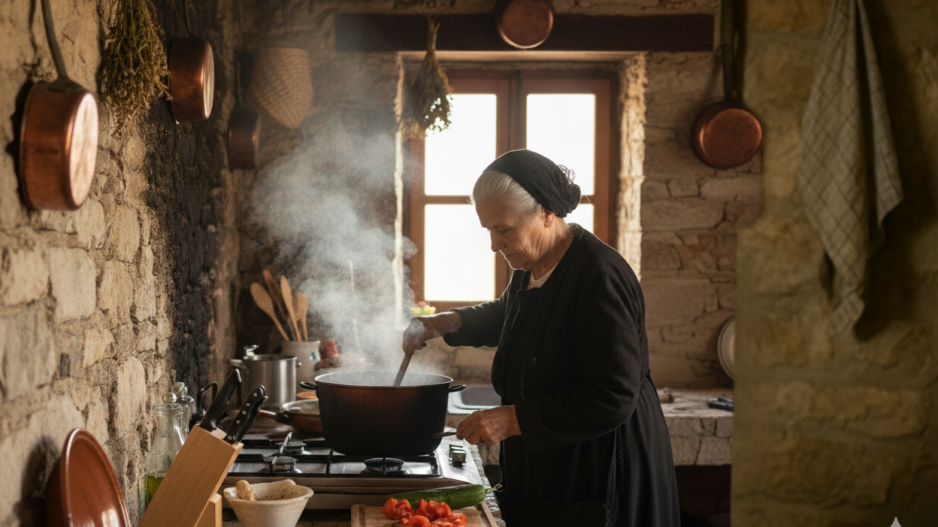
In almost every Cypriot household, the presence of a yiayia has been more than symbolic. She was the matriarch and the memory-keeper, equal parts cook, caretaker, disciplinarian, and historian. The term “yiayia” evokes not just a person but an entire way of life: a wooden spoon stirring a pot of trachanas, a whispered bedtime story from the village years, a slow stroll through the square with rosary beads in hand.
But as Cyprus hurtles forward into faster lifestyles, urban migration, and digital immersion, a cultural shift is quietly unfolding. The number of elderly women preserving these deeply rooted customs is shrinking. Their influence is harder to trace among the neon signs of cafés and the high-rises replacing village homes. And now, many are beginning to ask: Are we witnessing the last generation of yiayias?
Cyprus is undergoing a quiet but irreversible demographic transformation. As of recent data, people aged 65 and over make up about 10.4% of the total population. Meanwhile, the total fertility rate is projected to remain below replacement levels—around 1.5 children per woman by 2050—a figure that continues to shape the generational makeup of the island.
The implications are vast. Without sufficient population renewal, the Potential Support Ratio—the number of working-age individuals available to support each elderly person—is expected to decline from current figures to 2.5 in 2050, and even further to 1.6 by 2100. This leaves the elderly with fewer family members to carry forward traditions, stories, and shared practices.
Compounding the issue is the increasing tendency for young Cypriots to relocate to urban centers or abroad. The gap between generations widens both physically and culturally, eroding the closeness that once facilitated the natural transmission of customs, values, and language.
Yiayias were not merely present; they were foundational. Their everyday rituals were oral encyclopedias of family lineage, historical memory, and rural resilience. From recipes that had never been written down to lullabies inherited from their own mothers, they served as bridges between the past and the present.
Their role in cultural preservation has long been recognized in ethnographic research. John Peristiany’s seminal 1965 study of a Cypriot mountain village, for instance, described how honor and shame governed community behavior, with elderly women embodying and enforcing these moral codes. These women were also gatekeepers of faith, often leading family prayer traditions or church-going habits that centered family life.
Even in silence, their presence anchored homes. The way they knelt to tend a basil pot, set the table for fasting periods, or insisted on passing down baptismal candles—all were subtle gestures loaded with generational continuity. Without the yiayia, many of these rituals become untethered, drifting into irrelevance in the face of modern convenience.
As these pillars of the family age, the landscape of village life and its intangible heritage teeters on the edge of obscurity. Across Cyprus, many villages once teeming with extended families and multigenerational households now sit half-empty, their schools closed and taverns shuttered.
With this shift comes the potential disappearance of specific customs and expressions that have shaped regional identities for generations. The following elements of daily life—deeply tied to the yiayia’s influence—are some of the most vulnerable:
-
Culinary Heritage: Traditional cooking techniques—sun-drying, pickling, wood-fire baking—are vanishing as mass-produced alternatives and urban food habits dominate.
-
Dialect & Oral Culture: The unique dialects of Cypriot Greek, and musical oral forms like chiatistá (antiphonal folk singing), are preserved mostly by elderly women and remain at risk of being forgotten.
-
Craftsmanship & Rituals: Time-honored skills like weaving Lefkara lace or embroidery have fewer practitioners with each passing year, many of them elderly.
-
Village Rituals: Practices like dowry preparations, broksenya (matchmaking rituals), and communal wedding baking and customs are increasingly rare or reimagined without their original significance.
Efforts to document and understand the experience of Cyprus’s elderly population are growing—but still fall short of the urgency the issue demands. A study funded by the Cyprus Research Council (2007–2009) explored how older individuals, particularly women, understood their sense of belonging through place, memory, and ritual, revealing deep ties between identity and village life.
Another important perspective comes from sociolinguistics. A study on the way older Greek Cypriot women speak revealed how age, gender, and identity are constructed through dialect, expressions, and social roles. These voices carry complex emotional legacies—of war, displacement, resilience—but remain largely undocumented in any structured cultural archive.
Some organizations, like the Cyprus Third Age Observatory, emphasize how this demographic trend brings both health and cultural challenges, highlighting the need for programs that support active aging, storytelling, and community building. Informal efforts, like community bridge clubs or village festivals led by elders, may offer glimpses of hope, but they require broader support to grow into lasting cultural institutions.
Digital spaces are also becoming new arenas for memory preservation. From Instagram pages showcasing village life to YouTube channels featuring yiayias making koupes or kolokotes, younger generations are slowly beginning to document what they fear might disappear.
The passing of the yiayia generation isn't just about losing beloved family members; it represents the unraveling of a living cultural archive. For decades, these women served as custodians of Cyprus’s intangible heritage: they kept families rooted, translated hardship into tradition, and made meaning out of the mundane.
As Cyprus evolves, the challenge isn’t only modernization, but also it’s cultural amnesia. Without the intimate wisdom of the yiayia, the thread connecting past to future risks breaking. The values she instilled, the dialects she spoke, the rituals she enacted—they all formed a collective memory we may never fully recover.
To witness the last generation of yiayias is to stand at a cultural crossroads. Whether we move forward with remembrance or regret will depend on how urgently we begin to document, celebrate, and include their legacy in the story we continue to write as Cypriots.