First Flamingos Arrive in Cyprus—but Their Numbers Are Falling Fast
Experts warn of a 14–31% decline as Cyprus’ wetlands welcome the first birds of the season.
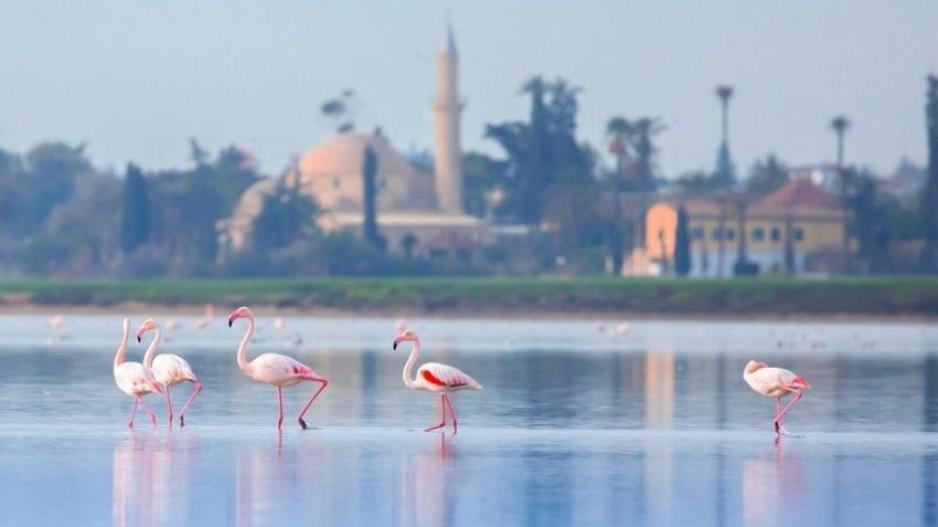
The first flamingos of the season have arrived at the Larnaca Salt Lake, marking the start of winter migration to Cyprus’ wetlands—one of the largest wintering sites for the species in the Eastern Mediterranean. However, experts report a notable population decline of 14–31% since 2013.
Several hundred flamingos have already reached the island. Speaking to CNA, Senior Officer of the Game and Fauna Service, Nikos Kassinis, identified the five natural wetlands that host the species: Akrotiri in Limassol, the Larnaca Salt Lakes, Paralimni Lake, Oroklini Lake, and several lakes in the occupied Famagusta area.
“Flamingos visit five natural wetlands on the island, with the largest numbers wintering at the Larnaca and Akrotiri salt lakes,” Kassinis said. On average, 5,000–10,000 flamingos winter in Cyprus—more than 1% of the Eastern Mediterranean population.
Kassinis noted that monthly waterbird counts conducted for over two decades by the Game and Fauna Service and BirdLife Cyprus show a significant long-term decrease in the species’ numbers. A recent overview of the species’ status was presented at the 4th International Flamingo Symposium in Italy on 10–15 November.
Potential drivers of this sharp reduction include:
-
Frequent droughts
-
Poor-quality water inflows reducing food availability
-
Pressure from nearby development
-
Human activities incompatible with wetland conservation
As part of the Pandoteira Project, a ten-year EU LIFE-cofunded initiative, researchers aim to fill knowledge gaps on key species’ feeding, nesting and resting needs, as well as quantify the threats they face. Flamingos are among the species included.
Kassinis said improved data will allow for targeted conservation actions in specific Special Protection Areas, helping meet conservation objectives for both the species and the Natura 2000 sites where they occur.