When Simplicity Wins: Inside Bieber’s Coachella Moment
A quiet shift from performance to emotional connection
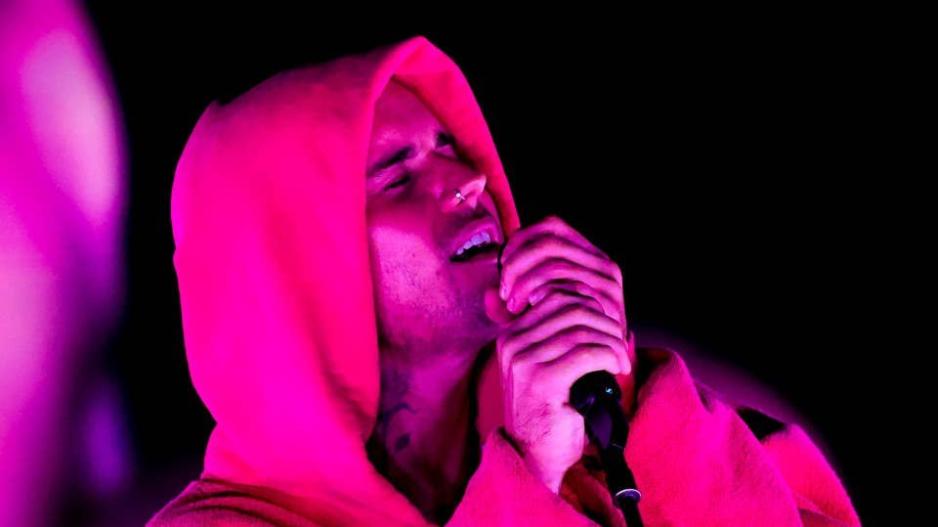
What happened with Justin Bieber at Coachella wasn’t just a performance; it was a powerful reminder of where culture is shifting and what people truly connect with today.
What we saw was simple, but intentional. An artist stepping onto the stage without heavy production, without filters, without the usual layers that separate performers from the audience. Just Justin Bieber, a microphone, a laptop, and a catalogue of songs that carry years of shared memories.
He chose to play older tracks; songs that instantly triggered nostalgia. And nostalgia is never passive. It brings people back to specific moments in their lives: teenage years, first love, first kiss, first heartbreak, simpler times. In that moment, the audience wasn’t just listening. They were remembering. They were feeling.
At the same time, there was a visible vulnerability. Not overperformed, not exaggerated, just enough to feel human. And that’s what created emotional connection. This kind of approach isn’t random. In marketing terms, this is what we call a “deconstructed performance” combined with “authenticity positioning.” It means intentionally lowering production while amplifying emotion. It means leaving space for the audience to project their own meaning into the experience. And when that happens, something powerful shifts: people no longer feel like spectators, but instead, they feel like participants in something real.

That’s why this moment stood out so strongly.
What makes this moment even more powerful is the deeper layer it taps into: it doesn’t just feel like a performance; it feels like a reflection of a different internet era. When Justin Bieber first appeared, there were no algorithms shaping perception, no “creator economy,” no pressure to optimize every second for engagement. Just raw uploads, real moments, and the possibility of being seen. This specific Coachella moment echoes that simplicity. It reminds people of a time when content wasn’t engineered; it was discovered. And that emotional recall amplifies everything: it’s not just nostalgia for his music, it’s nostalgia for a version of the internet - and ourselves - that felt more honest, more open, and more human.
Of course, nostalgia creates an immediate emotional response. It’s not just about the music, it’s about identity. People reconnect with who they were when they first heard those songs. That emotional shortcut is incredibly powerful. Furthermore, contrast plays a major role. At a festival like Coachella, where everything is built around spectacle, visuals, choreography, and scale, showing up with minimalism breaks the pattern. And when you break the pattern, you naturally capture attention without forcing it.
Overall, what we could potentially say is that, whether Justin’s whole performance was marketing, personal healing, or a mix of both, it worked. Because today, feeling is the strategy. Audiences are no longer drawn primarily to perfection, production, or technical excellence. They are drawn to relatability, to honesty, and to moments that make them feel seen, understood, or less alone.
We are moving from performance-driven influence to connection-driven influence. And this is exactly why there is so much value in a moment like this. What might initially seem like “no material” from a marketing perspective is actually rich with direction:
- A clear content angle: showing up as you are
- A strong brand message: rejecting perfection in favour of truth
- A compelling narrative: a comeback that doesn’t rely on reinvention
- A powerful positioning: not performing for the audience, but sharing with them
This is highly transferable across creators, personal brands, and anyone building an audience today. Ultimately, this moment didn’t resonate because it was simple. It resonated because it felt real in a world that often feels staged. And what makes the moment even deeper is the way it reframes the performance itself. By placing his present voice alongside the image of his younger self, Justin Bieber isn’t just revisiting a song; he’s quietly acknowledging time, growth, and continuity. The simplicity of the staging allows that contrast to breathe, turning what could have been a nostalgic throwback into something more reflective and complete. It no longer feels like a story about teenage heartbreak, but rather a full-circle moment, where past and present coexist, not in tension, but in harmony.
And that’s the most important insight of all: the version of you that you keep toning down, the unfiltered, less polished, more human version, is often the one people are actually waiting for.