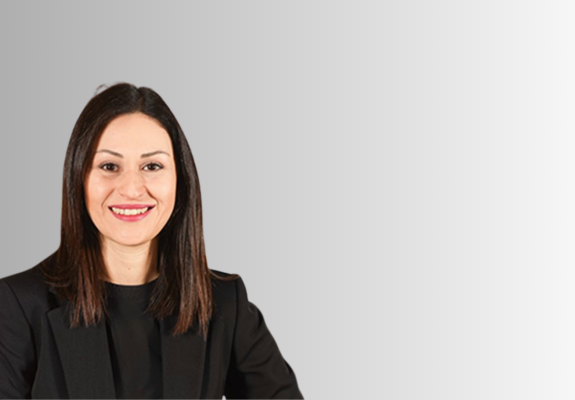
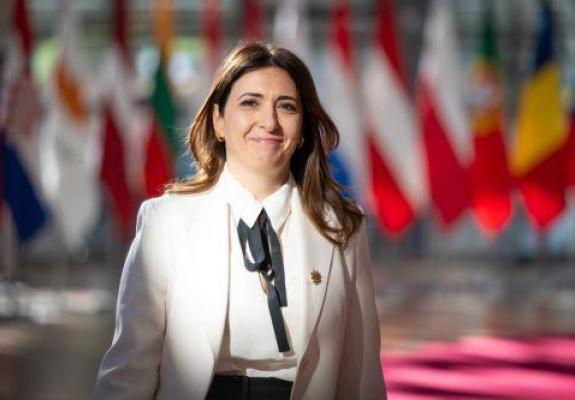
Alina de la Vega MacLean and Tatiana Berman Weinstein on A Golden Effort: Turning Grief Into Hope
Ahead of Nicosia’s landmark event under President Nikos Christodoulides, they discuss the Nicholas Zoe Foundation’s partnership with Boston Children’s Hospital and the push to accelerate pediatric cancer research
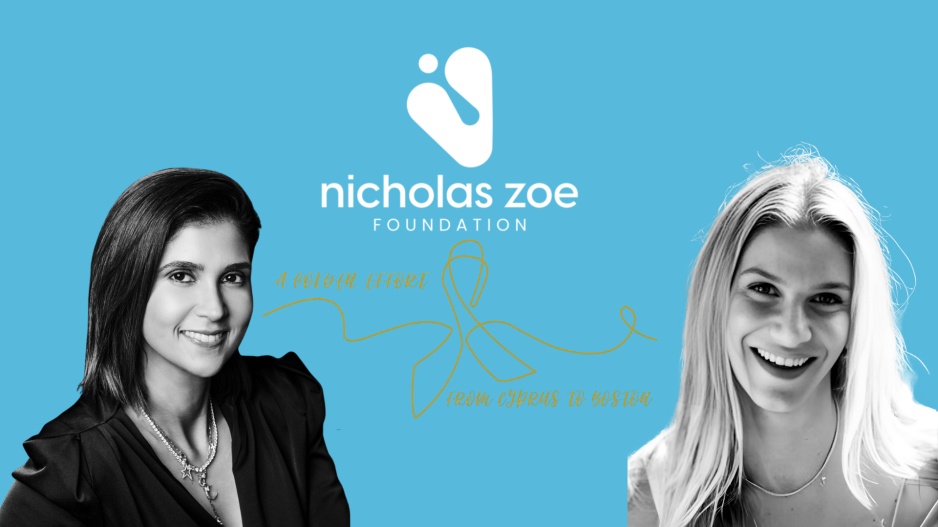
On September 16, 2025, the Nicosia Old Town Hall will host A Golden Effort: From Cyprus to Boston, a landmark gathering under the auspices of President Nikos Christodoulides. Co-organized by the Nicholas Zoe Foundation and Boston Children’s Hospital, the evening will feature research updates on liquid biopsy advances, a silent art auction curated by Maria Paphiti, and welcome remarks from national and medical leaders, with keynote contributions by Alexia Potamitou, Dr Mark D. Fleming, and Julia Burke. The aim is clear: mobilize support to bring a groundbreaking diagnostic tool into clinical trials and give children a better chance at timely, personalized care.
The roots of this collaboration trace back to Miami in 2022, when Alina de la Vega MacLean and Tatiana Berman Weinstein met Alexia Potamitou shortly after she arrived from Cyprus seeking answers for her son, Nicholas. A school community by the bay rallied around the family, and that shared experience forged a bond that now links Miami and Cyprus in common purpose. Since then, the Nicholas Zoe Foundation has helped propel liquid biopsy research forward, with over $200,000 already committed and a goal of $500,000 to reach clinical trial phase.
In the interview that follows, Alina and Tatiana reflect on how September’s Golden Effort matters, and how art, science, and storytelling together can turn loss into action for families facing childhood cancer.
Tatiana: Even though our professional backgrounds are very different, what unites us is something deeply personal. For me, it started when my own son, Nicolas, was just three years old and diagnosed with a rare autoimmune neurological disorder. That experience shook me to the core. I know what it feels like to hear the word cancer tied to your child’s name, and to leave everything familiar behind in search of answers. In Boston, I found hope and healing through doctors who were not only brilliant, but also deeply human.
So when my dear friend Alexia lost her son Nicholas, I felt her pain in a very real way. I encouraged her to look to Boston for answers, and together with Alina, we transformed that grief into the Nicholas Zoe Foundation.
For me, this work is also about the future, providing families with access to a new diagnostic tool that has the potential to transform how cancer is detected and treated. One never knows; one day it may even help one of our own loved ones. That’s why I dedicate my time and energy to this cause: to honor Nicholas’s legacy, to turn loss into purpose, and to bring hope and answers to children and families everywhere.
Alina: For me, the motivation is both deeply personal and communal. I’ve seen firsthand how fragile childhood can be when illness enters the picture, and how entire families are reshaped by a diagnosis. Supporting pediatric research is not just about science, it’s about restoring hope. Over the years I’ve also worked closely with initiatives feeding children and families in need, which deepened my commitment to making sure every child has the opportunity to grow, dream, and thrive. From my background in real estate and communications, I’ve learned that vision, resilience, and storytelling can create movements that last. Witnessing families navigate hospital corridors, clinging to hope, inspired me to dedicate my energy to supporting organizations like the Nicholas Zoe Foundation. No parent should ever feel alone in the fight, and every child deserves a future full of possibility.
Tatiana: To me, A Golden Effort represents turning heartbreak into hope. When I met Alexia and Nicholas, I saw firsthand the courage of a mother refusing to give up and a child determined to defeat what he called “the beast.” Their story has stayed with me and is the reason I am so committed to fundraising for this foundation, whether it’s brainstorming ideas, creating meaningful events or encouraging friends and family to take part.
Gold is the color of childhood cancer awareness, but it also symbolizes light, resilience, and the belief that even in the darkest times, something good can emerge. That’s why this event in Cyprus is so meaningful: it brings Nicholas’s legacy back home. It proves that even from unimaginable loss, we can create something that gives children and families around the world a fighting chance.
My hope is that people here feel inspired to join this effort, not only to raise funds for groundbreaking research like the liquid biopsy, but also to stand together as a community, offering the same love, strength, and solidarity I first witnessed in Miami.
A Golden Effort is more than an event. It’s a movement of compassion and determination. And I believe it has the power to change the future for children facing cancer everywhere.
Alina: “A Golden Effort” reflects the extraordinary courage of children and families facing cancer, as well as the collective strength required to change outcomes. Gold is the color of childhood cancer awareness, but it also symbolizes light—the spark that persists even in the darkest times. This event, hosted by Alexia and the Nicholas Zoe Foundation in Cyprus, carries a powerful message: awareness is global, and progress depends on international unity. By coming together through art, science, and culture, we show that no boundary limits compassion. My hope is that people leave Cyprus not only inspired to donate, but to become advocates in their own communities, spreading this golden light forward.
I’ve always believed wellness and prevention go hand in hand with medical research. When a child is healthy in body, mind, and spirit, they’re stronger in the face of treatment. Things like good nutrition, stress management, and emotional support don’t just comfort families—they create the foundation where medicine can do its work more effectively. This belief is also why I started a wellness company: to help people feel better, move their bodies, and discover the power of the mind-body-spirit connection. The future of pediatric care won’t be one-dimensional. It’s about blending the most advanced science with practices that keep children resilient through the hardest times, and give them a chance to thrive long after treatment ends.
When I first heard the word cancer connected to my son, I was shaken to the core. Every parent who faces that moment knows the fear and disbelief. My advice is simple: take it step by step and trust that answers exist. For me, that meant leaving everything familiar behind and finding answers at Boston Children’s Hospital.
What helped most was trusting the people I met along the way—the doctors who were not only knowledgeable and competent, but also deeply human. And just as important, I would tell parents to remain strong in front of their child. We are their mirror, and in an already frightening situation, showing fear only adds to their burden. Modeling strength, even in moments of uncertainty, gives them a sense of safety and a firm foundation—which is already there, because the greatest connection in nature is a mother’s love for her child.
So I would say: keep going, ask questions, surround yourself with people you trust, and above all, hold onto hope. Even in the darkest moments, there are breakthroughs and possibilities that can bring light back into your child’s life.”
Tatiana: I believe art, science, and personal storytelling each reach people in different but equally powerful ways. Science gives us the facts—the breakthroughs, like the liquid biopsy test, that can transform how cancer is diagnosed and treated. Storytelling gives those facts a heartbeat. When people hear a parent’s lived experience, they connect emotionally and understand what’s truly at stake. And art provides the bridge between the two—it opens hearts, inspires empathy, and creates a space where people are moved to act.
When we bring these elements together, awareness becomes something you don’t just learn about—you feel it. And once people feel it, they’re far more likely to join the mission and help turn hope into tangible change.
Alina: Art, science, and storytelling may seem like different languages, but together they create empathy and action. Science gives us the data, but numbers alone rarely move hearts. Storytelling humanizes the science—putting a face, a laugh, a family behind the statistics. Art transcends words altogether, allowing people to feel the urgency in ways logic alone cannot. When combined, these three create a multidimensional experience that not only informs, but inspires. In awareness work, inspiration is as crucial as knowledge. It’s what turns a passive listener into an active advocate, and ultimately, a supporter of research.
Tatiana: I believe the most effective way to inspire people is through storytelling, by sharing real lives and real legacies, like Nicholas’s. Facts and numbers are important, but it’s the human connection that truly moves hearts. When people hear about a mother’s courage, a child’s dream to defeat “the beast,” and a community that rallied around them, they see that their support can turn grief into hope.
For me, philanthropy is also about action—showing up, creating meaningful events, caring for every detail, and inviting others to be part of something bigger than themselves. When people feel that sense of belonging and purpose, they don’t just give once; they stay connected and invested.
Alina: Philanthropy, at its heart, is about people, not numbers. What truly moves communities isn’t a donation request, but the sense of being part of something meaningful. For me, that has meant showing up consistently, whether it’s feeding families in need, standing alongside parents in crisis, or supporting initiatives like the Nicholas Zoe Foundation. Over and over, I’ve seen how trust is built when people feel connected and informed, when they can clearly see the impact of their support. That’s when giving transforms from charity into legacy, because people realize they’re not just helping for today, they’re shaping a better tomorrow.