Gaurav Mehta on Turning Cyprus’s Deep Tech into Global Businesses
Translating Science into Scale

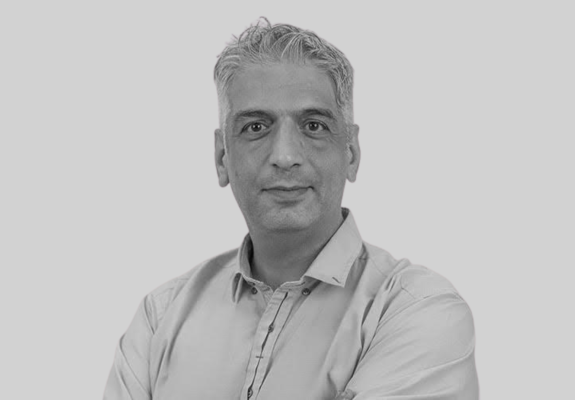
Scaling deep tech from a university lab to the global market requires more than brilliant science, it takes a radical shift in entrepreneurial mindset. To unpack how regional innovation can break into high-stakes international hubs, Fast Forward spoke with Gaurav Mehta, CEO of Alveolus Bio and MIT Deshpande Catalyst. Bringing elite Boston-ecosystem experience in biotech fundraising, regulatory strategy, and commercial pivots, Gaurav serves as a critical bridge between academic discovery and market execution. As a key mentor within Cyprus Seeds, he offers clear, actionable insights on what it takes for Cypriot scientific talent to build fundable, scalable ventures that compete globally.
In our discussion below, Gaurav reveals the ultimate blind spots for academic founders, healthcare's deep tech opportunities, and how to master the US market narrative.
Gaurav, as someone who scales high-stakes ventures in the USA, how does the caliber of research you’ve seen through Cyprus Seeds compare to what you see in more established global hubs like Boston or Silicon Valley?
What stood out to me is that the quality of research coming through Cyprus Seeds can absolutely belong in a global conversation. In places like Boston, Cambridge, or Silicon Valley, the difference is often not simply the science itself; it is the density of the ecosystem around the science. There are more repeat founders, translational operators, specialized investors, strategic partners, and experienced board members helping shape technologies into companies from an early stage.
Cyprus has strong technical and scientific talent. What Cyprus Seeds is doing well is helping that talent become more visible, more commercially disciplined, and more connected to international pathways. The opportunity now is to keep building the connective tissue: market validation, IP strategy, regulatory thinking, fundraising discipline, experienced governance, and global partnerships.
The raw ingredients are real. The next challenge is helping the strongest teams move from excellent research to fundable, scalable companies.
You have extensive experience in leading fundraising and board strategy. What is the most common "blind spot" for academic founders when they first try to pitch to international investors?
The most common blind spot is assuming that strong science automatically creates an investable company. Investors care deeply about technical quality, but they are also asking: What urgent problem are you solving? Who pays? Why now? What is the first market wedge? What milestone unlocks the next round of capital? And why is this the right team to build the company?
Academic founders are trained to explain the full depth of the science. That is important, but an investor conversation requires a sharper translation. The founder has to move from “this is scientifically compelling” to “this is a company with a clear path to value creation.”
The best founders do not dilute the science; they translate it. They learn to communicate the technology in a way that preserves credibility while making the opportunity understandable, urgent, and commercially compelling to investors, partners, and future board members.
With your background in AI and respiratory medicine, how do you see the teams at Cyprus Seeds leveraging these "deep tech" tools to solve global, not just local, healthcare challenges?
AI and deep tech are most powerful in healthcare when they are tied to a real clinical or operational problem. The danger is treating AI as the product, rather than as a tool to improve diagnosis, patient selection, workflow, monitoring, development speed, or decision-making.
In respiratory medicine, for example, there are major unmet needs around earlier diagnosis of diseases such as COPD and interstitial lung disease, better patient stratification, predicting exacerbations before they become emergency events, monitoring disease progression, and matching the right intervention to the right patient. Similar opportunities exist across many areas of healthcare. Teams that combine strong domain expertise, high-quality data, clinical workflow understanding, and a clear validation path can build solutions that matter globally.
For Cyprus Seeds teams, the key is to build with international standards from the beginning. A healthcare deep tech company should ask: What evidence would a US, European, or strategic healthcare partner need to believe this matters? That mindset can help Cyprus-originated innovation compete well beyond the local market.
What has been the most rewarding part of your cooperation with Cyprus Seeds? Is there a specific moment where you saw a team’s mindset shift from "scientist" to "entrepreneur"?
The most rewarding part was seeing how seriously Cyprus Seeds approaches the translation journey. This is not just about celebrating research; it is about helping teams think through impact, customers, investors, strategic partners, and the difficult path from laboratory insight to real-world adoption.
The most encouraging moments were when conversations shifted from describing the technology to discussing what it would actually take to build a company around it. That is the mindset shift from scientist to entrepreneur. It happens when a founder starts asking: Who is the first customer? What proof changes investor behavior? What milestone creates value? What team and board do we need around us?
That shift is not always easy, but it is essential. It does not diminish the science. It gives the science a better chance of reaching patients, customers, markets, and the world.
For a Cypriot startup looking to break into the US market, what is the single most important piece of advice you can give regarding their board strategy or fundraising approach?
The most important advice is to avoid entering the US market generically. The US is large, but it is also competitive, noisy, and unforgiving. A startup needs a focused beachhead: the first customer segment, first strategic partner, first clinical or commercial use case, and first investor audience that truly fits.
Board strategy matters enormously. A strong board should not be ornamental. It should help the company sharpen its story, pressure-test milestones, open relevant doors, and avoid wasting time with the wrong investors or partners. For fundraising, international investors need to see more than vision. They need a clear use of proceeds, credible milestones, and a path to value creation & capture.
For Cyprus-based companies, the goal should not be simply to “go to the US.” It should be to enter with the right narrative, the right advisors, the right board, and a disciplined plan for global scale.