'Most Leaders Are Still Wounded Children'
Dr. Stephanos Ioannou on mass trauma, modern isolation, and the path to collective healing.
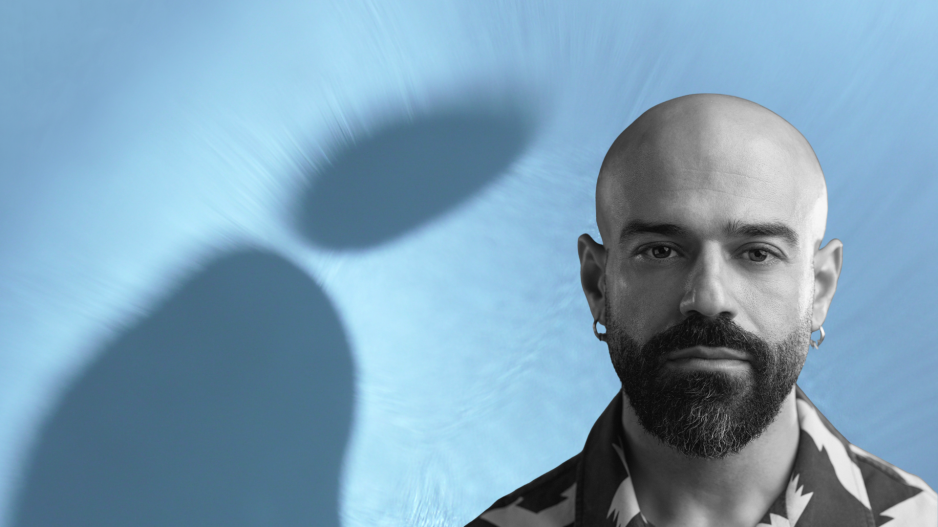
As societies across the globe navigate overlapping crises—economic uncertainty, social fragmentation, climate anxiety, and post-pandemic trauma—mental health has become one of the defining issues of our time. But beyond clinical terms and crisis hotlines, there lies a deeper, more systemic challenge: a collective loss of connection, meaning, and emotional truth. At the crossroads of neuroscience, psychology, and philosophy, Dr. Stephanos Ioannou—a recognized expert in stress and anxiety, Professor of Neurophysiology, and founder of the Limassol Psychological Wellbeing Centre—offers a radically insightful lens.
In this interview, he speaks to FastForward about mass depression, the corrosive effects of individualism, the spiritual vacuum of modern life, and the urgent need to restore communal structures and emotional honesty. As he reminds us: “Freedom begins where shame ends.”

Mass trauma and social hysteria arise when a society descends into fear and disconnection. At the root of this condition lie two of humanity’s deepest wounds: betrayal and injustice. These traumas play like a broken record in the background of our modern world—unacknowledged, unresolved, and persistent.
When lies go unaddressed, and when justice is manipulated to serve egos instead of truth, we face not only a breakdown in trust but a betrayal of the human spirit. This is the result of power being held by individuals still trapped in childhood wounds—adults acting from unresolved pain, not from mature wholeness.
What we are struggling to survive is unnatural: a world where many have lost their capacity for love because, at some point, they stopped loving their parents—and in trying to be seen or valued, began stepping on others to get ahead
We often speak of natural disasters as the great threat, but the true crisis is our disconnection from ourselves and from one another. If we trusted ourselves, if we had stayed rooted in love, we would be able to withstand what is natural. What we are struggling to survive is unnatural: a world where many have lost their capacity for love because, at some point, they stopped loving their parents—and, in trying to be seen or valued, began stepping on others to get ahead.
In this mechanized world, emotions are treated as liabilities rather than sacred truths. Why? Because we fear pain. And yet, it is only through feeling that we can transform. Those who allow themselves to feel become responsible—for healing, for growth, for change. This is the true alchemy of therapy: turning trauma into wisdom.
Right now, humanity is stuck in survival mode. And where there is only survival, there is no true safety. Without safety, love cannot thrive. Feelings are pushed aside. But feelings are the gateway back to wholeness.
Modern societies often glorify individual success and self-reliance, but what we frequently promote isn’t true autonomy—it’s emotional isolation. From a young age, children are conditioned to suppress vulnerability in favor of achievement. The result is a culture that confuses independence with disconnection.
Psychologically, this shift has profound consequences. Many adults today operate from unresolved childhood wounds, especially those rooted in early emotional betrayal. As children, we loved our parents unconditionally. But when that love was unmet, dismissed, or burdened by adult expectations, many of us internalized a painful belief: “I can’t ask for help.” This leads to hyper-independence—not strength, but fear in disguise.
The emphasis on individualism often leaves people feeling unsupported, anxious, and emotionally fragmented. Without communal frameworks to hold space for our pain, mental health suffers. We lose not only our connection with others, but also our connection with ourselves.
Without communal frameworks to hold space for our pain, mental health suffers
True self-reliance should mean taking responsibility for our well-being so that we can contribute meaningfully to others—not escaping into self-centered ambition. Unfortunately, modern culture tends to value productivity over presence, status over sincerity, and money over meaning.
Community cohesion breaks down when people are taught to prioritize personal success at the expense of shared responsibility. The loss of traditions, family bonds, and spiritual values has left many searching for belonging in all the wrong places.
To restore balance, we need to reclaim communal values rooted in empathy, interdependence, and shared purpose. Healing doesn’t happen in isolation—it happens in safe, supportive relationships. Communal healing is not weakness; it is the foundation of a mentally healthy society.
By redefining self-reliance not as avoidance but as accountability, we can rebuild a culture in which both individuals and communities thrive—together.
Preventative psychology begins not in clinics or textbooks, but in the ears—and hearts—of those willing to understand that mental health is the root of all health. When emotional wounds go unacknowledged, they manifest in destructive ways: a mother wound becomes an addiction, emotional suppression evolves into chronic or even terminal illness, and abusive parents pave the way for abusive relationships. The body keeps score, and silence is never neutral.
Resilience, often romanticized as strength in isolation, is actually born through awareness. True resilience arises when we recognize that many of us carry similar stories—stories that should not be hidden in shame but shared in truth. Yet so many people cling to their pain because their secrets make them feel unique, or even worthy. But at what cost? Guilt and shame become prisons, and healing becomes unreachable.
Freedom begins where shame ends.
True resilience arises when we recognize that many of us carry similar stories—stories that should not be hidden in shame, but shared in truth
If we can move beyond the barrier of shame, we unlock the power of connection. This is where authentic resilience is formed—heart to heart, shoulder to shoulder. In groups grounded in trust, spirituality, and shared vision, healing becomes communal. People find strength not in denying their wounds but in owning them together.
Preventative psychology is not just about avoiding illness—it’s about creating space for emotional honesty so that trauma does not silently evolve into suffering. When we speak, share, and connect, we begin to rewrite the story—not just for ourselves, but for generations to come.

Healthy communities once existed when individuals knew their traditions and roots. Back then, every child was seen as a son or daughter of the neighbors. Love prevailed because people lived with humility, aware of their vulnerability to the natural elements. The difference today is stark: with individualism, technology, and certain niche philosophies, we’ve been misled into believing we are gods. Perhaps Nietzsche was—but surely not those who merely read his work.
If people allowed themselves to feel deeply, they might realize that humanity reflects the divine through God—and that God is love, even when love manifests as death. As paradoxical as that sounds, humans can only perform godly acts through God, not through logic alone—especially when that logic is detached from shared, common understanding.
With individualism, technology, and certain niche philosophies, we’ve been misled into believing we are gods
The erosion—or, more accurately, the corrosion—of culture began during the Cold War era, with zones of influence reshaping societies. Out of fear, nations with deep histories and traditions adopted foreign customs and gods. This shift broke the continuity of identity. The question now is: can we return to our roots without death looming over us, especially when we have children to protect?
For communities to be rebuilt, people must find direction. But in the current age of individualism, we are lost—each of us trapped in our own bubble, driven by survival. There’s a treasure above us, yet we chase it alone until we reach the grave, instead of helping one another.
Humanity has long been enslaved—not by extraterrestrial beings, but by an “alien parasite” that polluted the mind: the “all-seeing eye” that once embodied love. The truth and authenticity we seek live in the human heart. Ironically, this is what everyone desires. Common logic is not found in detached rationality, but in a feeling body—in empathy and presence.
Community begins with healing the self.
There is mass depression—not contagious depression. This mass depression is reflected in the way the economy is moving. It doesn’t take a mental health professional to observe this; it just takes a financial analyst or a parent with children. When people go into survival mode, they lose presence—and they lose what is truly beautiful in their lives: their zest for life.
Financial pressures can contribute to this, without implying that money equals happiness. To break this cycle, communities need to understand that anxiety is beneficial—up to the point that it remains manageable. If you do not manage your stress levels, you are most likely in survival mode—and in that state, no one can truly recognize happiness, feel love, or create.
There is no proper education in schools or among adults in the business sector on how to become eu-stressed.
Community leaders might never fully understand their responsibilities, as they are often the first to be safeguarded during crises. They need to improve their communication—especially when it comes to management. Attempting to mentalize the public’s problems from within a “bubble of foam” will never provide a true sense of their depth unless leaders reach out to those at the bottom.
World leaders also need to improve their ability to collect data—and, more importantly, to use that data for the benefit of the world, not just the privileged few. When values are bought and interests become presidential campaigns, I’m afraid I have little optimism. People are bought. They sell out their dreams—and the dreams of their children.
Leaders are those whose values echo in the souls of the people... Yet very few will ever become real leaders, as I’m afraid most are still wounded children
Leaders are those whose values echo in the souls of the people. They embody responsibility and love—because of them, people are willing to die for their values, just as a child would for their family. True leaders have influence. Yet very few will ever become real leaders, as I’m afraid most are still wounded children.
Therapy should become obligatory before issuing birth certificates, approving marriages, or even assigning work placements. Wounded people are everywhere, and the only thing most have to share is hurt—born of fear, not truth.
As far as my knowledge allows, psilocybin could potentially be one of the most promising medicines for helping people emerge from mass depression and cognitive decline. Secondly, I would say: if you cannot find religion, then at least first find a mental health practitioner, a psychologist, or a sound healer. I don’t mind where you start—just start somewhere.
If you wait for a miracle drug or a brilliant someone to save you, I’m afraid you will be disappointed, because this is a lifelong journey. You also have a responsibility in your own healing—for a happier life and a healthier future.