Surviving the Siege, Rewriting the Future: Ahmed Tobasi on the Danger of True Art
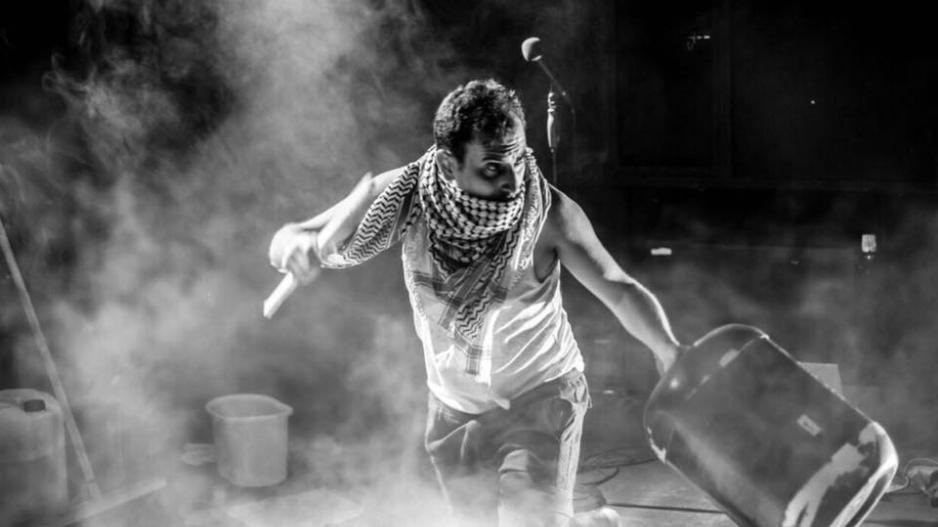
"I want the audience to stop viewing Palestinians as 'the other.' I want them to recognize themselves within the experience. The moment the audience consumes pain only emotionally, something uncomfortable happens, pain turns into a product."
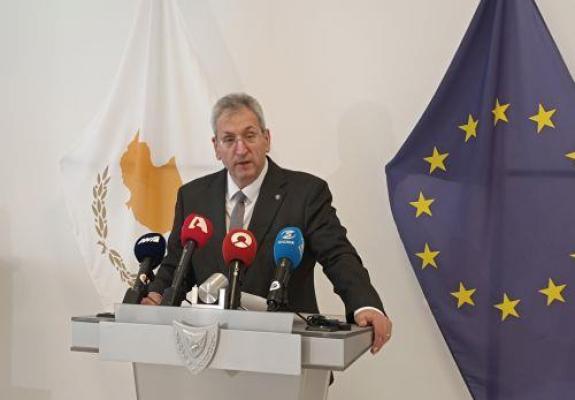
On the occasion of the 16th Culture Next Conference held in early May in Larnaca, we had the opportunity to speak with one of the keynote speakers, actor and director Ahmed Tobasi. The three-day conference gathered more than 50 participants from European cultural networks and European Capital of Culture cities.
Larnaca, as the European Capital of Culture 2030, placed the vision of "Common Ground" at its core, an approach that promotes co-creation, inclusion, and a culture of care, particularly during a time when artists are called upon to create amidst conditions of uncertainty, social tensions, and war.
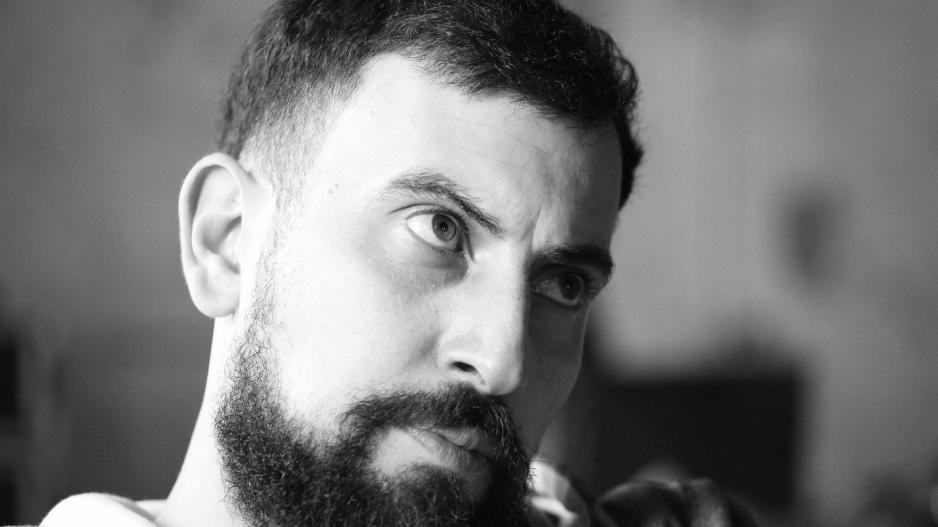
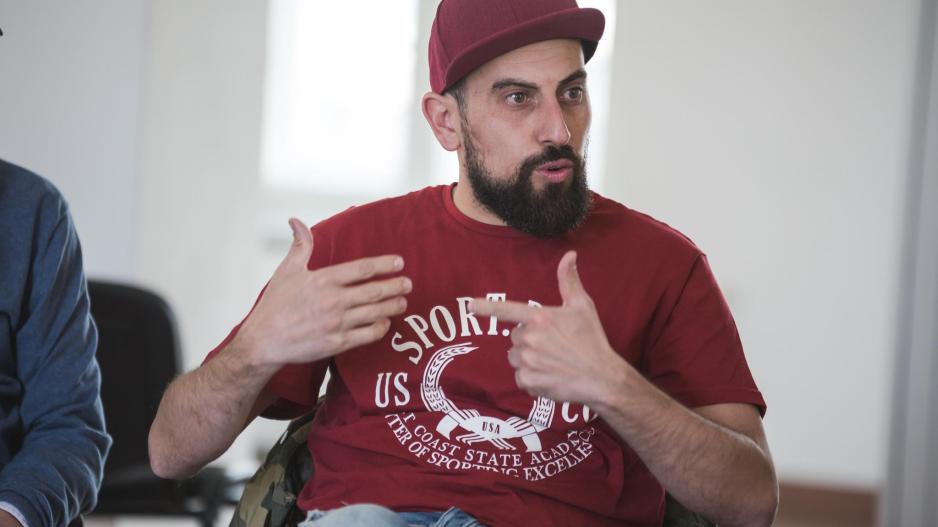
Within this framework, the presence of Palestinian actor, director, and cultural creator Ahmed Tobasi takes on special significance. Born in the Jenin refugee camp during the First Intifada and imprisoned at the age of 17 during the Second, Tobasi transforms the experience of violence, loss, and survival into a deeply human artistic language. His work does not seek to reproduce trauma as a spectacle, but rather to illuminate what conflict leaves behind inside a human being: memory, fear, dignity, and the need for freedom and imagination. In the interview that follows, Ahmed Tobasi talks about art as an act of resistance, theater as a space for survival and self-awareness, and the artist's responsibility toward society.
See everything we discussed.
You grew up in a continuous state of conflict. How did this shape your perception of the world and of art?
I grew up understanding very early on that life can change in a single second. Conflict wasn't something we watched on TV—it was our daily reality, part of the atmosphere, part of our bodies. But at the same time, growing up in that environment also made me very sensitive toward people, toward details, silence, humor, and survival. I didn’t discover theater as entertainment. I discovered it as a space where I could breathe, question things, and imagine a different reality. Art gave me the space to express things that were difficult to say directly. It also helped me understand that people are far more complex than the political identities imposed upon them. Later, working internationally, I realized that even if realities differ, many human questions are common everywhere: fear, identity, a sense of belonging, dignity, loneliness, freedom. This changed my relationship with theater. I stopped wanting only to explain Palestine to the audience. I became more interested in creating human experiences that people can emotionally recognize within themselves.
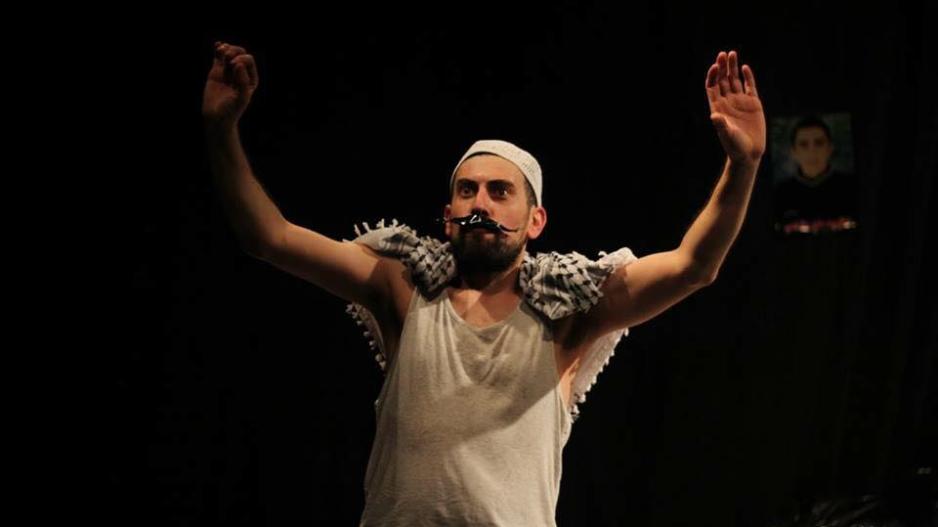
You were born during the First Intifada and imprisoned as a teenager during the Second. How do you transform such a violent experience into an artistic language?
I don’t try to recreate violence on stage exactly as it happened. I’m not interested in presenting trauma as shock or spectacle. What interests me more is what violence leaves inside people, how it changes memory, relationships, behavior, and even the way the body reacts to the world. Theater allowed me to transform that experience into something else. Sometimes words are not enough, especially when dealing with experiences tied to fear, prison, loss, humiliation, or war. Through movement, silence, sound, images, and presence, I can communicate things that are difficult to explain politically or intellectually. At the same time, I don’t want to remain trapped in my past. Art helped me move from reaction to creation. This was very important for me personally. And honestly, when I started developing my solo theatrical piece, I hadn't planned on telling my own story. We were looking for texts, books, and stories to adapt for the stage. But during the process, it became clear: why look for another story when my own already contains all these realities, contradictions, and questions? At first, I resisted this idea. I remember thinking: why my story? There are so many Palestinian stories far larger and more important than mine. Why should people listen to me? But then I understood something crucial: Personal stories are not just personal. Through one honest human story, people can understand much larger realities. Collaborating with Iraqi-British writer Hassan Abdulrazzak and director Zoe Lafferty was very significant, because we came from different backgrounds but shared a belief in the power of personal narrative. We understood that when you present politics directly, people immediately divide themselves, they decide whether they agree or disagree before actually listening. But when you tell a personal story with honesty, something shifts. I’m not telling the audience what to think politically. I’m saying: this is my life, this is my experience, this is what I saw and lived through. One can accept or reject parts of it, but it remains a true human story. And that is how a different way of listening is created. For me, theater stories always come from real life, from testimonies, from memory, from human experience. They are not detached from reality. After prison, after the invasions, after losing friends, after seeing houses destroyed around me, I remember honestly wondering: what did all this create? What does war actually do to people? Why do generations grow up like this over and over again? And perhaps that became one of the most important questions of my life. Because I realized I didn't want reality to decide for me who I would become. I didn't want violence to shape my only language. I grew up in war. I know what war does to people, to behavior, to culture, to families, to the imagination. I was born a refugee and lived as a refugee in my own country and outside of it. And that's why I feel a responsibility. I don't want future generations to continue living in the same cycles. I don't want more children to grow up in war believing that violence is a normal life. For me, every child deserves dignity, education, imagination, safety, and justice, regardless of nationality, religion, borders, or passports. That is why the search for an artistic language became so vital to me. Art and culture became the only real tools I found capable of connecting people from different histories, countries, and backgrounds. Honestly, theater didn't just emotionally save my life; it completely transformed it. It allowed me to understand myself differently, to change my future, to travel, to connect with the world, and to become someone who creates rather than just survives. And maybe that is why I believe so deeply in culture for the younger generations. Poetry, theater, music, cinema, dance, storytelling, these are not luxuries. They are ways in which people learn to express themselves instead of destroying themselves or others. At some point, many of us began to believe that perhaps the next real Intifada should be a cultural one; through art, theater, music, writing, cinema, and imagination. Because culture allows people not only to resist but also to evolve as human beings. And for me, this is the most important transformation: turning pain into awareness, memory into dialogue, and survival into creation.
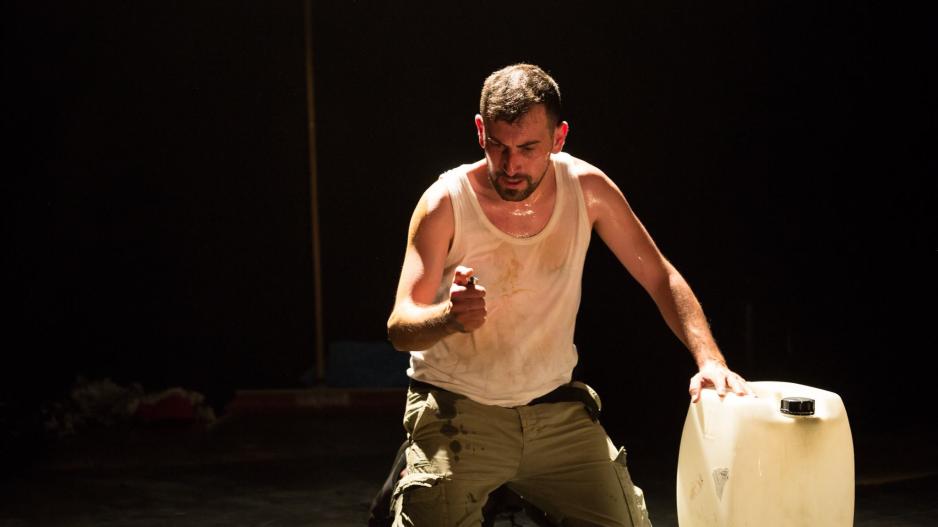
How do you carry the weight of telling stories that, for many people, are political, but for you are deeply personal?
This is something I still struggle with sometimes. For many people, Palestine is a political issue or a news headline. For me, it is family, memory, people I know, experiences I have lived. What helps me is remembering that I’m not trying to represent an entire nation or deliver political speeches. I’m trying to create an honest piece of human work. When I focus too much on "explaining," the work becomes heavy. But when I focus on the truth, the details, the contradictions, and the human presence, the audience connects more deeply. I’ve also learned that I cannot carry everything alone. Theater is collective. Collaborating with other artists, musicians, performers, and communities helps turn personal weight into collective creation.
Your work often focuses on power, identity, and resilience. What interests you most about deconstructing these themes?
I think I’m interested in the way power enters everyday life without people even realizing it. Not just through governments or armies—but also through family structures, gender roles, institutions, education, the media, and fear. Sometimes people reproduce systems of control even while fighting against them. I am also interested in resilience, but not in the romanticized way people often talk about it. People always expect Palestinians to be "strong" or "resilient." But resilience can also be exhausting. Sometimes, survival itself turns into a pressure. In my work, I try to question these ideas rather than praise them uncritically. I’m interested in contradictions.
How do you avoid the risk of Palestinian suffering being turned into a "spectacle" for international audiences?
By refusing to reduce Palestinians solely to the role of the victim. I believe this is very important. International audiences sometimes expect artists coming from conflict zones to perform pain on their behalf. And honestly, that can become dangerous. Of course there is pain, there is violence, there is loss, but our lives are also full of humor, beauty, intelligence, contradictions, desire, absurdity, daily habits, love stories, dreams, and all those details that make humans human. Sometimes I feel there is almost an international expectation that Palestinian artists must always appear carrying pain in a specific way that the audience already recognizes. But I am very careful with this. I don't want people to leave the theater feeling only pity for Palestinians. Pity is not enough, and sometimes it can even strip away equality between people. What interests me most is creating works where the audience stops seeing Palestinians as "the other" and starts recognizing themselves within the experience. The moment the audience consumes pain only emotionally, something uncomfortable happens, pain turns into an image, almost into a product. But when the work pushes the audience to question their own fears, systems, societies, and relationship with power, then theater becomes something deeper and more human. I also believe it is important to show the fullness of Palestinian life. We are not just people living under war. We are a society with culture, history, education, art, music, food, traditions, humor, and imagination. Even under extreme violence, people continue to live, love, create, and dream. As an artist, I am not interested in reproducing trauma in a sensationalized way. I don't believe that showing more blood automatically creates deeper understanding. Sometimes silence, irony, poetry, physical presence, or even humor can communicate much more honestly than a direct representation of violence. And perhaps this is also connected to dignity. These stories belong to real people, real communities, real memories. I feel a responsibility toward them. So, for me, the goal is not to make the audience watch Palestinian pain. The goal is to create a human encounter, where people leave the theater viewing Palestinians and perhaps themselves, with more complexity, awareness, and humanity.
What is it like to create art in an environment where daily life can be interrupted at any moment by violence or loss?
It completely changes your relationship with time, with theater, and with life itself. You stop taking anything for granted. A rehearsal can be suddenly cut short. An actor can disappear. A city can change overnight. Plans become fragile. But paradoxically, this also makes art more necessary. Theater becomes more than just a performance; it becomes a way to protect memory, humanity, imagination, and connection within unstable conditions. And honestly, every place in the world has its own reality and its own struggles. Theater in France operates within a different social and political environment than theater in Tunisia. Montreal has different questions than Japan. Palestine has different realities than Europe or Africa. Every artist works within the conditions that surround them. But from my own experience, particularly during the years I led The Freedom Theatre, I lived and worked under extremely violent and unpredictable conditions. After the invasions, the attacks, the years following the pandemic, and the escalation of violence, daily life itself became unstable. I lived right across from the theater, literally a few meters away. Every morning I would cross the street to go to work, and honestly, there was always the possibility of being shot, arrested, attacked, or simply never returning home. And maybe that sounds dark, but there was also an irony in all of it. As artists, we sometimes romanticize danger, the idea of dying on stage or on the way to the theater sounds somewhat poetic. But when you actually live through that level of danger every day, your understanding changes completely. You realize that art is not safe. True art is dangerous. And I don’t mean dangerous only in a dramatic or heroic way. I mean that if art truly challenges power, reality, and systems, then artists will always make some people uncomfortable. If you really do your work with honesty, there is always some risk involved, political, social, emotional, and sometimes physical. That’s why I always say: art shouldn't just comfort society. Sometimes it must disturb it. Sometimes it must ask difficult questions that people want to avoid. And this is also tied to responsibility. If artists detach themselves completely from reality, from their communities, from what is happening around them, then what is the role of art? For me, artists are not soldiers, and we shouldn't become violent ourselves. But we can become a kind of shield for memory, for humanity, for dialogue, for imagination, for the people and values we believe are worth protecting. That is why even in the most difficult circumstances, people continue to create theater, music, poetry, films, and paintings. Because without imagination and expression, fear wins entirely.
Is there a difference in the way European audiences "read" your work compared to Arab audiences?
Yes, definitely. European audiences often approach the political element first. They see Palestine first before they see the human story. Arab audiences sometimes connect more quickly emotionally or culturally with certain details, silences, forms of humor, or social dynamics without needing much explanation. But honestly, over the years, I became more interested in what connects audiences rather than what divides them. When I was young, growing up in the Jenin refugee camp and starting theater there, my dream was simply to be an actor. And like many young artists from Palestine, I dreamed of going to Europe, performing on big stages, participating in festivals and theaters, and showing that someone from Palestine could stand there as an artist and tell his own story. Part of this obsession for us was always learning new artistic tools so we could communicate differently with international audiences, to break the stereotypical image people already had of Palestinians. And in a way, years later, I achieved that dream. I have been traveling internationally for many years, presenting shows in small theaters, large organizations, festivals, and community spaces, across many different countries and cultures. But what became truly fascinating for me wasn't just the success of the tours, it was how differently audiences react to the exact same performance. Sometimes I perform in Europe, then in India, and then in another Arab country, and the reactions change completely. In India, the audience laughed at moments where European audiences remained silent. In Europe, people were moved by scenes that another audience experienced differently. The same text, the same body, the same performance, but entirely different emotional readings depending on culture, history, memory, and social context. For me, this is one of the beautiful elements of theater. It teaches you that an audience is shaped by language, politics, religion, education, collective memory, by all these elements. But at the same time, after nearly nine years of touring with my solo performance "And Here I Am" around the world, I discovered something else: beneath all these differences, people still recognize one another emotionally. After the shows, people from completely different cultures tell me: "This reminded me of my father," or "This reminded me of my fear," or "I understood that feeling." Even if they have never directly experienced Palestine or war. That is where theater gains power for me, when the work transcends identity labels and becomes human. And honestly, that is perhaps one of the most beautiful things I discovered through theater: despite all borders, cultures, languages, and politics, people still share something very essential inside them.
What does "resistance" through art mean to you?
For me, resistance through art means protecting humanity. It means continuing to create, imagine, question, and connect within systems that constantly push people toward fear, silence, hatred, or simplification. Resistance isn't just conflict. Sometimes resistance means keeping sensitivity alive. Sometimes it means refusing to become emotionally numb. But honestly, resistance is now a very complicated word for me. As I grow older and gain more experience, the more I wonder what resistance really means. Time changes the way you see things. Today, I believe resistance is deeply connected to choice. Resistance means refusing to become exactly what systems of power, occupation, fear, or society itself expect you to be. Resistance means being able to choose your reaction instead of reacting automatically. For me, this is also connected to freedom. Freedom doesn't just mean doing whatever you want. Real freedom is when you have enough awareness to choose: to react or not, to speak or to remain silent, to create differently, to refuse what is imposed upon you. That's why I believe resistance must be creative. If you simply repeat expected reactions, then in a way, you remain trapped within the system that controls you. True resistance surprises. It invents new language, new imagination, new ways of survival and existence. As an artist, I feel that resistance is creativity itself. As long as people continue to imagine, question, create art, make music, generate beauty, and engage in dialogue, they are already resisting the forces that try to turn life into fear, obedience, violence, or despair. I always remember the spirit of Palestinian artists and intellectuals like Naji al-Ali and Ghassan Kanafani, who understood that creativity itself is part of resistance. The moment a person thinks, imagines, questions, and expresses themselves freely, they are already refusing their erasure. Art cannot directly stop wars. But it can challenge the way people see themselves and others. It can "reopen" the imagination. And for me, imagination is one of the strongest forms of resistance humans possess.
Do you believe that art can heal trauma, or does it simply make it visible?
I don't believe that art magically heals trauma. Trauma is much deeper and more complex than that. But I do believe that art can create spaces where trauma becomes visible, shared, understood, and ceases to be so isolated. Sometimes people carry experiences without having the language to express them. Theater creates another language, through the body, sound, emotion, silence, and presence. It allows people to confront things indirectly, without always having to explain everything logically. For me personally, theater didn't make the pain go away, but it transformed my relationship with it. And sometimes, that transformation itself is already part of the healing. I think what theater and art really do is make people aware. They bring you face-to-face with yourself, with your fears, your vulnerabilities, your contradictions, your memories, your strengths, your history. The whole point is awareness. And this isn't just about trauma or war. Even more broadly in society, if people reach a point where they gain awareness of what is happening around them and within them, that is already the first step toward change, evolution, or healing. Art asks very simple but also very difficult questions: Who am I? Why am I like this? Where do I come from? What shaped me? What am I carrying inside me? I think theater helps people reconcile with parts of themselves they were trying to hide or avoid. It allows you to understand your trauma instead of being unconsciously controlled by it. And perhaps even more importantly, it can help transform what you once saw as a weakness into something essential, human, and even powerful. That, to me, is the beauty of art. It doesn't make you less because of your wounds or your difficulties. On the contrary, it can make you stronger, more aware, and more connected to yourself and to others. Art offers people a kind of emotional shield, not by removing the pain, but by helping them understand it, carry it differently, and continue to live with dignity and imagination.
What is the biggest stereotype about Palestine that you would like to break through your work?
The idea that Palestinians are only victims or that they are exclusively associated with violence and war. One of the first things any colonial or occupying power tries to do is dehumanize people. Because once you convince your own society that the others are "barbarians," "terrorists," "uncivilized," or somehow less human, then war becomes easier to justify. Fear becomes easier to sell. Violence becomes easier to accept. Growing up as a Palestinian, an Arab, and a Muslim from the Middle East, I experienced many of these stereotypes firsthand. And honestly, sometimes it is shocking how easily entire communities, religions, or nations are generalized into a single image. For me, one of the biggest problems is this conflation of everything, when people cannot distinguish between completely different realities, histories, and identities. When all Arabs become terrorists, all Muslims extremists, all Palestinians identified with violence. This is deeply dangerous, but also deeply ignorant. Like any people in the world, we do not want to be reduced to things we are not. Palestine historically has always been a place of diverse religions, communities, cultures, and identities. Muslims, Christians, and many other communities coexisted there for centuries. We have a heritage, education, culture, traditions, art, literature, music, humor, and deep social values. For generations, Palestinians have been teachers, intellectuals, artists, doctors, engineers, and creators throughout the Arab world. Yet, propaganda for many years created a very simplified image of Palestinians in the Western imagination, as if we only exist through violence or conflict. No. We are normal people. We love, we marry, we raise children, we dream of the future, we want safety, dignity, education, and opportunities for our families just like everyone else. And that is important to me in my work: to present Palestinians not as symbols or news headlines, but as complete human beings with contradictions, emotions, intelligence, beauty, failures, dreams, and humanity. Because when people truly see each other as human beings, it becomes much harder to accept violence against them. Sometimes, this connection is where healing begins.
Is there room for dreams in Jenin?
There has to be. Otherwise, people cannot go on. For me, if you keep dreaming, then you are alive. If you stop dreaming, then something inside you has already begun to fade. And also, I think it is important to say that Jenin is different from the Jenin camp. Sometimes internationally people conflate everything, but there is a difference between the city, the province, and the refugee camp itself. I was born in the Jenin refugee camp, and life there has a very particular intensity and instability. In the camp, you can't really control your life. You can't control your plans, your future, your time, or even your next few minutes. You don't know what might happen in five seconds, in five days, or in a year. Life can change suddenly all the time. That's why, in places like this, dreams are not a luxury. Dreams become a way of survival. People outside these conditions often imagine a dream only as an ambition or success, but for many young people in the camp, the very act of dreaming is already a form of resistance against despair. Even amidst difficult conditions, people continue to fall in love, tell jokes, make music, create art, study, open small cafes, build projects, and imagine a different future for themselves. And honestly, after everything I’ve seen, especially with young people and children, I feel that perhaps the most important thing we can do is help them keep dreaming. Because a person can lose many things, family, friends, home, land, safety, stability, but if they lose the ability to dream, then it becomes very difficult to continue living internally. That is why culture, theater, music, imagination, and spaces for expression are so important to me. Not because they solve everything politically, but because they protect something essential inside people. Dreams are sometimes the only space that no one can fully occupy or control.
What is the most political thing an artist can do today?
To protect complexity. Today, everything pushes people toward simple answers, polarization, fear, quick judgment, and identity politics. I think one of the most political things an artist can do is create spaces where people can still think deeply, feel, question, and encounter one another with honesty. Sometimes I really laugh when I hear artists say: "I am not political." For me, even that is already a political stance. We spent years debating whether art is political or not, what politics means, what it means to be an artist, and why we create art in the first place. I come from a different understanding of art. I don't see art as something detached from life or society. I never understood the idea of "art for art's sake." Perhaps because of where I come from, I always saw art as something alive, connected to people, reality, questions, struggles, imagination, and transformation. Art is much larger than aesthetics or entertainment. It is an entire space where people can come face-to-face with themselves and the world around them. At the same time, I also discovered that art, like everything else in life, can be corrupted. Artists are not automatically good people just because they create art. Art can defend power just as much as it can challenge it. That's why I believe artists have a responsibility. An artist doesn't come from nowhere. They come from a place, from a community, from a culture, from a social and political reality. For me, the artist is one of the most important people in society, because they ask questions that others are afraid to ask. The artist reflects what is happening in the community, the culture, the environment around them. They are a mirror, but also a kind of sensor for society, perceiving tensions, changes, dangers, and contradictions before others can even distinguish them clearly. Of course, some people want to exist only within the art itself, and I respect that that is their own path. But personally, I don't believe we live in a perfect world where artists can isolate themselves from reality. We live in a world full of wars, inequalities, violence, transformations, climate crisis, fear, and massive human questions. As artists, we are part of this world, not outside of it. The difference lies in how we respond. We don't respond with weapons or violence. We respond through imagination, culture, performance, music, images, and dialogue. For me, culture is one of the last spaces where people can still disagree without destroying one another. Through art we can disagree, question, refuse, dream, believe, or not believe—and yet still remain human together.
What is the story you haven't told yet but feel needs to be said?
I think I still want to talk more about the invisible consequences of violence about what remains inside people after years of conflict, fear, displacement, and survival. Not just physically or politically, but emotionally and psychologically. I am interested in what people carry silently inside them. The things handed down from generation to generation without words. The tension between freedom and fear, between survival and the desire to live normally. But at the same time, I also feel a strong need to tell another side of the Palestinian story and perhaps this is becoming even more urgent for me today. When people watch a genocide or a war through screens, they often see only the pain: starving children, destroyed homes, wounded bodies, people crying, people fleeing. Of course, this reality exists and it is painful and true. But the danger is that entire communities are reduced only to images of tragedy. People begin to pity them, but they stop seeing who these people really are. What I want to say is that Palestinians are not just people who die. Palestinians are a vibrant society with culture, education, history, art, heritage, music, food, traditions, humor, intelligence, and a deep social life. We didn't suddenly appear as victims in front of the cameras. We are part of a civilization and a long human history tied to the land, culture, and collective memory. Growing up, I used to hear stories about past massacres and violent periods, but many details were lost or arrived too late because social networks or the documentation we have today didn't exist. Now the world can see everything instantly, but even with all this visibility, there is another kind of invisibility, the invisibility of the full human reality of these communities. And this isn't just about Palestinians. Many communities throughout history have suffered violence, colonialism, or genocide while at the same time carrying rich stories, identities, and cultures that were forgotten behind images of suffering. As I grow older, the less interested I am in explaining direct political events, and the more interested I am in asking the question: how do we protect the humanity, memory, and complexity of people while they are still alive and not just after history turns them into symbols?
A few words about Ahmed Tobasi
Ahmed Tobasi is a Palestinian actor, director, and cultural leader from the Jenin refugee camp. His work draws inspiration from lived experience and explores issues of power, identity, and resilience under conditions of conflict. Born during the First Intifada, he was imprisoned for four years at the age of 17 during the Second Intifada, an experience that continues to shape his artistic voice.
He studied at The Freedom Theatre and later at the Nordic Black Theatre in Norway, presenting his work internationally across Europe and the Middle East. Tobasi served as the Artistic Director of The Freedom Theatre from 2019 to 2024, a period during which the theater gained international acclaim, including a nomination linked to the Nobel Peace Prize. His work creates powerful, human-centric performances that connect personal stories with global audiences.