Audit Office Exposes Flaws in €3.85m Direct Award for Cyprus e-ID Project
Report questions lack of open tender, slow rollout and conflict of interest risks in government’s digital ID scheme.
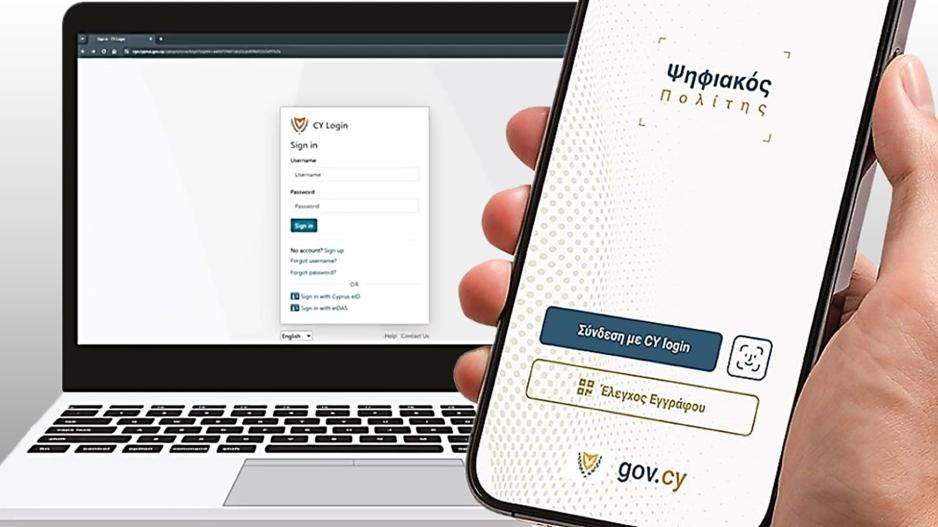
The Audit Office of Cyprus has raised serious questions over the government’s handling of the contract for the country’s first batch of electronic identity cards (e-IDs), warning of insufficient transparency, lack of competition, and potential conflicts of interest.
In a special report released Tuesday, Auditor-General Andreas Papaconstantinou said the Deputy Ministry of Research, Innovation and Digital Policy directly awarded a €3.85 million contract in January 2025 to a private company for the issuance of 100,000 e-IDs, without holding an open tender.
The Office noted that while the company was at the time the only licensed provider of e-ID services in Cyprus, there was no clear evidence that firms from other EU member states could not have participated if given adequate time. The relevant legislation had been in place since 2021, making the government’s claims of urgency “not acceptable,” the report said.
The Audit Office also highlighted the past professional links between the Deputy Minister and the contracting company, urging that in such cases authorities must apply stricter safeguards. At a minimum, it added, the ministry could have opted for a “voluntary ex-ante transparency notice” — a 10-day procedure that allows third parties to raise objections before a direct award is finalized.
Concerns were further raised over the involvement of the Council of Ministers, which in October 2024 approved the use of direct negotiation. Under Cyprus’ public procurement law, however, only the ministry’s Tenders Board had the legal authority to make such a decision. The Audit Office cautioned that political announcements and premature statements by officials risked putting pressure on the competent body.
The project officially began on 20 January 2025, but by September only 10,000 e-IDs had been issued, despite the first 30,000 being offered free of charge. The slow uptake, the report warned, suggests that stronger public awareness campaigns and incentives will be needed.
Looking ahead, the Audit Office called on the Deputy Ministry to ensure open and competitive procedures for future e-ID tenders, stressing the importance of cultivating healthy competition and avoiding monopolistic conditions.
The e-ID scheme is a central part of Cyprus’ efforts to align with the EU’s “Digital Decade” strategy, which requires member states to provide secure digital identity wallets to citizens by 2026.
The Deputy Ministry of Research, Innovation and Digital Policy rejected the Audit Office’s conclusions, stressing that it acted “with full transparency, legality and respect for competition” throughout the design and implementation of the e-ID project.
The ministry argued that Cyprus’ legal and regulatory framework does not allow participation from providers without infrastructure and authorization in Cyprus, calling references to other EU operators “misleading.” It added that an open framework had been created as early as 2021 under the “National e-ID Plan,” which was open to all potential providers and even subjected to public consultation. Despite this, no other operators developed the necessary infrastructure or obtained authorization.
On the decision to proceed via direct negotiation, the ministry said this was formally approved by the competent Tenders Board on 11 October 2024. The Council of Ministers’ decision a day earlier, it clarified, was limited to a political decision on the subsidization of e-IDs for citizens.
The ministry also dismissed the Audit Office’s suggestion that it should have issued a voluntary transparency notice, insisting that such a procedure was unnecessary given that only one eligible provider existed, there was no market interest from others, and the project had already been widely publicized.
Regarding concerns over the Deputy Minister’s prior links to the contractor, the ministry called such references “unfortunate,” arguing that the project had been in development since 2017 under three successive governments, and its completion during the current Deputy Minister’s term was simply “a natural continuation of an institutional process, not linked to personal relationships or ulterior motives.”
Concluding its statement, the ministry said it does not accept any claims or insinuations that cast doubt on the legality or transparency of the project.