Cyprus Risks Fines Over Failure to Meet EU Waste Landfill and Recycling Targets
Cyprus Faces Legal Pressure, Missed Deadlines, and Mounting Waste as It Lags Behind EU Recycling and Landfill Reduction Goals
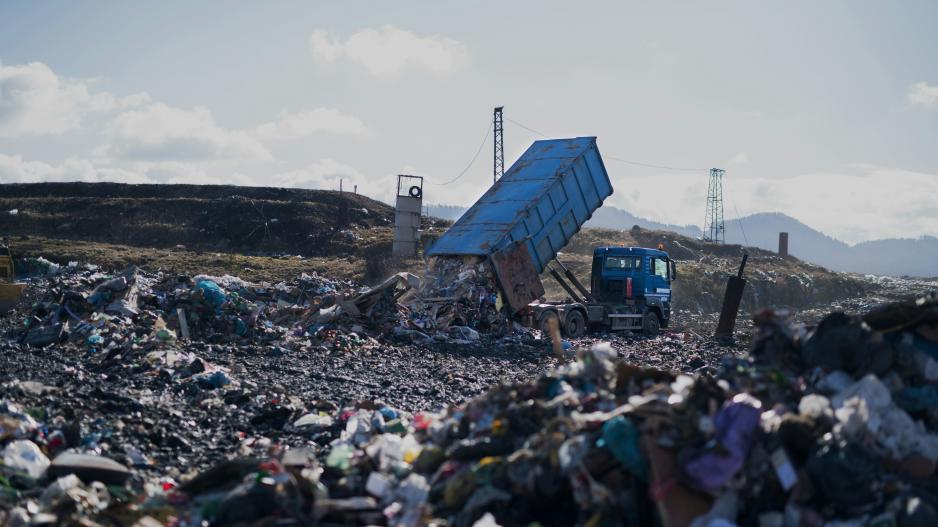
Cyprus faces serious environmental risks and mounting challenges as it remains among the lowest-ranking EU member states in terms of municipal waste recycling and continues to rely heavily on landfilling—currently estimated at around 60%.
As Brief reports, in this difficult context, the country is now at risk of facing financial penalties for failing to comply with rulings of the Court of Justice of the European Union (CJEU) regarding the Landfill Directive.
The violations concern the landfill sites in Kotsiatis and Vati, which have ceased operations but were never rehabilitated in accordance with EU environmental legislation.
At the same time, due to EU obligations, the Cypriot government is required to introduce a landfill tax and fee for municipal waste by the end of June 2026.
This landfill tax will apply to all waste disposed of at landfill sites, starting at €35 per tonne with an annual increase of €5 per tonne, reaching a maximum of €70 per tonne. Although this tax was approved by the Council of Ministers in July 2022, with implementation scheduled for 2025, it has not yet been enforced.
A 2023 Early Warning Report highlights Cyprus’s excessive reliance on landfilling, identifying it as one of the country’s greatest environmental risks.
Landfill taxes are the most common economic instrument used across the EU to improve municipal waste management, with 22 out of 27 member states implementing them. These taxes are often combined with bans on landfilling certain types of waste.
According to the EU Landfill Directive and the national Waste (Landfill) Regulations, each member state is obligated to reduce the amount of municipal waste going to landfills to 10% or less of the total generated (by weight) by 2035.
Cyprus is one of the last five EU countries without a landfill tax, alongside Malta, Croatia, Luxembourg, and Germany.
Revenues from the landfill tax will be allocated to fund waste management projects and improve waste disposal methods. The initiative is part of an environmental tax reform required under Cyprus’s Recovery and Resilience Plan, with a final implementation deadline of June 2026.
It is worth noting that, as early as January 26, 2012, the European Commission issued a reasoned opinion to the Republic of Cyprus, urging compliance with EU landfill legislation. At the time, six landfills were operating illegally, serving all municipal waste from Nicosia and Limassol, as proper waste infrastructure had not yet been developed in those districts.
Moreover, in a 2023 report, the European Commission listed Cyprus among the member states at risk of missing three key targets: preparing municipal waste for reuse and recycling by 2025, meeting the packaging waste recycling target for 2025, and achieving landfill reduction goals by 2035.