Cyprus on Fire, Reforms on Hold: When Prevention Plans Are Always “For Later”
Delays in prevention systems, a failed emergency alert rollout, and poor coordination left communities exposed to the worst fire in the country’s modern history.
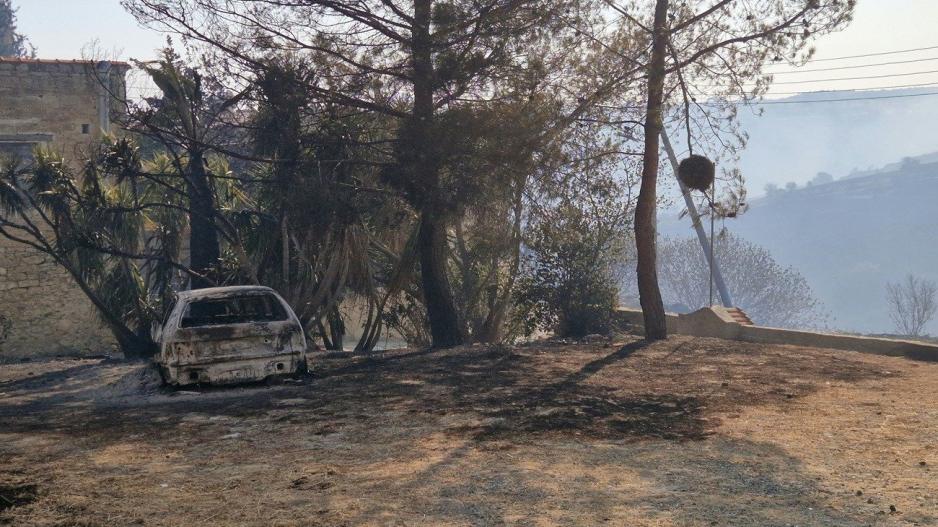
In the wake of the devastating wildfire that swept through Limassol’s mountainous communities, killing two people and destroying over 125 square kilometers of land, a harsh question arises: was the disaster truly unavoidable — or was Cyprus simply unprepared?
>>Audit Office Rang the Alarm: Cyprus’ Firefighting System Was Already Burning<<
Despite repeated government reassurances in the spring that the country was “more ready than ever,” glaring gaps in prevention, early warning, and inter-agency coordination paint a different picture.
Perhaps the most emblematic failure is the non-functioning 112 public alert system. While the rest of Europe has long relied on this SMS-based tool to warn residents of approaching dangers, Cyprus remains stuck in bureaucratic limbo. The 112 system is still “under evaluation,” with its rollout delayed by tender disputes since 2022. As a result, communities were forced to rely on village bells and word of mouth to evacuate — a jarring reality in 2025.
“The system is moving forward, but we cannot give a specific timeline,” admitted Civil Defence spokesperson Panayiotis Liasides on Politis 107.6, noting that current regulations prevent emergency equipment from bypassing procurement procedures.
Equally troubling is the state’s reliance on volunteers without a clear strategy. Farmers and local youth were among the first responders, operating tractors to create firebreaks or helping evacuate elderly neighbors. But this spontaneous bravery exposed the absence of a national volunteer registry — a plan announced in 2024 but postponed until after 2026. While the Commissioner for the Citizen began designing a legal framework for such a registry, it remains only a promise on paper.
According to the Silikou village head, Nikos Aresti, volunteers were the last line of defense. “If they hadn’t acted, the whole village would have gone up in flames,” he told Sigma. He also criticized the lack of information from state services during the first critical hours.
Compounding the problem, Cyprus still lacks a centralized civil protection agency. The Civil Defence remains underpowered and overwhelmed. Calls for its transformation into a fully functional Civil Protection Service have yet to materialize — another reform still “in the works.”
The government also failed to fully enforce preventative policies. Despite the existence of programs encouraging brush and plot clearing, multiple communities had not implemented them. Scattered illegal landfills, unmanaged dry fields, and lack of local enforcement persisted — ideal fuel for an uncontrollable blaze.
Even the Department of Forests, a key actor in fire response, was underutilized. Though it owns vehicles equipped with up to 560 meters of hose range, insiders revealed that its teams were positioned kilometers away from the ignition zone due to jurisdictional constraints. Coordination between the Forest Department and Fire Service — still governed by territorial responsibility — was described as fragmented.
This patchwork of missed reforms, inactive systems, and bureaucratic complacency now stands in tragic contrast to the official narrative of preparedness. It also raises another painful truth: if these shortcomings had been addressed, the magnitude of the disaster — including the loss of human lives — might have been significantly reduced.