What Greek Cypriots Should Know About Today’s Vote in the North
Beyond politics and slogans, a Turkish Cypriot voice explains the hopes, fears, and realities shaping this crucial vote.
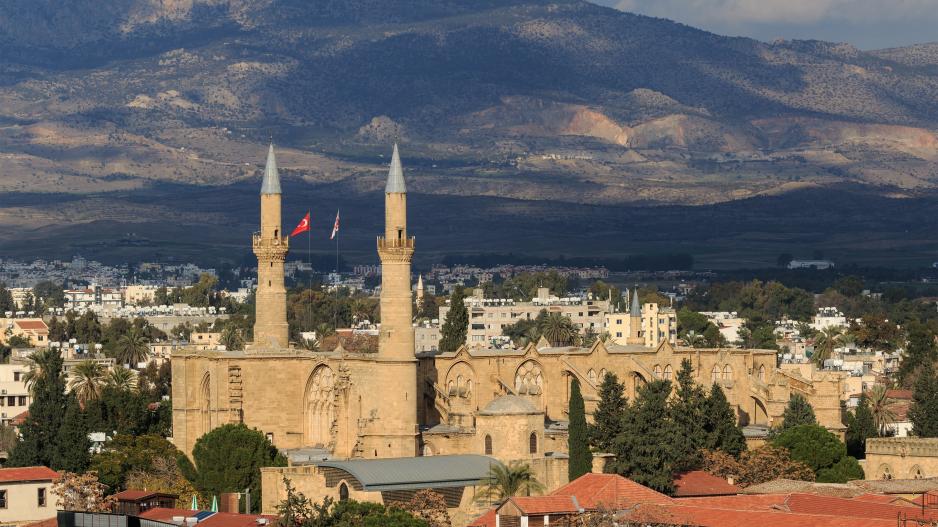
Today, October 19, the Turkish Cypriot community heads to the polls in what may be one of the most decisive votes for its leadership in recent years. The process began at 8:00 a.m. and will conclude at 6:00 p.m. A total of 777 ballot boxes have been set up, with 218,313 registered voters eligible to cast their vote.
Eight candidates have entered the race, though the main battle is expected between the incumbent leader, Ersin Tatar, and Tufan Erhürman, over who will assume the leadership of the Turkish Cypriots. The other candidates are Osman Zorba, Arif Salih Kırdağ, Ahmet Boran, Mehmet Hasgüler, İbrahim Yazıcı, and Hüseyin Gürlek. It should be noted that independent candidate Hüseyin Gürlek announced on Saturday that he is withdrawing from the race.
To win in the first round, a candidate must secure an absolute majority — 50% of the valid votes plus one — something that cannot be ruled out. If no candidate achieves this, a second round of voting will be held next Sunday, October 26.
>>Erhürman’s Landslide Win Shakes North and Rekindles Reunification Hopes<<
FastForward spoke with Hakan Çoban, a Turkish Cypriot with in-depth knowledge of political developments in the north, who holds a degree in international relations and has professional experience at the European Parliament. He discussed the key issues likely to shape the Turkish Cypriot vote, the polarized political climate in the north, and what Greek Cypriots should know about the two main contenders — and the potential implications of the vote’s outcome.
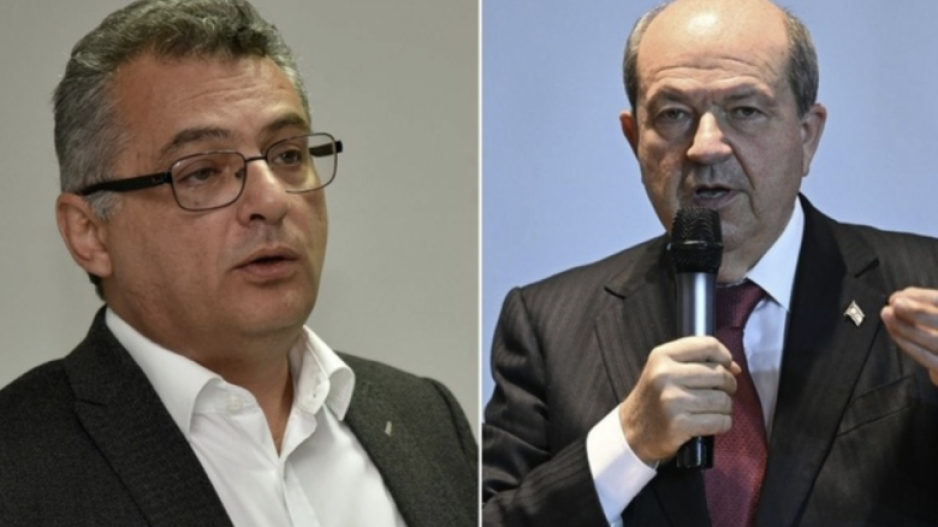
Asked whether this is truly the most critical leadership race in decades, Çoban paused before offering a tempered reflection. “If you had asked me that question back in 2020, right before the elections between Mr. Akıncı and Mr. Tatar, I’d probably have said yes. And even now, I’m inclined to say yes — but in truth, every election is important in its own way, especially for those on the left.”
The subtext is that this vote carries symbolic weight, but it’s also part of a long pattern. For Turkish Cypriots, each vote reopens old questions about identity, autonomy, and the future of the island — questions that never seem to move far from the Cyprus problem itself.
Once again, the Cyprus issue has overshadowed almost everything else. “On one side, you have those who support a two-state solution or prefer to maintain the current status quo — which, in my opinion, are essentially the same thing,” Çoban explained. “On the other, those who still believe in a federal solution.”
But for many Turkish Cypriots, daily life is shaped less by diplomacy and more by the cost of living, inflation, and economic insecurity. “The real problems in the north go far beyond that. Economic and social issues are wearing down society, and people are increasingly aware of this reality,” he said. “The second and third generations of newcomers, for example, tend to support Mr. Erhürman simply because he’s able to communicate his ideas and vision more clearly.”
The divide between left and right remains deeply tied to the Cyprus issue — and to fear. “Just yesterday, Mr. Tatar shared a post claiming that if we move toward a federation, we’ll lose our jobs and even our country,” Çoban noted. “He’s had every opportunity to act on his promises. Yet, the economy remains weak, and people are dissatisfied with the living conditions in the north. Instead of acknowledging this, he continues to focus on fear-based narratives.”
That, Çoban suggested, is the paradox of politics in the north: fear sells better than accountability.
Turkey’s involvement in Turkish Cypriot politics is neither new nor subtle. “Throughout history, there has always been some level of intervention from Turkey,” Çoban said, recalling examples as far back as the Denktaş era. “Yes, any form of intervention is problematic. But when I see Indian ships arriving in the Republic of Cyprus, and Israel, the U.S., and the U.K. using the island as a military base whenever they wish, I can’t help but wonder why Turkey’s presence alone is treated as such a major issue.”
For Çoban, Ankara’s influence is part of a broader geopolitical reality — one that extends far beyond local leadership races.
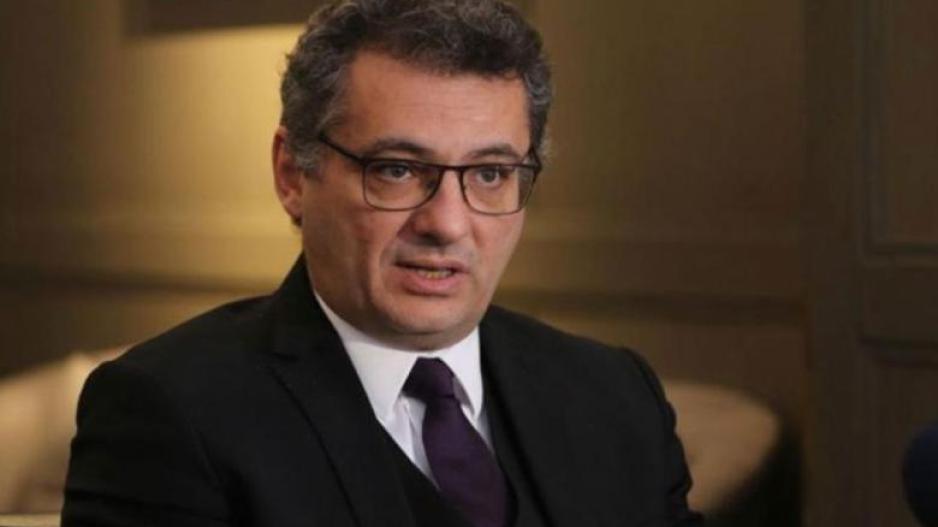
If there is a sense of hope within the Turkish Cypriot left, it’s largely attached to Erhürman’s name. “He actually has a plan for the future of his community,” Çoban said. “He has a clear vision for the day after the election and has already outlined what he intends to do within his first 100 days in office. More importantly, he can really explain his ideas — he communicates openly and directly.”
His contrast with Tatar is striking. “Just imagine — Mr. Erhürman invited Mr. Tatar to a TV debate, and he didn’t even show up,” Çoban remarked. “If he can’t sit down and talk with Mr. Erhürman, how on earth is he going to have a conversation with Mr. Christodoulides?”
Whether Erhürman will be able to deliver on his promises remains to be seen. “That we will never know,” Çoban admitted. “But yes, I do believe he’ll do whatever he can.”
A victory for Erhürman would mark a shift in tone, if not an immediate shift in geopolitics. “There would definitely be a major change in the Turkish Cypriot approach,” Çoban said. “However, I can’t say the same for Turkey’s stance — that’s likely to remain focused on the two-state solution. This difference in perspective could create some tension between Erhürman and Turkish diplomats.”
For Greek Cypriots who claim “both candidates are the same,” Çoban was direct: “They are not. Mr. Erhürman clearly, openly, and loudly supports a federal solution, whereas Mr. Tatar advocates for a two-state solution. These are fundamentally two very different approaches.”
Once, the idea of “European Cyprus from end to end” inspired enthusiasm in the north. Today, that energy has faded. “It doesn’t have the same impact it did back in 2004,” Çoban explained. “The real question is whether there’s any momentum within the EU itself regarding the Turkish Cypriot community — any shared progress or engagement. If not, I think Turkish Cypriots have matured enough not to get overly excited by initiatives that aren’t mutual or reciprocal.”
When asked what Greek Cypriots often get wrong about life in the north, Çoban listed a few familiar clichés: “Many assume we’re obsessed with the flag on the mountain. Some think they can’t safely visit the north. Others believe that Turkish Cypriots only arrived on the island after 1974. Unfortunately, these misunderstandings are still very common.”
Yet, despite the polarization, he ended on a note of connection. “One of the biggest problems in Cyprus is the lack of willingness to engage with or for each other. Even reading this article and starting a conversation is a step forward.”
When asked whether he feels optimistic, Çoban smiled: “Without hope there is no way out — or in. Some days very optimistic, some days very pessimistic. Learning to balance that out.”
Hakan Çoban