Grid on the Edge: The High-Stakes Battle to Power Cyprus
Inside the Tsoc Control Room as Aging Power Stations, Soaring Summer Temperatures, and a Lack of Storage Push the National Grid to Its Absolute Limits.
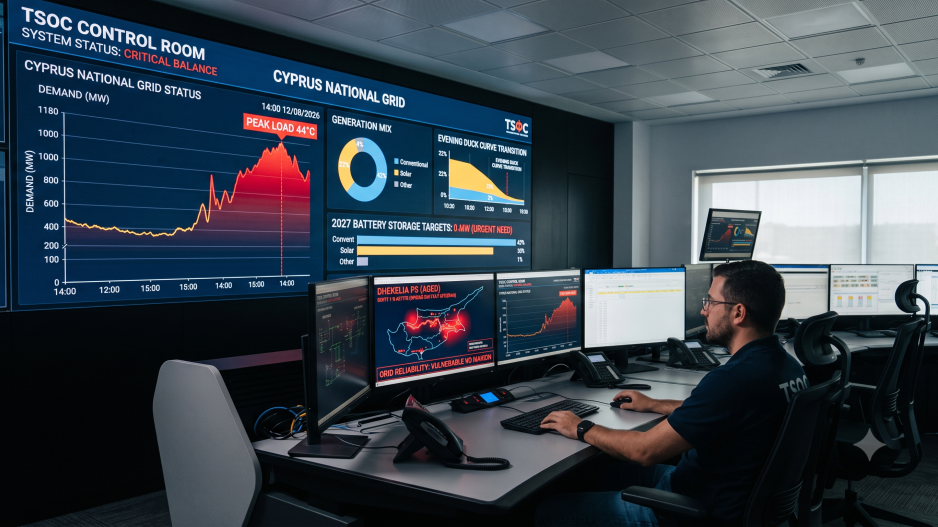
As summer heatwaves push Cyprus's electricity grid to its absolute limit, the Transmission System Operator of Cyprus (TSOC) faces a daily, high-stakes countdown to maintain power before critical battery storage targets arrive in 2027.
The 2:00 PM Countdown: Inside the High-Stakes Race to Keep Cyprus Powered
The air inside the central control room is cool, but the digital dashboard tells a completely different story. It is a scorching August afternoon in Cyprus, with ambient temperatures outside hovering near 44°C. On the wall-sized monitors, the island’s electricity demand curve is climbing toward its absolute peak as hundreds of thousands of air conditioning units run simultaneously. For the engineers on duty at the Transmission System Operator of Cyprus (TSOC), this is not just another shift; it is a high-stakes balancing act. They are tasked with matching volatile, real-time power consumption against a strained mix of aging fossil-fuel plants and shifting renewable generation. With zero margin for error, keeping the lights on during a Mediterranean heatwave has evolved from a routine utility operation into a daily battle against grid failure.
Managing Grid Stability with Aging Infrastructure
At the core of the afternoon tension is a stark reliance on infrastructure that has long outlived its ideal operational lifespan. When demand spikes, the TSOC control room must call upon every available megawatt, which means running the island's oldest conventional units at maximum capacity. According to historical infrastructure data from the Electricity Authority of Cyprus (EAC), the steam units at the Dhekelia Power Station are nearly 50 years old, with some units commissioned as far back as 1982, operating far past their initial design parameters.
Running these legacy machines under intense thermal pressure creates an ongoing vulnerability to sudden mechanical trips or system faults. Industry specialists warn that relying on such vulnerable, marginal reserves means that a single technical failure at Dhekelia during peak hours could immediately destabilize the entire network. This fragile balance regularly forces operators to make split-second decisions to prevent a cascading grid collapse.
The Solar Paradox and the Evening Cliff
While Cyprus boasts a massive expansion in solar infrastructure, the abundance of afternoon sunshine introduces a complex technical challenge known to grid engineers as the "duck curve." During the brightest hours of the day, solar farms flood the grid with clean energy, allowing operators to scale back some conventional production. However, the crisis point shifts rapidly as evening approaches.
When the sun sets and solar generation plummets, electricity demand simultaneously remains exceptionally high due to sustained summer heat. According to the long-term forecasts highlighted by the Cyprus Energy Regulatory Authority (CERA), the grid faces a steep operational cliff during this transition window. Without large-scale storage systems in place to capture afternoon surpluses, operators must frantically ramp up fossil-fuel generators at maximum speed to fill the massive generation deficit left behind by the setting sun.
The Race Toward the 2027 Storage Targets
This persistent daily friction underpins the urgent legislative and structural debates occurring across the country's energy sector. The immediate vulnerability of the network has prompted intense consultations between regulatory bodies, with CERA officially advising the Ministry of Energy to evaluate emergency fallback protocols. Specifically, discussions have centered on whether the state must invoke Article 34 of the national electricity market law, an extraordinary measure allowing for the rapid deployment of temporary conventional back-up units to guarantee short-term adequacy.
However, the ultimate resolution lies in the transition to utility-scale storage. National strategic planning updates from the Ministry of Energy, Commerce and Industry confirm a racing countdown toward early 2027, when the first major wave of commercial and TSOC-owned battery storage installations, totaling hundreds of megawatts, is scheduled to integrate into the system, finally providing the buffer needed to secure the grid.
Modernizing the Island's Energy Strategy
To safeguard the island from escalating climate pressures and structural vulnerabilities, Cyprus must transition from reactive crisis management to an aggressive, modern grid policy. Accelerating the deployment of the planned 2027 battery storage systems remains the most critical priority; these assets must be treated as urgent national infrastructure to eliminate the evening generation cliff.
In the interim, the Ministry of Energy should establish formalized demand-response programs that incentivize large industrial consumers to voluntarily shift their heaviest loads away from peak hours. Ultimately, bridging the gap between aging conventional plants and a renewable future requires a combination of disciplined storage investment, swift regulatory approvals for back-up capacity, and transparency with consumers, ensuring that the island's economic growth is supported by a resilient, modern power grid.