Raouna Urges Cyprus to Build Permanent Structure to Save EU Legacy
Cyprus Presidency Acquis Must Not Be Lost, Coordinating Structure for European Issues Necessary
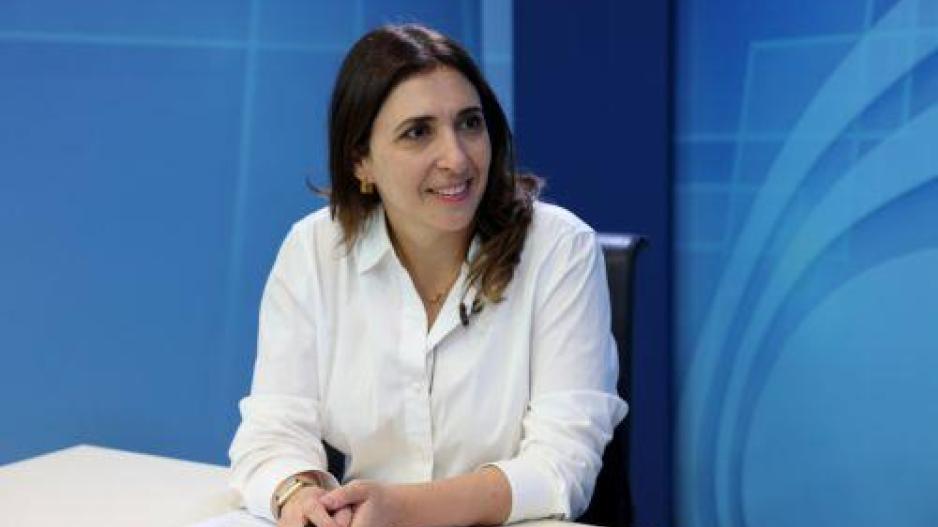
Outgoing Deputy Minister Marilena Raouna reflects on Cyprus’s highly effective EU Presidency, urging the establishment of a permanent cross-cutting coordination structure to safeguard institutional legacy and advance national interests in Brussels.
Preserving the EU Presidency Acquis
The acquis of the Cyprus Presidency of the Council of the EU must not be lost, as this does not concern any particular government or individual, but has been a national mission, Deputy Minister for European Affairs, Marilena Raouna, said in an interview with CNA shortly before the end of her term on July 31. She further stressed the need for Cyprus to establish a coordinating structure that would include all departments within Ministries and Deputy Ministries dealing with EU affairs.
“We must build on the lessons we have learned from the Cypriot Presidency, drawing on best practices from other Member States, with a view to ensuring institutional continuity. We must not lose this acquis and this legacy of the Cypriot Presidency, and we are here to continue the dialogue. Let us build on the achievements of the Cypriot Presidency and make a coordinating structure, which does not currently exist, so that it can effectively advance Cyprus’ interests,” Raouna said.
She pointed out that EU issues, beyond their sheer volume, which has increased significantly, and their complexity, are now cross-cutting and require a cross-cutting coordination structure. “And very often, it is also necessary to bridge differences in positions at the political level, because frequently one Ministry may hold one position while another Ministry may hold a very different position on the same issue,” she noted.
Parliamentary Decision and Institutional Continuity
Regarding the results of Cyprus’ EU Presidency, Raouna said that “it is recognised that we were a particularly effective Presidency, and this is evident from the numbers. We negotiated 32 dossiers at the trilogue level, that is negotiations involving the Council, the European Parliament, and the European Commission. We successfully concluded 85% of them (27 dossiers), which is a very high percentage,” she said. This has been publicly acknowledged by the heads of the EU institutions as well, and “it is something we continue to see even after the end of our Presidency,” as was the case, for example, at the most recent General Affairs Council meeting in which she participated, she said.
Asked about the House of Representatives’ decision to reject a six-month extension of her term and whether she considers the establishment of a Deputy Ministry of European Affairs necessary 20 years after Cyprus joined the EU, Raοuna said that the decision of the House of Representatives is fully respected, noting that “there must be, and there is, respect for all institutions and for all the people behind those institutions, and this applies to everyone.”
She said that throughout the preparations for the Cyprus Presidency and during the six-month term they had “a particularly productive, smooth, and flawless cooperation” with the parliament as there was also a significant parliamentary dimension to the Cyprus Presidency.
She also noted that the Cypriot EU Presidency was not politicized. “One of my first actions as Deputy Minister to the President for European Affairs was to seek out and hold meetings with all the political forces in the country. I believe there has been political maturity on the part of all political forces regarding the Cypriot Presidency, and this is also a lesson: that when a national mission is not politicized, we achieve these significant results for Cyprus, because the Presidency did not concern any particular government or individual," she noted.
"Now, this decision has been made as regards the extension of the existing legislation for six months to ensure institutional continuity and to allow for the continuation of certain important negotiations that are currently underway,” she said.
These issues require a horizontal coordination structure and do not concern just one Ministry, she noted. “Negotiations are now moving at such a rapid pace because the roadmaps have set very strict timelines, requiring a political decision to be reached within a very short timeframe to bridge the differences,” she pointed out. Raouna added that it was therefore deemed beneficial to have an extension of her term to allow time to present a more comprehensive proposal, taking into account best practices in member states.
As she said, approximately twenty of the 27 member states have this permanent structure; they have established the position of a Deputy Minister for European Affairs because the scope, volume, and complexity of horizontal issues in the European Union have increased significantly, she added.
“Given the decision of the parliament, which, I emphasize once again, is fully respected, the government’s proposal did not move forward. We are not looking back, we are looking ahead. I believe that all political forces have the political maturity to proceed in a thoughtful and consensual manner, always through dialogue, guided by what is in the public interest and to the benefit of Cyprus," she said. This, she added, "does not concern any individual, it does not concern any government. And I believe this is the path we must follow, drawing on the lessons we have learned from the Cypriot Presidency, incorporating best practices from other member states, and guided by the need for institutional continuity."
"We must not lose this the acquis and this legacy of the Cypriot Presidency, and we are here to continue the dialogue,” she stressed.
She further noted that she has not heard any political force in the country saying that there is no room for dialogue. “Let us build on the legacy of the Cypriot Presidency and ensure that we all now have a coordinating structure, which does not currently exist, that effectively promotes Cyprus’s interests,” she added.
When asked whether this coordinating body could be a Deputy Ministry of European Affairs, Raouna replied: “Not necessarily. My view is that, based on objective factors, actual data, best practices, statistics, and numbers, and based on what works effectively in other member states, we should put a proposal on the table that, through dialogue with political forces, will allow us to find the middle ground. I always believe that a solution can be found.”
Noting that her own term ends on July 31, as do the contracts of those who worked for the Cypriot EU Presidency but are not employed as civil servants, Raouna said that “we will build on this experience so that we can make the most of this legacy of the Cyprus Presidency and ensure institutional continuity."
"Right now, I am focusing on the tasks before me until July 31. A review report is being prepared, a requirement stipulated in the legislation governing the Cyprus Presidency, covering the results in all aspects. It will be submitted to the President of the Republic and, of course, forwarded to the House of Representatives,” she added.
When asked what the institution under which the various services across the Ministries and Deputy Ministries dealing with European Union issues would fall might be, Raouna said that there are various models that could be considered and that exist in other countries.
“What we need to do is build on best practices and our own experience from the Presidency, because the coordinating structure that operated during the Presidency was effective, and based on these facts, by building on these objective factors and always keeping in mind what is in the country’s best interest, we must take this next step, which would also constitute a significant reform,” she emphasized.
Key Legislative and Policy Breakthroughs
Invited to say what she considers to be the three most important achievements of the Cypriot Presidency achievements that will leave a lasting mark Raouna said that, of the 345 legislative and other dossiers negotiated during the 181 days of the Cypriot Presidency, the results that stand out most are those that brought tangible benefits to the daily lives of Europeans and, by extension, Cypriot citizens.
Specifically, she said, “we concluded negotiations on regulation 883 concerning European employees’ social insurance. This was a dossier that had been on the negotiating table for more than 10 consecutive presidencies, without result, precisely because it was a complex dossier. The completion of this dossier significantly improves workers’ rights, for example with regard to their pension rights, which is particularly important,” she noted.
Another important outcome for citizens’ daily lives, she said, was the revision of the regulation on air passenger rights. “This was also a dossier that had been on the table for 13 years. It was also extremely complex, because the airlines are involved. We also had developments in the region that had a broader impact on the economy. We persisted in these negotiations precisely because they improve passengers’ rights,” she said.
She also noted that progress had been made regarding the protection of children online. “We finalized proposals in the Council concerning the protection of children against sexual exploitation, and we are very proud of these results,” she said.
The other most important achievement, Raouna continued, is that “after intensive and complex negotiations on the European Union’s new budget, we managed to put forward the Multiannual Financial Framework and, beyond that, to conclude negotiations in the Council on the three specific regulations concerning competitiveness, the external dimension of the budget, cohesion issues, and agricultural policy.”
Raouna noted that in this case, “even 24 hours before the final negotiations, there were serious concerns that we would not reach our final goal. We persisted, and we succeeded. This means that the goal set by the leaders, to reach a political agreement by the end of 2026 so that there is no interruption in funding to all member states, is now achievable,” she said.
The third notable achievement is the significant results in enlargement policy, as she said. “There was an impasse regarding the accession negotiations with Ukraine and Moldova, and after intensive negotiations in April and thereafter, we managed to find solutions. As for Montenegro, we were also the Presidency that, after 10 long years, succeeded in establishing the working group on Montenegro’s Accession Treaty, the first time since Croatia, and also with Albania. This is particularly important not only at the European level, but also for Cyprus itself,” she noted.
Explaining the significance of this for Cyprus, she said that in June there was an important vote in the Council of Europe concerning Cyprus’s fourth inter-state case against Turkey, and it is worth examining how the votes of specific candidate countries differed “because the Cypriot Presidency delivered tangible results, which were particularly appreciated.”
Overcoming Geopolitical and Legislative Hurdles
When asked what the most thorny issue they faced was and whether there was ever a moment when they considered a difficulty to be insurmountable, Raouna said that the challenges they had to face were numerous and constant, both in terms of the most practical issues and with regard to negotiations on specific dossiers.
“In terms of complexity, difficulty, and constant twists and turns, I would single out the negotiations on the European Union’s new Multiannual Financial Framework, because it is a new budget in every respect. It is a significantly increased budget, with a new architecture and a new structure. It now consists of three main pillars and a single national envelope is being introduced for the first time, meaning we are no longer talking only about a cohesion policy portfolio or a common agricultural policy portfolio, it is all part of a single national plan. For this reason, there were strong and conflicting views, which we were called upon to bridge, and so we did,” she said.
The other issue they faced, she noted, “was the crises we had to deal with, among which the war in Iran certainly stands out. But we also had others. We started with Venezuela, we had the developments regarding Greenland, and we had to very quickly and flexibly adjust the schedule of meetings in Cyprus for two weeks in March, without missing a single meeting."
"No ministerial meeting in Cyprus was canceled, precisely because we had the quick and effective reflexes to adapt immediately and find new dates. And we did that, and I must say this has also been recognized by the institutions,” she added.
Asked if she believes there was anything that could have been done better or if there were things that did not go as planned for whatever reason, Raouna replied that there is always room for improvement. “There were dossiers that we advanced very far as regards the negotiations, but which were not finalized at the last stage. This was precisely because there were still objections from member states. One example is the simplification package concerning digital issues,” she said.
The simplification packages, she explained, essentially concern the EU effort to reduce red tape for its businesses, with an emphasis on small and medium-sized enterprises, so as to increase the profits of small and medium-sized enterprises, encourage investment in the EU, and we have achieved significant results. “We have finalized 10 legislative proposals aimed at simplification. As part of the Digital Simplification Package, which consists of various legislative proposals, for example, we finalized the legislative proposal on artificial intelligence, there was another dossier concerning digital issues which, although we worked on it until the very last day, we were unable to finalize. However, we handed it over to the Irish Presidency; we worked with them, and it is being finalized,” she said.
Noting that there are other such dossiers, she said that what matters, however, is that “we worked intensively on all of them. We acted as honest mediators. There was no legislative dossier that we considered too difficult, and there were many such cases, to even attempt to negotiate. We did not cancel any trilogues, because there are also examples where negotiations with the European Parliament have been canceled at the last minute because it was deemed that they were far from achieving a result."
Our approach, she pointed out, "was one of transparency and inclusivity, even on dossiers which were not decided by unanimity, where we still achieved significant results, and even in cases decided by majority vote, we wanted to secure a high majority percentage to ensure inclusivity for all member states, regardless of size.”
The Pillars of Success and Foreign Policy Legacy
When asked what was the reason for the results achieved by the Cypriot Presidency, Raouna said she that “we are only as strong as our team. There are many factors. Let me start with the preparation and the hard work. The Presidency was not a six-month exercise. It was a two-and-a-half-year preparation process."
"It was a national mission, and credit for that goes to the President of the Republic, because from the very beginning he made it clear that this was a tremendous opportunity and a priority for the government, which is why it was on the Cabinet’s agenda almost every week,” she added.
Raouna pointed out that a coordination mechanism was built from scratch in the framework of the Secretariat of the Cyprus Presidency, having a central role in coordinating all Ministries and Deputy ministries. “We activated all levels of European affairs in every Ministry and Deputy Ministry. And I believe that everyone and everything is judged by the results. This coordination mechanism, therefore, functioned successfully. That is why we achieved these results," she said.
And at the end of the Presidency, she noted, "we held a review workshop together with all the Ministries and all the units responsible for European affairs, and we also distributed a questionnaire. One of the questions was, ‘Do you consider the coordination structure established within the Secretariat of the Cyprus Presidency to have been effective and that it should continue?’ and over 90% of officers from the Ministries responded that it was very effective and that it should continue, and I think that’s important.”
The other factor of our success, she noted, was that they operated with transparency and inclusivity towards the member states, “and gained their trust very early on. We began negotiations on the Mercosur Free Trade Agreement, an issue that had sparked strong reactions. We started working with the member states on this as early as late December. We had already formulated our strategy, our plan, how we would bring all the member states to the table."
"And right from the first two or three days, we did just that, and we achieved these results very quickly on difficult issues. That earned us trust, and I believe our hard work produced these results,” she added.
Asked whether the Cyprus issue and the non-recognition of Cyprus by a candidate member state, namely Turkey, was an issue they “came across” during the Presidency or whether Cyprus’ EU partners now view the need for this active EU member state, Cyprus, to be reunified as more urgent, Raouna replied that what they had observed throughout the Cyprus Presidency was that “our partners no longer view us as a member state that deals only with a single issue. And this is the result of systematic work and recognition of this government’s multifaceted and multidimensional foreign policy,” she said.
“We have demonstrated that we are always promoting solutions, and we are never creating problems, and have shown in practice that we are a member state that truly serves as a bridge between the Eastern Mediterranean region and the European Union. And our partners never approached us with suspicion during the Presidency,” she noted.
“Furthermore, precisely because of the Russian invasion of Ukraine and that we are now facing challenges to the international system and international law, and throughout this period we have emphasized that in Cyprus, on European soil, there is an occupation and that the Cyprus issue is a problem of invasion. All these concepts are now being discussed on a daily basis, and due to other international problems, there is now an understanding in Brussels that the Cyprus issue is indeed a problem of invasion and occupation,” she said.
She added that “we acted throughout our Presidency as honest mediators on this issue, which also concerns EU-Turkey relations. In practice Turkey is a candidate country but negotiations have been frozen due to the rule of law situation in the country and because it has not made progress regarding its obligations related to Cyprus. As as was our duty, and in line with the practice followed by other presidencies, we invited Turkey to the fora where we invited the candidate countries, namely the General Affairs Council and elsewhere, and this was appreciated by our partners. This came as no surprise, because we have demonstrated that we operate with seriousness,” she said.
She also added that, although this did not happen, “if the Commission were to bring a matter concerning EU-Turkey relations to the Council for negotiation, we would negotiate it, like everything else, as honest mediators.” Cyprus has been divided since 1974, when Turkish troops invaded and occupied 37% of its territory.
Looking to the Future
To a remark that she had been a close associate of President Nikos Christodoulides even before his election, and when asked about her future career after completing a demanding task at the helm of the Cyprus EU Presidency, Raouna said that her collaboration with President Christodoulides began 15 years ago in Brussels, when she was working for the European Commission and afterwards for the Ministry of Foreign Affairs during Cyprus’ first EU Presidency.
“He honoured me with his trust for this enormous undertaking, and I thank him for that. My term runs until July 31. It is now up to the President of the Republic to decide how he wishes to proceed and make the most of the Cypriot Presidency legacy. What I can say for my part is that I have been working on European issues throughout my entire professional career. This is the field, the area where I believe I can and I want to continue to contribute, and nowhere else. Now, as I said, any decisions rest, both institutionally and constitutionally, with the President of the Republic,” she concluded.