Parliament: Debate Begins on Legal Service “Revolution” After 65 Years
Separation of prosecutorial powers and creation of a Public Prosecutor’s Office spark constitutional debate.
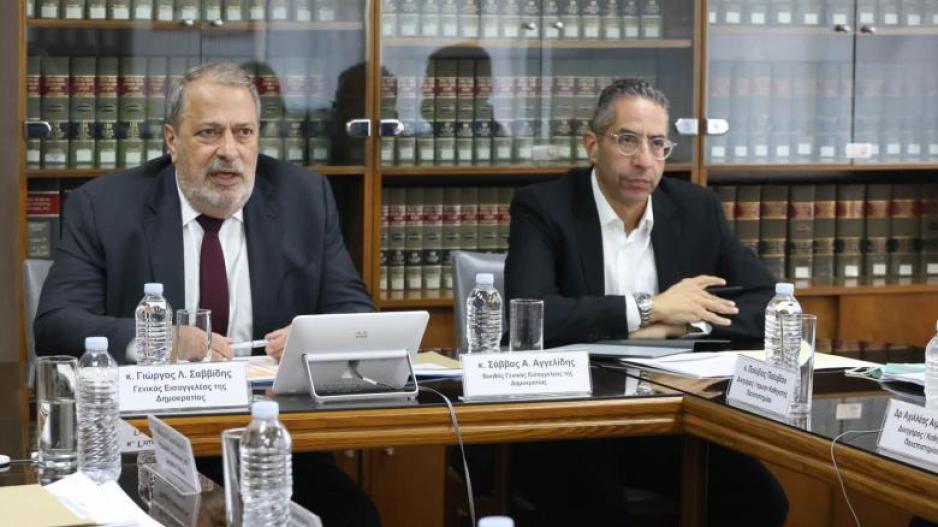
Today marks a crucial turning point for Cyprus’s legal system, as Parliament’s Legal Affairs Committee discusses, for the first time, sweeping reforms to the Attorney General’s Office—changes described as a constitutional revolution after 65 years.
As Offsite reports, at the center of debate is the separation of powers between the Attorney General and a newly created Public Prosecutor of the Republic, who will be entrusted with prosecutorial authority. This landmark reform aims to strengthen transparency and impartiality in criminal prosecutions, ensuring decisions are based solely on the rule of law and the pursuit of justice.
The New Structure: Attorney General vs. Public Prosecutor
Under the reform, the Attorney General and the Deputy Attorney General will remain the state’s chief legal advisers, representing the Republic in court.
In contrast, the Public Prosecutor and a Deputy Public Prosecutor will handle all criminal cases, holding exclusive powers to initiate and conduct prosecutions, independently from the Attorney General.
This separation of functions is designed to safeguard the independence of the criminal justice system, minimizing risks of political pressure or interference in prosecutions.
Implementation is planned for 2027, aligning Cyprus with legal systems in other jurisdictions that already adopt this model.
Eight-Year Appointments and the Prosecution Council
According to the Cabinet’s decision on July 2, 2025, the Attorney General, Deputy Attorney General, Public Prosecutor, and Deputy Public Prosecutor will all be appointed by the President of the Republic for a single, non-renewable eight-year term.
Another cornerstone of the reform is the creation of a Prosecution Council, which will have authority over:
-
Appointments
-
Promotions
-
Transfers
-
Postings
-
Secondments
-
Dismissals
-
Disciplinary actions
This body will become the key decision-maker for the staffing and management of both the Attorney General’s Office and the new Public Prosecutor’s Office.
Constitutional Concerns and Legal Challenges
Despite the reform’s ambitious scope, significant constitutional issues loom. Delegating part of the Attorney General’s powers to new offices raises questions about whether Parliament can amend the Constitution without the participation of Turkish Cypriot MPs, who abandoned their seats in 1964.
Legal experts warn that such changes may ultimately be tested by the Supreme Constitutional Court, either preventively—through a presidential referral before publication of the laws—or retrospectively, following citizen challenges.
The application of the “doctrine of necessity” may again come into play to justify constitutional adjustments, though this remains legally contentious.
Alternative Proposals Under Discussion
Two additional legislative proposals will also be debated today:
-
Six-Year Renewable Term: AKEL MP Andros Kyprianou proposes limiting the Attorney General’s and Deputy Attorney General’s terms to six years, with the possibility of renewal, alongside stricter eligibility rules for candidates.
-
Conflict of Interest Restrictions: MPs Charalambos Theopemptou (Greens) and Alexandra Attalides propose that the Attorney General and Deputy Attorney General should not serve as state legal advisers in cases where potential conflicts of interest arise.
These proposals add further complexity to the already transformative discussions.