These Are the 6 Points of Cyprus’s Plan for Gaza
The proposal builds on UN frameworks and elements of the Trump Peace Plan to coordinate humanitarian aid and rebuilding efforts.
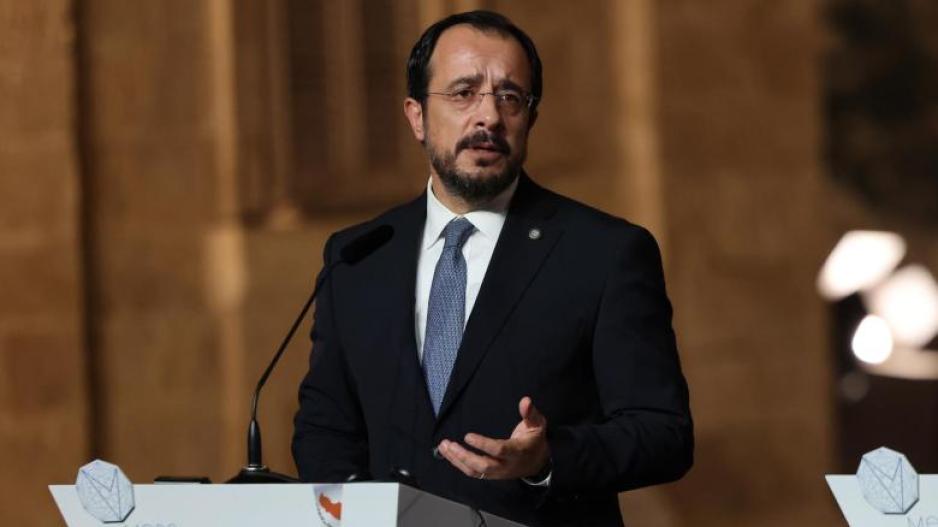
Nikos Christodoulides will present the Republic’s Six-Point Proposal for the Reconstruction of Gaza at today’s European Council Summit.
The plan was first unveiled by President Christodoulides during the Peace Summit in Sharm El-Sheikh, attended by world leaders including the President of the United States.
According to government sources, the Cypriot proposal reflects and operationalizes specific aspects of the 20-Point Peace Plan put forward by U.S. President Donald Trump, particularly those concerning humanitarian aid, reconstruction, and post-conflict stabilization.
Cyprus already maintains operational readiness through two internationally recognized mechanisms: the “Amalthea” maritime humanitarian corridor, and the CYCLOPS Training Centre, which functions as a regional capacity-building hub.
According to documents obtained by Offsite News, the Six-Point Plan of the Republic of Cyprus is as follows:
-
Provision of Humanitarian Aid (Trump Plan Points 7 & 8): Implementation of the “Amalthea” initiative in coordination with UNOPS and UNSCR 2720, in partnership with the United Arab Emirates and with operational coordination with Israel for the collection, inspection, and transport of humanitarian aid via the Limassol–Ashdod–Gaza corridor.
To date, 25,000 tonnes of humanitarian aid have been delivered through Amalthea (out of a total 190,000 tonnes sent by the UN to Gaza), including 3,300 tonnes between August and October. -
Secure Goods Screening and Dual Inspection (Trump Plan Points 13 & 15): Utilization of UN-based inspection mechanisms to ensure transparent, fast, and reliable two-way inspection of materials entering and leaving Gaza.
-
Debris Removal and Reconstruction Activation (Trump Plan Points 2, 4 & 14): Establishment of dual maritime routes for exporting debris from Gaza and importing construction materials to support the reconstruction process. Cyprus could facilitate both the removal of debris via its ports and the supply of building materials for rebuilding efforts.
-
Support for Training, Stabilization, and Rebuilding Relations (Trump Plan Points 9, 15 & 18): Training programs in inspection, customs control, and security through CYCLOPS, in cooperation with EUBAM Rafah, building on UN2720 experience in Gaza. The plan also references Cypriot expertise on Missing Persons issues and calls for strengthening the Palestinian Authority’s institutional capacity.
-
Contribution to the International Stabilization Force (ISF) (Trump Plan Point 15): Cyprus is prepared to contribute support personnel and logistical assistance to the ISF to ensure a safe environment for humanitarian and reconstruction operations.
-
Support for Economic Development Plan (Trump Plan Point 10): Leveraging Cyprus’s position as a regional business and logistics hub to attract investment and job creation, supporting a sustainable and dignified recovery for Gaza’s population.
Diplomatic sources outline three upcoming stages in advancing Cyprus’s proposal:
-
Technical Assessment Mission to Cyprus (focusing on Amalthea and CYCLOPS operations).
-
Coordination with key stakeholders, including planners and ISF implementation partners, as well as regional actors.
-
Integration of the proposal’s provisions within the EU framework, particularly under the EU Civil Protection Mechanism and related institutional instruments.
The Cypriot President has discussed the proposal extensively with European Commission President Ursula von der Leyen, presenting it both during the European People’s Party (EPP) leaders’ videoconference and at the MED9 Summit in Slovenia earlier this week (20 October).
Diplomatic sources indicate that key provisions of the Trump Peace Plan — notably points 2, 7, 8, 9, 10, 13, 14, 15, and 18 — require reliable mechanisms for the delivery of humanitarian aid, reconstruction oversight, and stabilization efforts following implementation of a peace agreement.