University of Cyprus Hosts Elite International Conference on Author Nikos Kazantzakis
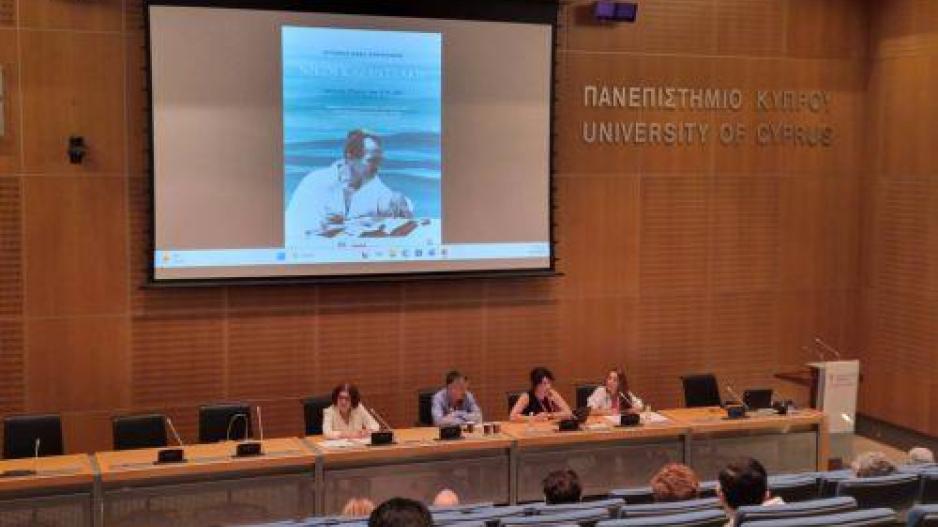
The University of Cyprus recently hosted a high-profile international conference on legendary Greek author Nikos Kazantzakis, gathering leading global scholars to engage in creative dialogue regarding his relationship with philosophy, theology, modernism, and his lesser-known metaphysical pursuits.
Global Academic Gathering in Nicosia
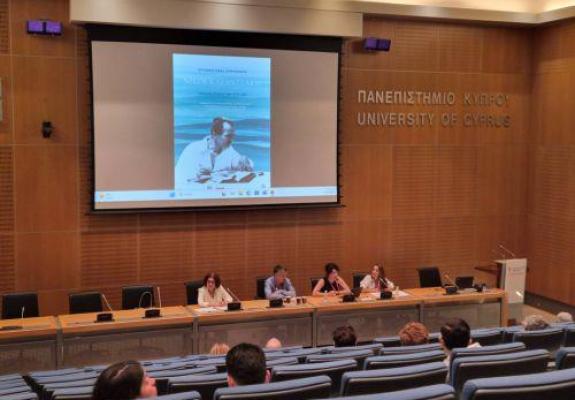
The University of Cyprus hosted an International Conference on renowned Greek author Nikos Kazantzakis, from 19 to 21 June.
A press release issued here on Wednesday says that the conference was organised by the Department of Byzantine and Modern Greek Studies of the University of Cyprus, with the support of the Centre for Hellenic Studies at Cambridge, the Centre for Hellenic Studies at King’s College London, Baylor University, the Modern Greek Studies Program at Rutgers University, and the Department of Theology and Religious Studies at Villanova University.
The event brought together scholars, researchers, and doctoral students from Cyprus, Greece, the United Kingdom, the United States, Poland, and other countries, confirming the enduring international interest in the work and thought of Nikos Kazantzakis, one of the most important writers of modern Greek literature and a figure of global intellectual stature.
Participants came from major academic institutions, including Brown University, Harvard University, the University of Cambridge, Rutgers University, King’s College London, Villanova University, the University of Warsaw, the University of Crete, Aristotle University of Thessaloniki, and the National and Kapodistrian University of Athens, highlighting the high academic standard of the event.
Keynote Highlights Psychic and Metaphysical Journeys
The keynote speaker was Lewis Owens, a distinguished scholar of Kazantzakis’ work, who, in his opening lecture named “I Don’t Know What to Believe: Kazantzakis, Psychic Research, and Spiritual Grandfathers”, approached Kazantzakis’ intellectual and spiritual journey through a broad interdisciplinary and interartistic lens, bringing to light lesser-known aspects of his thought and opening up productive avenues of discussion regarding the writer’s engagement with questions of faith, spirituality, psychic research, and metaphysical enquiry.
Other participants included Dean Papademetriou, Costas Myrsiades, Michail Paschalis, Alexia Wang, Afroditi Athanasopoulou, Christina Argyropoulou, Paola Pruett-Vergara, Przemysław Kordos, Angela Lopez-Egea Vives, Anna Coopey, Kyriaki Petrakou, Marinos Pourgouris, Bart Soethaert, Thomas Karangiozopoulos, Nikos Mathioudakis, Vangelis Calotychos, Afroditi Tseremi, Konstantinos Kalaitzakis, Paraskevi Vasileiadi, and Dionysios Psilopoulos.
Exploring Theology, Modernism, and Global Influence
During the event, original research papers were presented covering a wide range of topics, including theology and mysticism, politics and ideology, classical reception, travel writing, literary intertextuality, adaptations of Kazantzakis’ work, and its cultural reception.
Particular emphasis was placed on his relationship with Christianity, philosophy, the Homeric tradition, modernism, and the global intellectual networks of the twentieth century. The papers addressed both emblematic works by the writer, such as Zorba the Greek, The Last Temptation, The Saviours of God: Spiritual Exercises, and The Odyssey: A Modern Sequel, as well as less studied aspects of his literary and intellectual production.
The conference brought established Kazantzakis scholars and younger researchers into creative dialogue, making a substantial contribution to the renewal and enrichment of Kazantzakis' studies.
The press release notes that the successful completion of the conference confirmed the enduring significance of Nikos Kazantzakis’ work and highlighted the Department of Byzantine and Modern Greek Studies important role in promoting research, international collaboration, and academic dialogue on modern Greek literature and Greek culture.