Delays in Nicosia’s New Archaeological Museum Brought Before Parliament
Construction Progress Under Parliamentary Review
The issue of the New Archaeological Museum of Nicosia will be discussed today, Thursday, October 9, in the Transport Committee of the House of Representatives, following a motion for self-examination submitted by Members of Parliament Marinos Mousiouttas, Dimitris Dimitriou, and Christos Orphanides.
According to statements made to OffsiteNews by Marinos Mousiouttas, Chairman of the Transport Committee, the committee will specifically request updates from the Department of Antiquities and the Department of Public Works regarding the construction progress of the project. It will also seek information on the expected completion date, whether the project is on schedule, and, if not, what deviations have occurred.
Mousiouttas emphasized the significance of the new museum, noting that “it will enhance the area’s tourism appeal while offering visitors greater insight into Cyprus’s archaeological treasures.”
He added that “we want this to be a major tourist attraction, allowing visitors to experience Cyprus’s antiquities in a more engaging way than before, unlike the current small, overcrowded museum.”
According to official announcements, the project’s total cost amounts to €143,924,216. Two financing agreements have been signed—one with the European Investment Bank and another with the Development Bank—each contributing €72 million to cover the project’s expenses.
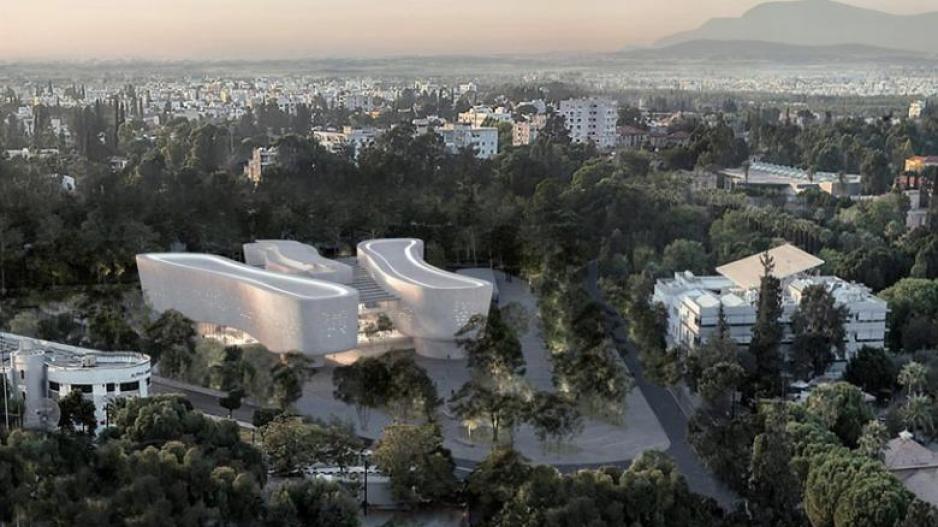
The New Archaeological Museum of Nicosia will be a three-story building with two underground levels. It will include permanent exhibition spaces of 5,500 square meters, capable of showcasing around 7,000 archaeological exhibits.
>>Delays and Rising Costs Plague New Nicosia Archaeological Museum<<
In addition, the museum will feature 1,000 square meters of temporary exhibition halls, as well as 2,000 square meters dedicated to educational programs and conservation workshops.
The ground floor will serve as the main entrance, providing access to the upper floors. The first basement will house the laboratories, a cafeteria, and educational areas, while the second basement will include the museum’s storage facilities.
Parking facilities will include over 80 covered spaces and more than 60 outdoor spaces, along with designated parking for buses, disabled visitors, families, and electric vehicles.