Artificial Intelligence Discovered More Than 100 New Exoplanets “Hidden” in NASA Data
The Raven Model Identified Rare Worlds And Thousands Of New Candidate Targets.
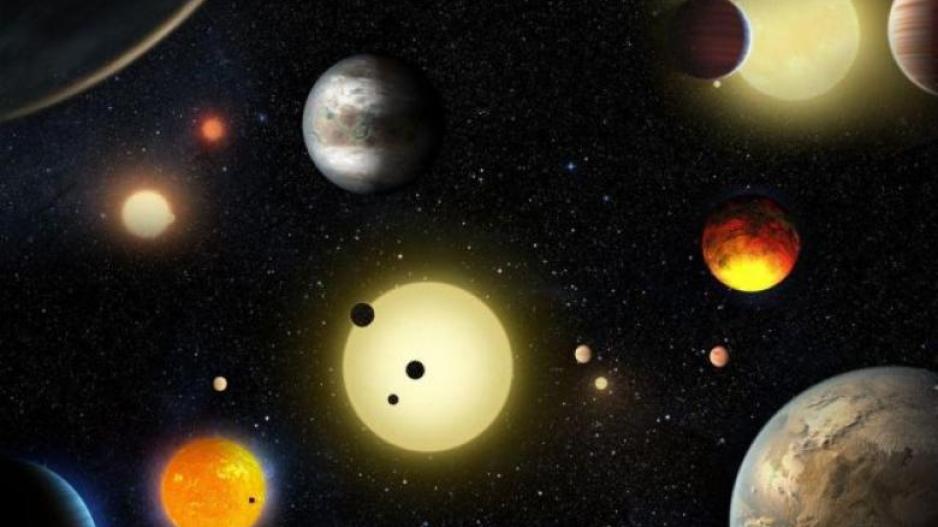
Seven years after its launch, NASA’s TESS space telescope has already confirmed around 700 exoplanets. That may sound like a lot, but TESS monitors more than 2 million stars, and many of the signals flagged as promising have not yet been accurately classified.
Within this enormous archive of data, a research team identified and validated more than 100 new exoplanets. To achieve this, scientists at the University of Warwick in the United Kingdom developed the AI tool RAVEN, short for RAnking and Validation of ExoplaNets. The purpose of RAVEN is to distinguish real planets from false signals that can mislead detection systems.
“Using RAVEN, we managed to validate 118 new planets and more than 2,000 high-quality planet candidates, nearly 1,000 of which are entirely new,” said Dr. Marina Lafarga Magro, lead author of the study.
TESS’s primary detection method relies on tiny drops in a star’s brightness when a planet passes in front of it from our point of view. However, such signals are not always caused by planets. They may result from two stars eclipsing one another, a faint background star interfering with measurements, or even instrument noise. The confirmation process is time-consuming and requires careful analysis.
RAVEN follows a different approach. Its creators trained it using hundreds of thousands of simulated examples: synthetic signals from real planets, as well as signals that resemble planets but are not. With the help of machine learning models, the system learned to recognize the patterns that separate genuine transits from misleading data artifacts.
The research team applied RAVEN to approximately 2.2 million ordinary stars observed by TESS during sectors 1 through 55, covering the mission’s first four years of full-sky surveys. The search focused on planets with orbital periods shorter than 16 days, meaning worlds located very close to their stars.
The analysis produced 118 validated planets, 31 of which had never been identified before. At the same time, RAVEN highlighted more than 2,000 strong candidates that have not yet been officially validated. Among them are several unusual candidates showing only a single transit, which could indicate planets with much longer orbits.
Two categories of findings stand out in particular. The first involves ultra-short-period planets, which complete a full orbit around their star in less than 24 hours. The second involves planets located in the so-called “Neptune Desert,” a region of orbital distances and planet sizes where Neptune-sized planets are strangely rare.
The significance of the study, published in the journal Monthly Notices of the Royal Astronomical Society, extends beyond the discovery of new worlds. Researchers used the clean sample of planets to estimate how common close-orbit planets are around Sun-like stars. They concluded that roughly 9% to 10% of such stars host this kind of planet, a result consistent with earlier findings from the Kepler mission but with much smaller uncertainty.
The same sample also enabled the first accurate “census” of the Neptune Desert. According to the researchers, such planets appear around only 0.08% of Sun-like stars.
The complete catalog of validated planets, candidates, and inspection tools is now publicly available, allowing other research teams to select targets for further observation. Planets in the Neptune Desert and ultra-short-period worlds are expected to attract particular attention, as they exist at the limits of current theories about the formation and evolution of planetary systems.
Source: cnn.gr