The Death of Objective Truth in the AI Era
What Makes Truth Hard to Come By in 2026?
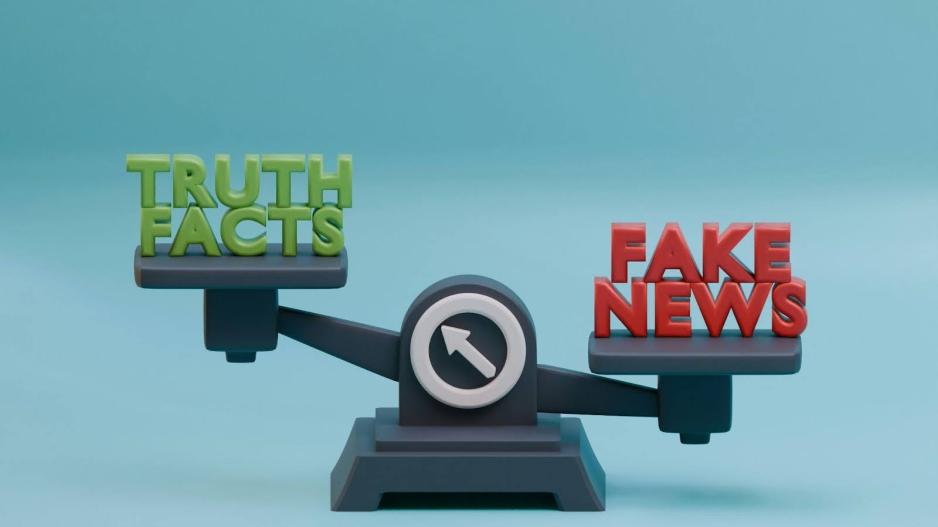
Truth, reality, and the objective and undisputed understanding of their nature is the essence of communication. Naturally, as humans, we have different perceptions of multiple aspects of life, but we do share the common foundations that have made our world as we generally perceive it.
However, throughout mankind’s evolution new technologies and developments have shifted our understanding of our surroundings significantly, and they are still doing so.
When these changes begin happening rapidly, humans are left playing catch-up.
AI was everyone’s favorite (or not so much) buzzword of 2025. It is no coincidence that multiple internationally recognized dictionaries chose relevant words as their words of the year, with Cambridge picking the word ‘parasocial’, and Merriam-Webster choosing the word ‘slop’.
The rise of generative AI has been one of the most significant contributing factors in the distortion of pure, objective truth. With the latest available technologies, just about anyone can create something unmistakably lifelike out of thin air.
Videos and images that feel almost indistinguishable from the real world keep popping up day after day, and while the technology is still in its early stages, the differences are already becoming too subtle to be easily made out.
Older people or individuals with not enough time or tech fluency will have a very hard time telling AI apart from reality, and the results become more convincing by the day.
Similarly, the written word has become a far more shaky and unreliable medium, thanks to the rise of chatbots to prominence. Combined with our newly developed overreliance on what used to be a non-factor a couple of years ago, this makes for a very dangerous cocktail of speculations, half-truths, or even straight-up fiction.
In recent years, people across the world have relied on word of mouth, books, search engines, forums, and other human-centric means in their search for answers. But with the introduction of platforms like ChatGPT or Gemini, reliability went out of the window for the sake of convenience and instant gratification.
Several studies have already shown that chatbots are generally consistent with their responses, although their credibility is found wanting, as they struggle to distinguish facts from opinions. Furthermore, chatbots will very often resort to making up obviously false statements whenever they have a hard time coming up with an accurate response.
Despite the aforementioned knocks in their reliability and capability to provide objective, unbiased, truthful information, studies have shown that nearly one in three teens interacts with their preferred chatbot on a daily basis.
The easy choice would be to despair or revolt against new technologies and their integration into our livelihoods, but that approach would be short-sighted and reactionary. Multiple inventions in the past were initially met with distrust, and were viewed as something that would threaten the way people lived at the time.
It is fair to say that most of said inventions turned out to be useful, and AI is no different. Artificial intelligence can be utilized as an asset with almost limitless potential in many fields. From day-to-day use to medicine and science, AI can streamline and accelerate multiple parts of our lives.
That being said, the advancements AI is currently making are moving at breakneck speeds, with scientists and experts already struggling to keep up. This is where a proper regulatory framework should be coming into place to monitor the progress of AI and our understanding of its capabilities and infrastructure. Unfortunately, with multiple colossal technological conglomerates from all over the world racing each other for the development of artificial superintelligence, that seems rather unlikely at the moment.