Artemis II: NASA’s Bet to Return to the Moon Enters Orbit
The Mission Has Successfully Reached Earth Orbit and Is Preparing for the 384,000 KM Journey.
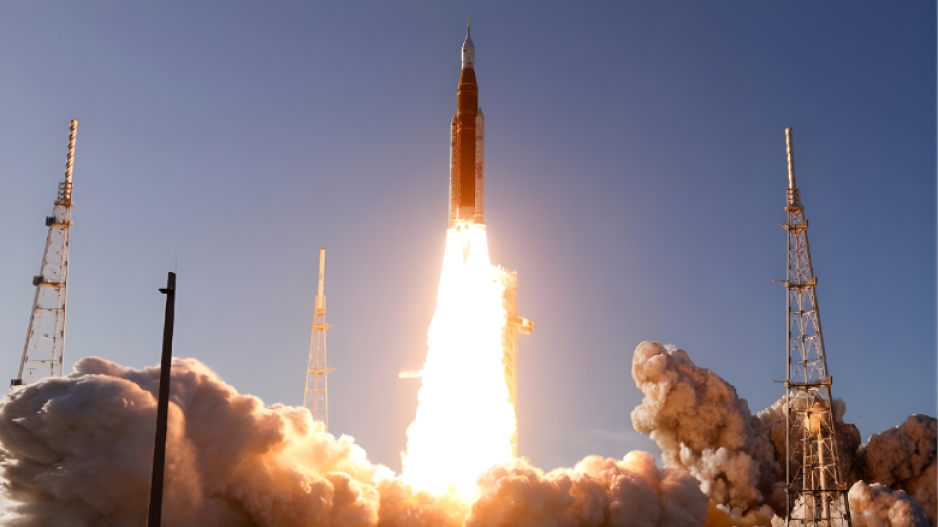
The crew of NASA’s historic Artemis II mission, the first to travel toward the Moon in more than fifty years, successfully entered Earth orbit on Wednesday (early Thursday Cyprus time), the agency announced just minutes after the rocket’s impressive launch.
About eight minutes after liftoff, the Orion capsule separated as planned from the massive Space Launch System (SLS) rocket and its core stage, which carried it into space, and was placed into orbit around Earth.
The crew, consisting of American astronauts Victor Glover, Christina Koch, and Reid Wiseman, along with Canadian astronaut Jeremy Hansen, “are safe and in excellent spirits,” according to NASA. For now, they will remain in Earth orbit to conduct a series of critical tests. Later, they will begin their journey toward the Moon, approximately 384,000 kilometers from Earth, or about a thousand times farther than the International Space Station.
Before committing Orion to its long journey away from Earth, the crew will spend several hours deliberately trying to “break” the spacecraft.
Astronauts are switching computers between different operating modes, changing communications between ground stations and satellites, and moving actively inside the cabin to test how the life-support system handles increased carbon dioxide and humidity levels.
Engineers are also checking the performance of small thrusters to confirm they respond exactly as predicted.
All of these tests aim to answer a simple but crucial question: Is the spacecraft healthy enough to continue the mission hundreds of thousands of kilometers away from Earth, without the possibility of a quick return?
If any of these tests reveal unexpected issues, NASA will not hesitate to cancel the trans-lunar injection maneuver and use Orion’s engine to bring the astronauts back to Earth immediately.
A few hours after launch, the four Artemis II crew members reported an unexpected issue with Orion’s toilet system. Specifically, Christina Koch noted a problem during the activation of part of the Universal Waste Management System, which handles urine collection.
According to NASA spokesperson Gary Jordan, one of the toilet components appeared to jam during a live broadcast of the mission. Ground teams are working to provide instructions to resolve the issue and restore full system functionality.
Norm Knight, NASA’s flight operations director, explained that the malfunction is linked to a controller issue. NASA confirmed that astronauts can still use the system for solid waste, but urine collection is currently unavailable. Engineers are working on a full fix, while backup waste management options have been activated in the meantime.
The Artemis II mission has launched successfully from Kennedy Space Center and is now entering the next phase of its journey. From Earth orbit to splashdown, the mission will follow several key stages:
Earth Orbit (Day 1)
Immediately after launch, the astronauts will spend one day orbiting Earth, ensuring all systems are functioning properly before proceeding toward the Moon.
Journey to the Moon (Days 2 to 5)
Between days two and five, Orion’s main engine will ignite, sending the capsule out of Earth orbit and toward the Moon.
Flyby of the Moon (Day 6)
On day six, Orion will reach its farthest point from Earth, passing thousands of miles beyond the Moon. The crew will document this historic moment on video.
Return to Earth (Days 6 to 9)
After completing the lunar flyby, Orion will use the gravitational pull of the Moon and Earth to begin its return journey. This phase is critical for trajectory alignment and re-entry preparation.
Re-entry Into Earth’s Atmosphere
The service module will separate from the capsule, which will then re-enter Earth’s atmosphere. Temperatures are expected to reach around 1,650°C, placing the spacecraft under intense thermal stress.
Splashdown
The mission will conclude with the capsule landing in the Pacific Ocean. Using parachutes, the astronauts will safely return to Earth, marking the end of a historic journey around the Moon.
Source: protothema.gr