Davos 2026: A World on Edge Meets in the Alps
From Trump’s tariffs to geopolitical flashpoints, the World Economic Forum faces its most confrontational year yet.
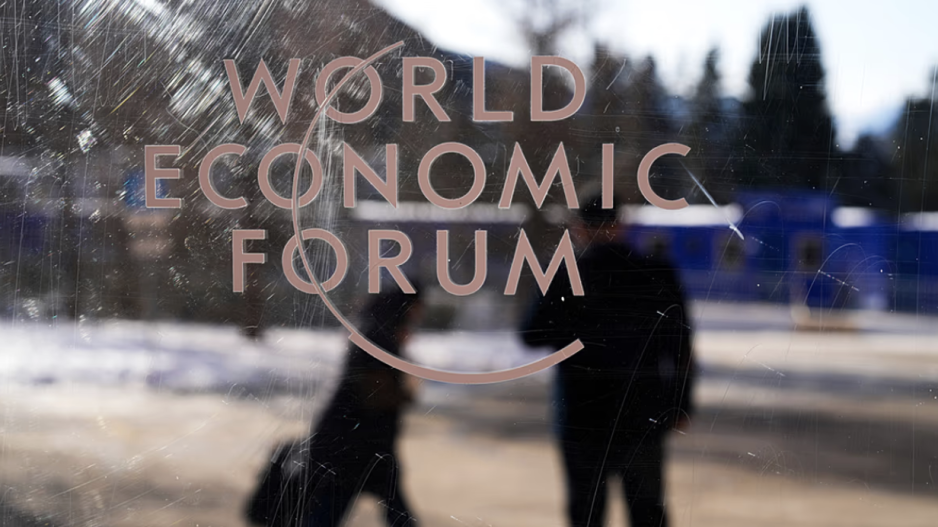
The annual meeting of the World Economic Forum (WEF) in Davos returns in 2026 amid an international environment that is more tense and unstable than at any point in recent decades. Once again, the Swiss Alpine resort becomes a hub of global decision-making, hosting political leaders, central bankers, and top corporate executives at a time when the foundations of the global order are being openly tested.
The presence of Donald Trump, accompanied by the largest US delegation ever to attend Davos, sets the tone. The United States is reasserting itself at the centre of the global debate—not only as an economic superpower, but also as a force openly challenging the prevailing model of globalisation.
The Essence of Davos 2026: Less Consensus, More Confrontation
Unlike previous years, when Davos functioned primarily as a forum for building consensus, the WEF of 2026 is taking place in an atmosphere of open confrontation. Trump’s tariffs, once again a central tool of US trade policy, are causing significant disruptions to international trade and bringing protectionism back to the forefront.
Discussions no longer focus on how to strengthen globalisation, but on how economies can manage a world with more borders, greater uncertainty, and heightened geopolitical risk. Davos 2026 reflects this transition—from an era of cooperation to one of strategic rivalry.
The United States, Tariffs, and a New Economic Doctrine
The US delegation, including key cabinet members and a strong representation from the business community, arrives in Davos with a clear message. The United States no longer views international trade as a neutral arena, but as an instrument of geopolitical power.
Tariffs are presented not merely as a means of protecting domestic production, but as leverage against both allies and competitors. The dominant question in discussions is whether this strategy can deliver long-term benefits, or whether it risks triggering a vicious cycle of retaliation and instability.
China as a Systemic Challenge
Opposite the United States, China arrives at Davos 2026 with a different strategy, yet an equally decisive presence. As the world’s second-largest economy, it seeks to position itself as a pillar of stability at a time when trade pressures are intensifying.
The Chinese delegation faces critical questions: how to manage slowing growth, how to respond to US restrictions, and what role China will play in a world increasingly divided into regional power blocs. In Davos, China will not simply be present—it will be under intense scrutiny.
Geopolitical Fronts and Economic Consequences
The World Economic Forum 2026 is taking place against the backdrop of active military and political conflicts. Ukraine, Gaza, Iran, and Venezuela are not merely geopolitical crises; they are factors directly affecting energy markets, supply chains, and global financial stability.
Discussions in Davos focus on how economies can withstand prolonged crises without sliding into recession or social unrest. The link between geopolitics and economics has never been more direct.
Europe Between the US and China
The European Union arrives at Davos 2026 in the role of a balancer. On one side stand its close ties with the United States; on the other, the need to preserve economic relations with China. Europe is being called upon to chart a course toward strategic autonomy in a world where major powers are redefining the rules.
The presence of the European Commission and the European Central Bank underscores that the debate extends beyond growth to include financial stability, energy security, and industrial policy.
The “Spirit of Dialogue” Put to the Test
This year’s forum theme, “the spirit of dialogue,” appears more like a challenge than a given. In a world where confrontation increasingly outweighs cooperation, Davos 2026 serves as a platform for open—and often difficult—discussions.
The essence of this year’s World Economic Forum is not to offer easy solutions, but to realistically capture the contours of the new global landscape—one in which economics, politics, and security are inseparable, and where the decisions taken this year will shape global balances in the years ahead.