European Space Giant Formed to Challenge Starlink Dominance
The €6.5 billion partnership seeks to strengthen Europe’s space industry and reduce reliance on U.S. technology.
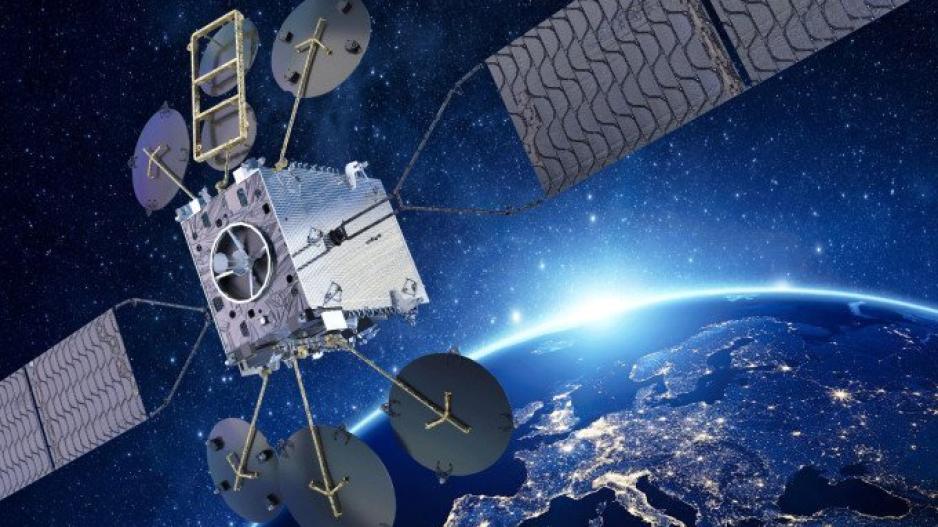
Major European aerospace and defense companies Airbus, Thales, and Leonardo signed a memorandum of understanding today to merge their satellite operations. The ambitious program aims to challenge the global dominance of Elon Musk’s Starlink while reinforcing Europe’s strategic autonomy in space.
The new entity, described as a “European space champion,” will employ around 25,000 people across Europe, with an expected annual turnover of €6.5 billion by the end of 2024 and an order backlog equivalent to more than three years of sales.
According to Thales, the joint company will become operational in 2027, pending approval from the European Commission.
“In an increasingly competitive global landscape, we need space champions on a European scale,” said Philippe Baptiste, France’s Minister for Higher Education, Research and Space, and former head of the French space agency CNES. “This is the only way to invest more, innovate more, and strengthen our competitiveness while ensuring our space sector serves Europe’s strategic autonomy,” he added.
The merger project, code-named Bromo, was hailed by French Economy Minister Roland Lescure as “excellent news,” praising the creation of “a European satellite leader” that will help “reinforce our space sovereignty.”
The new entity will be headquartered in Toulouse, southwestern France — already home to major engineering, production, and research facilities of Airbus, Thales Alenia Space, and Leonardo, according to a senior Thales official.
Under the agreement, Airbus will hold 35% of the capital, while Leonardo and Thales will each own 32.5%. The venture will operate under joint control with balanced governance, said Leonardo. Following the announcement, Leonardo’s shares rose 2.9% on the Milan stock exchange.
However, trade unions have expressed concern that the merger could lead to a monopoly in Europe’s space sector and pose risks to employment and technical expertise.
Ongoing job cuts at Airbus and Thales’s space divisions, they warn, threaten to undermine the preservation of key skills.
According to the CGT Metalworkers’ Union, the goal of the merger is “to create a monopoly capable of dictating its own prices while weakening the influence” of France’s CNES and the European Space Agency.
In a statement earlier this week, the union also noted that Airbus and Thales Alenia Space already have record-high order books that they are struggling to fulfill.