NATO Military Spending Surge Could Emit 1.3 Billion Tonnes of CO₂
New analysis links planned defense budgets to worsening climate crisis, equating emissions to those of Brazil, the world’s fifth-largest polluter.
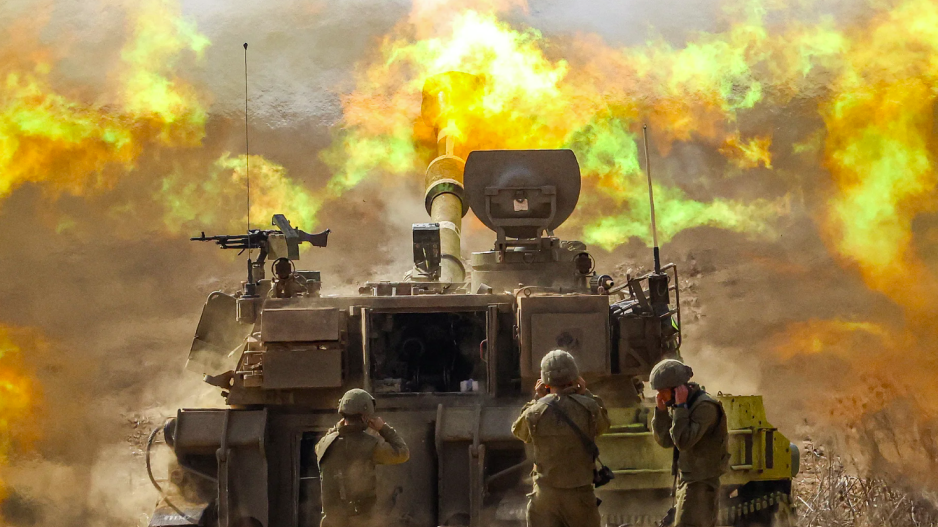
A new report reveals that NATO countries’ planned increases in military spending could intensify the climate crisis, releasing 1.32 billion tonnes of planet-warming emissions over the next decade—equivalent to the annual greenhouse gas output of Brazil, the world’s fifth-biggest emitter.
Military activity depends heavily on fossil fuels, yet official national reporting on military emissions is often inadequate or entirely absent.
According to an analysis by Scientists for Global Responsibility (SGR), based on 11 recent academic studies, every $100 billion in additional military spending produces roughly 32 million tonnes of CO₂ emissions.
These emissions arise from both direct sources—such as fighter jets, warships, and armored vehicles—and indirect ones, including equipment transport, global supply chains, and military operations themselves.
Following Russia’s invasion of Ukraine and Donald Trump’s threats to withdraw the U.S. from historic alliances, NATO announced a target to raise military spending to 3.5% of each member state’s GDP. This forms part of a broader ambition for total security spending to reach 5% of GDP.
Meeting the 3.5% threshold alone would add 132 million tonnes of CO₂, comparable to the annual emissions of 345 natural gas power plants or the entire oil-producing nation of Oman.
This increase comes on top of the $200 billion in extra spending between 2019–2024, which already generated an additional 64 million tonnes of CO₂.
SGR stresses that reconciling this scale of military buildup with the Paris Agreement’s goal of limiting warming to 1.5°C is virtually impossible.
Despite their significance, military emissions remain opaque, with no binding requirements for disclosure and little clarity on where funds are actually allocated.
In 2019, military activity was estimated to account for 5.5% of global emissions—a higher share than the entire aviation industry (2%) or shipping (3%).
Since then, worldwide defense spending has soared, reaching $2.72 trillion in 2024, the highest level since the Cold War.
-
Israel’s defense budget climbed to $46.5 billion, the world’s largest percentage increase, amid offensive war operations in Gaza, Syria, Iran, Yemen, and Lebanon.
-
The U.S. defense budget is projected to reach $1 trillion by 2026, a 17% increase.
SGR’s study is the most comprehensive assessment yet of the systemic climate impacts of rearmament, warning that unchecked military spending makes global climate targets unattainable. “There is an urgent need for rapid decarbonization to avoid the most dangerous consequences of climate change. Yet current and planned arms programs and wars are pushing the world in the opposite direction,” said Dr. Stuart Parkinson, lead author of the report.