At Shanghai Summit, Xi Jinping Signals China’s Bid to Lead the Global South
China pledges billions in funding, reinforces ties with Russia, and expands Beijing’s influence across Eurasia.
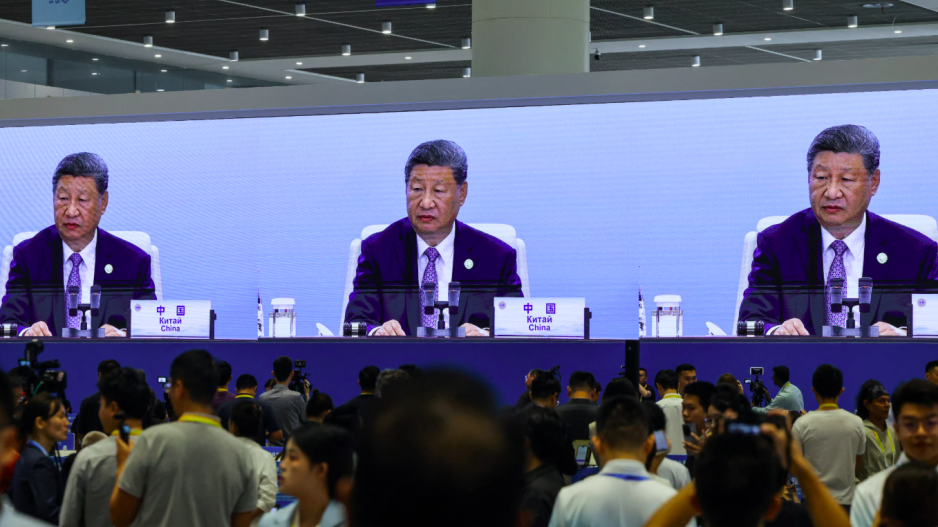
The 25th Shanghai Cooperation Organisation (SCO) summit concluded this week in Tianjin, China, with Beijing leveraging the platform to position itself as a counterweight to U.S. dominance and a stabilizing force for the Global South.
Chinese President Xi Jinping opened the summit by pledging billions of dollars in financial support to member states. He emphasized the need to harness the bloc’s vast markets, strengthen trade ties, and expand investment. Specifically, Xi announced $280 million in immediate funding and proposed establishing an SCO Development Bank to anchor future cooperation. He also committed $1.4 billion in new Chinese investments across SCO countries over the next three years.
While avoiding direct mention of the United States, Xi condemned “hegemonism,” “Cold War mentality,” and “bullying practices”—widely interpreted as veiled criticism of Washington’s global posture under President Donald Trump. Trump’s tariff wars and sharp cuts to foreign aid have left many developing nations seeking alternative economic leadership, a gap China is eager to fill.

Founded in 2001 by China and Russia, the SCO now has ten full members—including China, Russia, India, Pakistan, Iran, Belarus, and several Central Asian states. It also counts 16 observer and dialogue partners such as Turkey, Egypt, Qatar, and the UAE. Together, the bloc represents about 40 percent of the world’s population, giving its calls for multipolarity and alternative globalization considerable weight.
Xi further bolstered China’s diplomatic influence by approving membership bids from Armenia and Azerbaijan, two nations that only recently signed a U.S.-brokered normalization framework. This move marks a strategic victory for Beijing in reshaping Eurasian alliances.

The summit highlighted the increasingly close partnership between China and Russia. Xi Jinping and Vladimir Putin made a public display of camaraderie during official dinners and ceremonies, underscoring their personal bond even as Russia continues its military campaign in Ukraine.
Indian Prime Minister Narendra Modi attended the summit but declined to participate in China’s upcoming military parade, citing the use of Chinese-made weapons by Pakistan against Indian forces. Still, Xi and Modi met on the sidelines, agreeing that their nations should be seen as “development partners, not rivals.” They also pledged to ease trade tensions. Analysts suggest that Trump’s tariffs on Indian exports—some as high as 50 percent—have nudged New Delhi toward Beijing in search of economic alternatives.
Observers note that Trump’s unpredictable foreign policy—characterized by trade wars and U.S. withdrawals from UNESCO, the Paris Climate Agreement, and the World Health Organization—has weakened Washington’s role in international institutions. In contrast, China has seized the opportunity to expand its influence through platforms like the SCO and BRICS, framing itself as the champion of “inclusive globalization” and a more equitable system of global governance.
As Xi Jinping summarized, the goal is to “support equal and orderly multipolarity, inclusive economic globalization, and build a more just and equitable system of global governance.”
With its vast membership spanning Asia, the Middle East, and beyond, the SCO has emerged not only as a security and economic forum but also as Beijing’s vehicle to send a clear message: the West is no longer the sole center of global power.