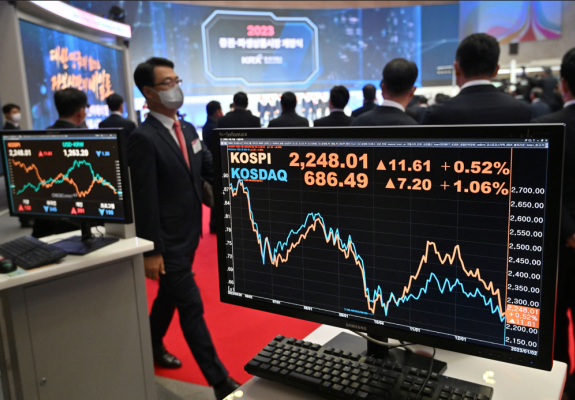
Opening of the Competitive Electricity Market with 17 Participants – What’s Changing
The first commercial transactions in the new electricity market will take place on October 1.
The final step before the launch of the Competitive Electricity Market (CEM) in Cyprus, scheduled for October 1, was completed on September 26–27. During this two-day period, 17 market participants signed the accession contract to the regulatory framework governing electricity market rules.
>>The Competitive Electricity Market Is Here. Lower Prices Aren’t.<<
Speaking to CNA, the Director of Electricity Market Operations at the Transmission System Operator Cyprus (TSOC), Konstantinos Varnavas, said that 17 participants have initially joined the electricity market. These include two producers (one of them operating a “virtual unit” with a capacity below 5 MW), ten suppliers, nine Renewable Energy Aggregators, and three RES producers.
He noted that both EAC Generation and EAC Supply are among the CEM participants, but clarified that “special arrangements and restrictions will apply to these activities of the Electricity Authority of Cyprus due to its dominant market position.”
According to Varnavas, the first commercial transactions in the new electricity market will take place on October 1, following a trial operation period that started on January 7, 2025, during which no monetary transactions were carried out.
He added that most of the participants are already active in the Transitional Electricity Market Arrangement, operating since 2021, which currently trades about 10% of total production and consumption.
Explaining the concept of the electricity market and its impact on everyday life, Varnavas said: “It is the framework where producers sell and suppliers buy energy, pay fees for essential system and public utility services, and are financially settled for the energy they inject into or withdraw from the system, according to their metering data.”
Consumers and prosumers participate indirectly through their suppliers, either as active customers or as members of energy communities.
Once licensed by the Cyprus Energy Regulatory Authority (CERA), participants may act as producers, RES aggregators, RES producers selling energy, or suppliers purchasing and reselling energy to end customers in the retail market.
Varnavas explained that the electricity market consists of three sub-markets with distinct purposes:
-
Forward Market: Participants sign bilateral contracts at prices and terms they set themselves.
-
Day-Ahead Market: Suppliers cover demand for the next day, with offers submitted in half-hour intervals. The highest accepted selling offer determines the uniform marginal price for all accepted offers.
-
Real-Time Balancing Market: Operating 24/7, this allows the TSOC to accept offers from participants to increase production or consumption, ensuring continuous system balance and safe grid operation. Offers must be submitted by 16:00 of the previous day.

Varnavas highlighted that unlike the Transitional Arrangement, where settlement occurs monthly with uniform pricing, the Competitive Market settles every 30 minutes, reflecting real-time supply and demand fluctuations. Additionally, producers and suppliers in the CEM are responsible for balancing their energy portfolios every half hour.
Regarding consumer benefits, Varnavas stressed that “advantages will not be immediately visible from day one,” but emphasized that the CEM is a crucial element enabling a range of actions ultimately benefiting consumers.
Suppliers, responding to wholesale price signals and using advanced consumption meters, will be able to design pricing schemes tailored to customer needs. Competition among suppliers is expected to introduce various tariff options: fixed rates, fuel-adjusted rates, or dynamic pricing based on wholesale market fluctuations.
“This clearly increases consumer choices, allowing them to freely select the supplier and tariff best suited to their needs,” he underlined.
With smart meters recording half-hourly consumption, suppliers can offer tariffs directly linked to wholesale prices, enabling consumers to shift usage to cheaper periods.
Furthermore, consumers with their own generation capacity, whether individually as active customers or collectively through energy communities, can indirectly participate in the market. Varnavas stressed that consumer empowerment is a core principle of the EU’s energy model, which Cyprus follows.
Investors are also expected to benefit by identifying opportunities from price differentiation. For instance, storage investments can allow buying electricity cheaply during high renewable output and selling it during peak demand periods.
Varnavas concluded that the Transmission System Operator has secured and operates the Market Management System, a specialized and complex software platform used for transaction registration and settlement. The TSOC has also staffed the Market Control Center, which operates daily and manages the MMS, in addition to the long-established National Energy Control Center responsible for overseeing the power system.