Sustainable Skies or Grounded Promises?
How Airlines Are Coping With Climate Pressure
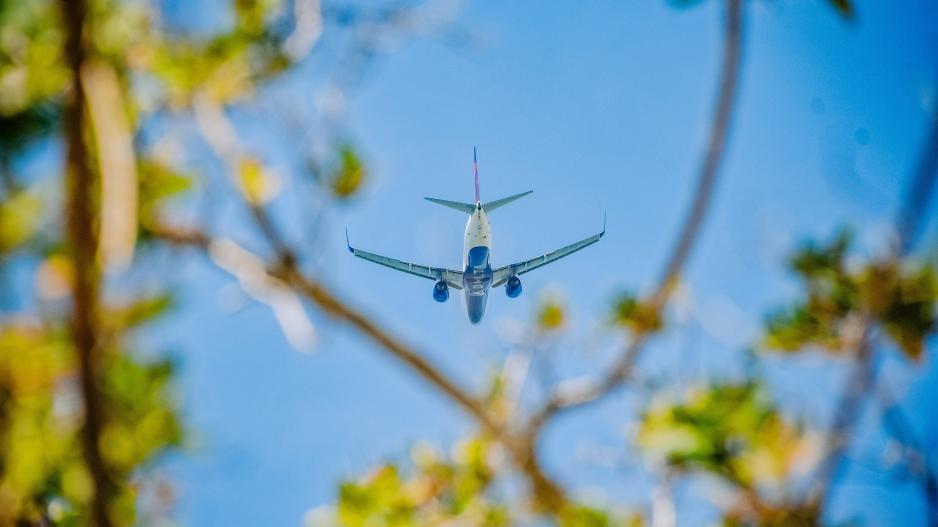
The aviation industry is flying into increasing climate scrutiny. As passenger volumes rebound, airlines are facing more pressure to live up to their lofty sustainability promises: net-zero by 2050, cleaner fleets, and more sustainable fuels. The question is no longer whether they care, but whether their actual strategies reflect the scale and speed that climate action demands.
Behind the glossy corporate reports and marketing commitments lies a reality of hard constraints: limited supplies of sustainable aviation fuel (SAF), long aircraft development lead times, complex regulation, and ballooning costs. What is emerging now is a clearer view of what truly moves the needle, and what remains more talk than action.
Globally, policy frameworks are tightening. The International Civil Aviation Organization (ICAO) has adopted the long-term aspirational goal (LTAG) of achieving net-zero CO₂ emissions by 2050 for international aviation. At the same time, the industry is operating under the Carbon Offsetting and Reduction Scheme for International Aviation (CORSIA), which covers growth in international aviation emissions via offsets.
In Europe, the regulatory environment is particularly rigorous. The ReFuelEU Aviation regulation mandates that by 2025 a minimum blend of 2% SAF is supplied at designated EU airports — and airlines are required to work toward much higher percentages in subsequent years. Meanwhile, the EU Emissions Trading System (EU-ETS) continues to cover intra-EU flights and is being bolstered by monitoring of non-CO₂ climate effects (contrails, NOx).
These combined policy signals send a clear message: the era of voluntary pledges is fading, and airlines must now integrate measurable reductions in fuel, operations and fleet into their business models. According to ICAO’s recent stock-taking, aviation continues to make progress, but the speed of change is still insufficient.

Airlines are pinning much of their decarbonization hopes on sustainable aviation fuel (SAF) because it slots into existing aircraft and infrastructure, but supply is painfully scarce. The International Air Transport Association (IATA) projects SAF production to reach about 2 million tonnes in 2025, which amounts to merely ~0.7% of total airline fuel consumption. That’s a small fraction given the scale of decarbonization required.
A key snapshot comes from the SAF-Outlook to 2030 produced by Centre for Sustainable Aviation (CENA). The report shows that as of end-2024 there are 265 active projects worldwide, yet many are still under development and not producing fuel at meaningful scale.
Major obstacles remain: high production cost, immature feedstock supply chains, weak demand signals and under-invested offtake commitments. As the consultancy Boston Consulting Group (BCG) highlights, many companies anticipate being observers rather than leaders in the SAF market by 2030.
Supply-mandates such as those under ReFuelEU help, but airlines still face a supply-versus-demand misalignment: SAF is more expensive, feedstocks are limited, and aviation-specific logistics are complex. The result: many airlines are on track to buy more SAF than they actually use, or rely on “book & claim” trading schemes.
Airlines are not simply waiting on fuel; they are working on fleet renewal, operational efficiencies and longer-term propulsion technologies. Modern aircraft bring incremental efficiency gains, but the leap to truly clean, long-haul aviation remains distant. The European network agency EUROCONTROL observes that battery-electric and hydrogen propulsion remain impractical for long-haul services this decade; hence, SAF plus fleet/operational improvements remain the only realistic pathway for trans-oceanic flights.
Operational improvements also contribute: continuous descent approaches, optimized flight planning, lighter materials and contrail-avoidance routing are gaining traction. The non-CO₂ effects of aviation (e.g., contrails) are increasingly monitored, and reducing these offers climate benefits even though these methods may impose cost or complexity.
Yet, the carbon math is still daunting. According to IATA’s “Net Zero Roadmap”, aviation will need a multi-dimensional strategy: fuel switching, fleet replacement, operations, and in some cases demand moderation. In short, no single lever suffices.
Airlines that are embracing climate responsibility are aligning with science-based targets and transparent reporting. The Science Based Targets initiative (SBTi) has released aviation-specific guidance and several carriers are having near-term targets validated against a 1.5 °C trajectory. Meanwhile, regulatory and industry frameworks (such as IPO disclosures, ESG filings, and compliance regimes) push attention away from marketing and more toward measurable results.
Investment signals are also meaningful. The cost consequences of inaction are increasing: standalone SAF mandates, EU-ETS pricing, and U.S. tax incentives (under the Inflation Reduction Act) all raise the cost of fossil-based aviation fuel and reduce the investment risk for cleaner solutions. But making these solutions competitive still demands scale, patience and cross-industry coordination.
The upshot is that airlines only gain credibility when they shift from promise-making to performance-tracking: reporting fuel purchased vs SAF used, entering firm offtake contracts, retiring inefficient aircraft, and avoiding greenwashing. The difference between sustainable skies and grounded promises lies exactly in that transition.
The aviation industry is navigating a moment of truth: ambitious climate goals meet operational and economic reality. Carriers that treat decarbonization as core strategy, not as side marketing, are distinguishing themselves. The runway toward 2050 is long, but the levers that actually bend the emissions curve—SAF scale-up, efficient fleets, conscious operations and enforceable regulation—are clearer than ever. For airlines, the question now is whether they will execute or simply stay airborne on slogans.