The 15 Hours of the Iran-Israel War That Changed the Rules of the Game in the Middle East
How Tehran’s Direct Involvement and Washington’s Regulatory Role Limit Tel Aviv’s Freedom of Movement, Despite Its Military Superiority.
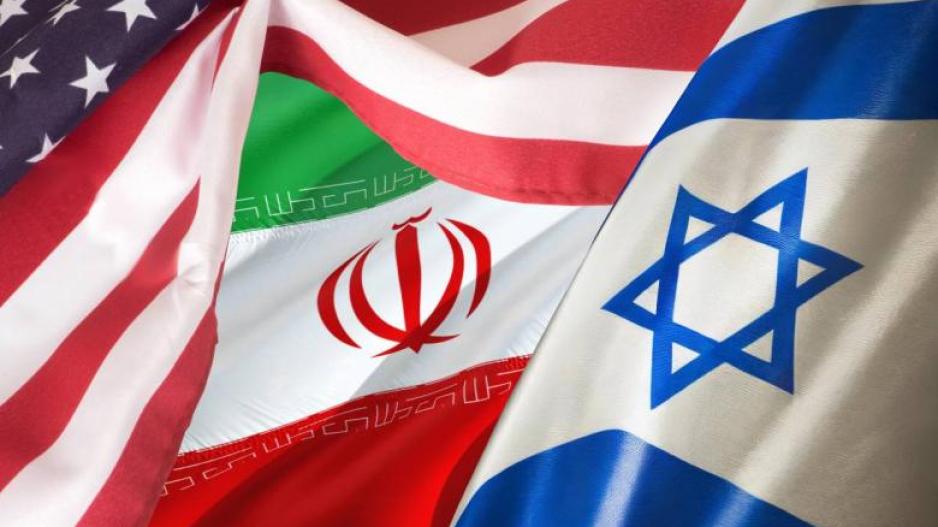
The conflict that lasted less than 15 hours between Israel and Iran was not just another episode in the long chain of regional confrontation. It was a brief but revealing test of strength and, above all, a reminder of the limits within which Israel now operates.
Tel Aviv realized that it can respond militarily to Hezbollah, strike targets in Lebanon, and project determination to its domestic audience. But it can no longer take for granted that it will have full control over the next phase. That is because every Israeli strike against Hezbollah can now trigger an Iranian response. And every Iranian response can place Washington in the role of regulator, stopping the escalation before it spirals out of control and, above all, stopping it without directly participating in strikes inside Iran.
This is Israel’s new strategic problem. The country still has superiority in military power, air capabilities, and response speed. But that superiority does not automatically translate into freedom of action. On the contrary, the more intensely American diplomacy becomes involved in talks with Tehran, the more Israel’s military option becomes subject to Washington’s political calculations.
The critical element of the 15-hour episode was the connection between Lebanon and Iran. Until recently, Israel had tried to keep the fronts separate: Hezbollah in the north was one issue, Iran another, and the Houthis in the Red Sea another. Reality, however, is now moving in the opposite direction. Tehran is trying to impose a unified regional equation and, for now, on this specific front, it appears to be succeeding, with Trump’s pressure mainly directed at the Israeli side. If Israel hits Hezbollah hard, Iran can respond directly. If Israel responds to Iran, the United States may intervene to stop the escalation. If pressure increases, the Houthis can reopen the maritime front in the Red Sea.
Put simply, Tehran wants to turn every local episode into part of a broader regional puzzle. Hezbollah pressures Israel’s north. Iran maintains the missile threat. The Houthis highlight the vulnerability of maritime routes. And Washington, seeking an agreement with Tehran, acts as a brake on Israel’s response. This does not mean Israel has lost its deterrent power. It does mean, however, that its deterrence is no longer unilateral. Every Israeli move produces a reaction in more than one field. And every reaction creates political costs for the White House, which does not want a return to full-scale war with Iran.
US involvement has been both an advantage and a constraint for Israel. On the one hand, American military power strengthens Israel’s security and acts as a strategic shield against Iran. On the other hand, that same dependence gives Washington the final say on when a round of escalation begins and when it ends. This was clearly visible in the latest episode. Israel acted militarily, but the duration of the confrontation was not determined only by its own choices. It was determined by the American need to prevent the diplomatic process with Iran from collapsing. The White House does not want a new major flare-up in the Middle East at a time when it is trying to conclude, or at least frame, an agreement with Tehran.
For Israel, this is extremely difficult. It fears that a US-Iranian agreement may prove insufficient on the nuclear front while also benefiting the Iranian economy. In other words, it may temporarily contain the crisis while leaving Iran with more resources, greater regional depth, and a preserved ability to exert pressure through its allies.
Israel’s dilemma is clear: if it tries to derail the process through military means, it risks finding itself opposed by Washington. If it accepts the process, it risks seeing an agreement that does not address its core concerns. In both cases, its freedom of movement is limited.
Hezbollah remains the most immediate and dangerous lever of pressure against Israel. It does not need to provoke a full-scale war in order to create a strategic problem. It is enough for it to maintain a level of tension in the north, threaten Israeli communities near the border, and force Israel to respond. The problem is that the Israeli response is no longer judged only on the Lebanese front. A strike on a symbolic Hezbollah area may be considered by Iran sufficient grounds for a direct missile response. As a result, Hezbollah gains additional protection. Not because Israel cannot strike it, but because every heavy strike can open a wider cycle of confrontation.
This is the essence of the new equation. Israel wants to restore its deterrence in Lebanon. Iran wants to show that Lebanon is not an isolated front. Hezbollah wants to limit the cost of its own attacks. And the United States wants to prevent escalation from blowing up the prospect of an agreement.
The result is a field in which everyone is testing everyone else’s limits. But Israel is in the most difficult position because it is the one that must immediately protect its population, maintain its deterrence, and, at the same time, avoid breaking the American framework.
The brief flare-up gave the Israeli leadership an opportunity to appear decisive. In an environment of domestic pressure, declining poll numbers, and fatigue from successive wars, the display of military determination carries political value.
But that value is limited when military action quickly stops under American pressure. The image of strength can easily turn into an image of dependence. The message to the domestic audience becomes double-edged: Israel can strike, but it cannot always continue. It can launch a round of retaliation, but it cannot necessarily determine its outcome. This is politically dangerous. It reinforces the sense that the country is caught between three pressures: security in the north, the Iranian threat, and the American diplomatic priority. Within this triangle, every option carries a cost.
Behind the conflict lies the major issue: Iran’s nuclear program. For Israel, the core question is not only whether the current tension will stop. It is whether the next agreement will permanently prevent, or merely temporarily freeze, Iran’s path toward nuclear capability.
If the agreement is weak, Israel will face a difficult scenario: less room for military action, more constraints from Washington, and an Iran that has gained time, political space, and economic breathing room.
If the agreement is strong, Israel will need to accept that the central management of the Iranian threat will come through American diplomacy rather than Israeli military initiative. And that, too, is difficult for a country that has built its security doctrine on the principle that it does not outsource its existential defense to others.
The 15-hour Iran-Israel episode did not change the balance of power. But it did change the image of the limits. It showed that Tehran feels strong enough to respond directly when it believes its regional axis is being hit. It showed that Hezbollah can still pressure Israel without bearing the full cost alone. And it showed that Washington, as long as it seeks an agreement with Iran, will put the brakes on any escalation that threatens to swallow diplomacy. For Israel, this is the essence of the new deadlock. It is not weak. It is not disarmed. It has not lost the ability to impose a heavy cost on its opponents. But it no longer operates in an environment where military power alone is enough to impose the rules.
In the coming period, Tel Aviv will have to decide whether to adapt to this new equation or try to break it. The first option means restraint and acceptance of the American pace. The second means a high risk of generalized conflict. And between the two lies Israel’s real dilemma: how to maintain its deterrence when every response can become the beginning of a war that others will stop.
Source: protothema.gr