Affordable Housing
When the Middle Class Starts Being Priced Out of the Market
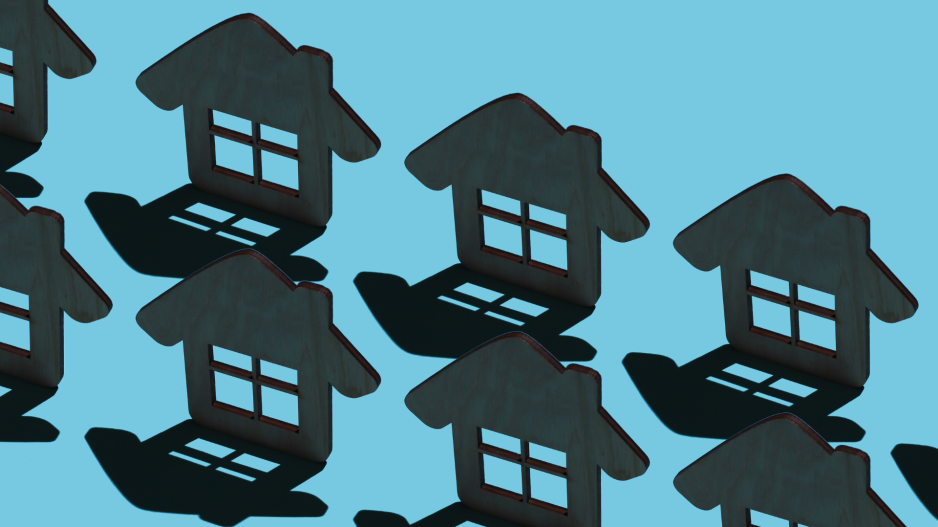
Access to housing is now evolving into one of the greatest social and economic challenges for the middle class in Cyprus.
The discussion surrounding affordable housing no longer concerns only vulnerable groups or low-income earners. It affects young couples with regular jobs, young professionals, and working families who, despite everything, struggle to buy or even rent a decent home without spending a disproportionate part of their income.
In many cases, two employees with good salaries are unable to secure a mortgage on sustainable terms. At the same time, rents in Limassol, Paphos, Larnaca, and now in Nicosia are moving at levels that until a few years ago were considered foreign to Cypriot reality.
Perhaps the most worrying element is something else. More and more young people are starting to consider it normal that they might never acquire their own home.
This is not just an economic issue. It is a social issue. It is a matter of future prospects.
The British Prime Minister Winston Churchill once said that "we shape our buildings and afterwards they shape us." Housing is not just about four walls. It is about security, stability, family, and ultimately, the very quality of a society.
The problem is not that the real estate market is growing. The problem is that this growth has not been accompanied by a corresponding housing balance for the middle class.
In recent years, the Cypriot real estate market has operated mainly on an investment logic. Increased demand from foreign buyers, rising construction costs, high interest rates, and continuous pressure on prices have created an environment where the production of housing does not necessarily mean the production of affordable housing.
The market continues to build, yet more and more Cypriots feel that no space is being built for them within it.
This is perhaps the most critical point of the discussion.
For years, we considered the continuous rise of the real estate market to be a success in itself. Today, it is becoming increasingly clear that growth without housing balance inevitably creates social pressure.
In recent years, specific initiatives and housing schemes have been taken to support young couples and strengthen affordable housing. However, the intensity of the problem and the speed at which prices and rents are increasing show that an even more comprehensive and long-term strategy is required.
Tackling the housing issue cannot rely on a single organization or a single policy intervention. It requires coordination between the state, local government, and the private sector.
The solution, of course, does not lie in extreme interventions or policies that will hurt an important sector of the economy. The real estate and construction sector remains a key pillar of growth. This, however, does not mean that housing policy can remain passive.
A more targeted affordable housing strategy is required.
Faster licensing is needed for projects concerning affordable housing, better utilization of public land, more incentives for land development companies to create housing with controlled costs, and the strengthening of housing tools that truly target the middle class.
There is also a need to utilize closed or unexploited properties within urban centers. In several areas, the paradoxical phenomenon of vacant houses is observed at a time when housing pressure is constantly increasing.
Thousands of young workers today give almost half their salary for rent without any substantial capability to save money. Young couples are returning to their parental homes not by choice, but out of necessity. People with regular salaries see home ownership moving continuously away from their financial capabilities.
This reality is creating social pressure, slowly but steadily.
The economist John Kenneth Galbraith once said that "every great social explosion starts when large segments of society feel that they are gradually losing what they took for granted."
That is precisely where the greatest danger lies today.
An economy can grow numerically. A society, however, cannot be considered truly healthy when the middle class begins to be left out of basic goods like housing.
For an entire generation of Cypriots, the dream of a home is gradually transforming from a life plan into an exercise in financial survival.
No economy can be considered truly strong when its young people struggle to imagine their future within it.