AKEL to Refer Vasiliko Scandal to Anti-Corruption Authority
Stefanos Stefanou launched a scathing attack on DISY, the Anastasiades government, and also on the Christodoulides administration.
Stefanos Stefanou, General Secretary of AKEL, lashed out over what he called the “scandal” at Vasiliko, as well as the contentious issue of the electricity interconnection.
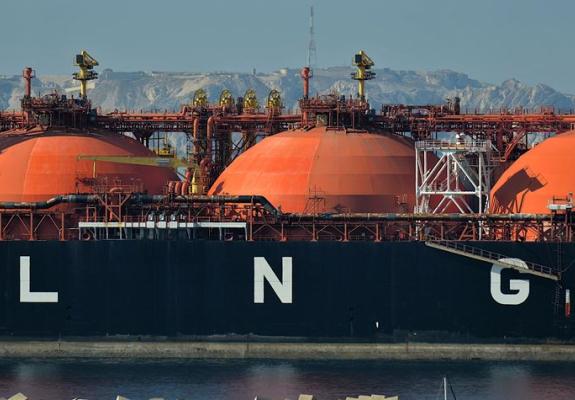
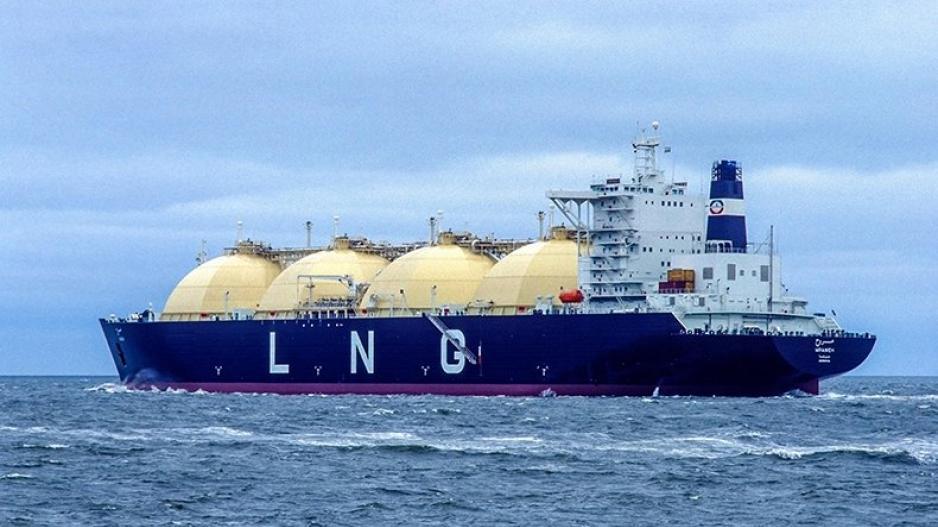
>>Papanastasiou on LNG Terminal Scandal: “Assigning Blame Is Not a Priority”<<
As Offsite reports, speaking moments ago at a press conference, the AKEL leader revealed that in the coming days he will, on behalf of his party, send a letter to the Anti-Corruption Authority, urging it “to intervene and launch an investigation into Vasiliko.”
“There are well-founded suspicions of collusion and corruption, because we are talking about millions of euros. It is not just €67 million,” Stefanou argued. He stressed that the total amount the EU will claim is €101 million, which Cypriot taxpayers will ultimately have to cover.
“We are not all to blame,” he remarked. “The scandal, as it is unfolding with Vasiliko and the electricity interconnection, has protagonists, it has names, and everything is out in the open,” he added. “It was not AKEL that organized celebratory fiestas for Vasiliko, and certainly not for the electricity interconnection,” he noted.
The AKEL General Secretary launched a scathing attack on DISY, the Anastasiades government, and also on the Christodoulides administration, criticizing their handling of both the Vasiliko case and the electricity interconnection.
“They cannot remain silent,” he stressed, addressing state institutions and expressing the view that they must act “to investigate these scandals.”
“We are not satisfied with the position of the Legal Service that, since the European Public Prosecutor’s Office is investigating, we will not conduct our own investigation,” he said, adding: “The European Prosecutor is looking into the €101 million that was initially approved for us and is now being withheld.”
He went on to emphasize that AKEL recently asked the Legal Service to investigate matters that EU institutions are not examining. “If there is political will, there is plenty of material,” Stefanou underlined.
Stefanos Stefanou questioned why two members of the Cabinet hold diametrically opposed positions on the electricity interconnection project.
“The Energy Minister says the project is moving ahead as planned, while the Finance Minister claims it is not viable based on studies in his possession. So, what is the position of the Christodoulides government on this strategically critical project of electricity interconnection?” he asked.
He added that the project is not progressing, yet expenses are mounting. CERA has already approved costs of €82 million for ADMIE, while the Cabinet has decided to allocate €125 million over the next five years for cost recovery.
The AKEL leader expressed serious concern that the government has committed to splitting project costs 50%-50%.
“If the project fails to go ahead, the Republic of Cyprus will be burdened with about €150 million in costs,” he warned.
“These decisions,” Stefanou argued, “reflect irresponsibility toward the country, which today faces a severe problem of energy security and sufficiency. The economy and citizens are already paying for very expensive electricity.”
Asked whether the energy issue should be examined at a national level due to its seriousness, Stefanou referred to the Advisory Committee on Energy Policy, established during the Christofias administration.
He further stressed that without natural gas, Cypriots will not have access to cheaper electricity.
“According to Eurostat, Cyprus is the only country where emissions have increased, because measures that should have been taken long ago were not implemented,” he noted, adding: “Cyprus has paid €1.3 billion in emissions costs so far.”
“Is this the image of a serious, responsible, and capable government?” he asked.
Answering another question, Stefanou accused the government of embarking on a massive, multi-billion project and only afterwards deciding to launch a feasibility study to assess whether it benefits consumers.
He concluded that Cyprus now faces an energy risk due to “criminal, mistaken, bad, and suspicious decisions signed by the former Anastasiades government,” while at the same time, “the incompetence and irresponsibility of the Christodoulides government is being exposed.”