In the Ashes of Disaster, an Economy on a Mission of Solidarity
When Cyprus Was Burning, Businesses Stepped Forward. The Major Survey on the Support of Fire-Stricken Communities by the Business World Following the Deadly Fire of July 23, 2025.
-
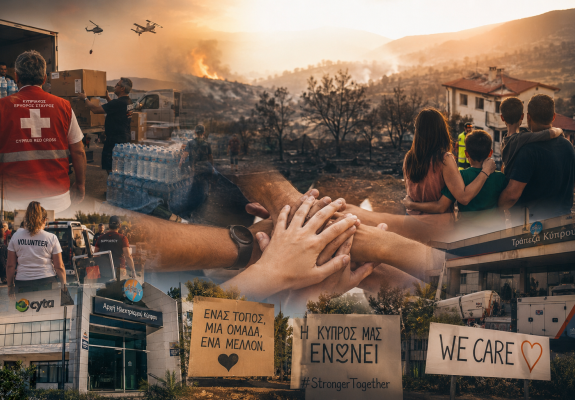
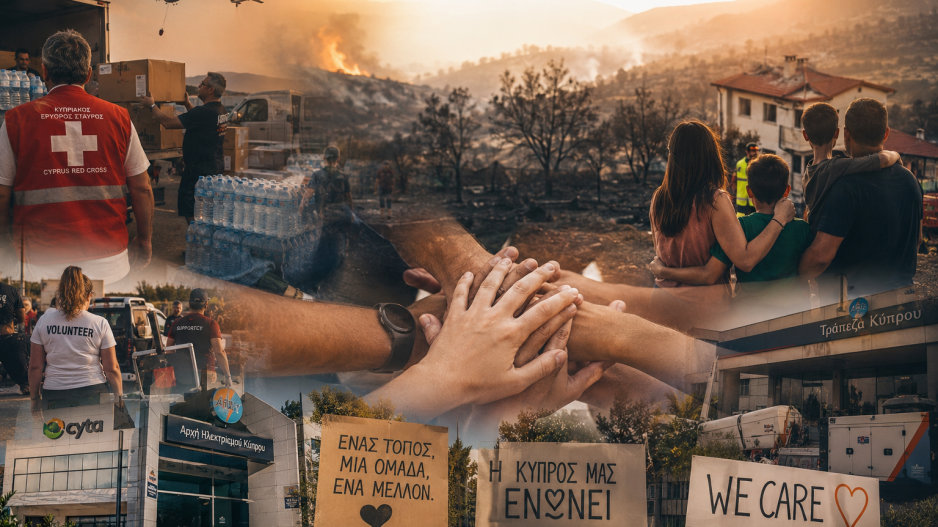
The catastrophic fires of July 2025 in mountainous Limassol caused extensive damage, immediately mobilizing state services and hundreds of volunteers.
-
The private sector acted in a complementary role, immediately utilizing its infrastructure to provide food, essential supplies, and temporary shelter to those affected.
-
The Cyprus Red Cross assumed the coordination of humanitarian aid, while energy and telecommunications companies proceeded with the rapid restoration of critical infrastructure.
-
Banks and insurance companies offered financial relief through loan suspensions, interest-free financing, and the acceleration of compensation procedures for households and businesses.
-
The transition to reconstruction was supported by multi-year programs worth millions of euros and the collective mobilization of the technology ecosystem through the organization TechIsland.
The fire had already left behind its heaviest footprint when July 24, 2025, dawned. In mountainous Limassol, smoke continued to rise over the slopes, while the last flare-ups kept firefighters and volunteers on constant alert. Where until the previous day there were vineyards, orchards, olive groves, and yards full of life, there now stretched a landscape that seemed to have lost all color. Burned homes, destroyed crops, vehicles deformed by the heat, and people returning to their properties for the first time, knowing that nothing would ever be as before.
The disaster was not measured only in burned acres or millions of euros in damage. It was measured in the small, everyday questions that every major crisis generates. Where will a family that lost its home sleep tonight? How will an elderly person who hurriedly left the village find their medicine? When will electricity be restored? How will a producer communicate with their people when telecommunications remain problematic? How does a local society continue to function when, within a few hours, it loses part of its productive tissue?
The answer to these questions could not wait for official recordings or the completion of damage assessments. The needs were immediate and specific. Water. Food. Fuel. Temporary shelter. Medical care. Electrification. Communications. Anything that would allow people to stand on their feet until the difficult journey of restoration began.
As happens in every major natural disaster, the burden of the first response was carried by state services. The Fire Service, Civil Defense, National Guard, Police, local authorities, and hundreds of volunteers continued to operate ceaselessly, even when the major fronts had been contained. At the same time, however, a second, less visible but equally critical operation began to take shape. It was not organized through operational centers nor carried out by people in firefighter uniforms. It unfolded in warehouses, distribution centers, call centers, workshops, hotels, and corporate offices across Cyprus.
Within a few short hours, businesses of every size began to utilize what they knew best: organizing people, networks, and infrastructure. Those with warehouses opened them to immediately dispatch food and essential supplies. Those with vehicle fleets used them to transport humanitarian aid. Hotel businesses provided rooms to families that had lost their homes. Energy and telecommunications companies mobilized personnel to restore critical infrastructure. Banks and insurers prepared relief measures, knowing that the financial ordeal of residents would continue long after the fire was extinguished.
None of these moves, on their own, could change the picture of destruction. Together, however, they formed a support mechanism that operated almost simultaneously with state services. It was not the product of central planning. It was the result of dozens of initiatives born almost spontaneously, having as a common denominator the need to get help as quickly as possible to the people who needed it.
This mobilization exceeded the narrow boundaries of corporate social responsibility. Most businesses did not limit themselves to providing a sum of money or a symbolic statement of support. They put their very operational capabilities at the service of society: their supply chain, personnel, vehicles, facilities, information systems, and partnerships developed over years. In other words, they leveraged their core advantage, namely, the ability to operate in an organized and rapid manner even under conditions of extreme pressure.
The picture that emerged in the first days after the fire is rarely seen in the country's recent history. It was not just the amount of donations that would be announced later, nor the number of participating companies. It was the fact that nearly every sector of the Cypriot economy found a way to contribute. From retail trade and energy to telecommunications, the banking sector, the insurance market, tourism, pharmaceuticals, and technology, the response was not limited to a few large organizations. It acquired characteristics of a broader collective mobilization.
This is perhaps the most important conclusion emerging one year later from documenting all these initiatives. The business world did not attempt to substitute for the state. It operated complementarily to it. Where public services fought the battle of civil protection, businesses utilized their flexibility, organization, and operational experience to meet constantly shifting needs. This partnership proved decisive for the first phase of crisis management and created a model of cooperation that went far beyond the usual understanding of corporate contribution.
The Frontline of Solidarity

The humanitarian response began even before the damage assessment was completed. On the frontlines were businesses whose daily activities are connected to food supply, supply chains, and direct customer service. Within hours, the very infrastructure serving commercial operations was converted into a support network for affected communities.
Alphamega Hypermarkets immediately activated their store in Trimiklini, which served as a point of service for firefighters, volunteers, and local residents. In cooperation with the Cyprus Red Cross, more than 400 meals, bottled water, fruit, and basic essentials were distributed. A few days later, the company announced the provision of gift vouchers worth €1,000 to every family that lost its primary residence, while management's presence in the affected communities underlined that support was not limited to a financial contribution.
Lidl Cyprus moved along the same front, providing large quantities of bottled water, food, and personal hygiene products through the Cyprus Red Cross. It was an intervention that highlighted the importance of an organized supply chain in emergency conditions, when the speed of distribution proves just as vital as the offer itself.
A central role in coordinating this effort was played by the Cyprus Red Cross. Beyond its own operational actions in the affected areas, it managed much of the humanitarian aid arriving from businesses and organizations. More than twenty-five suppliers and partner companies remained on constant standby, ensuring that the flow of essential goods would not be interrupted for the duration of the crisis. It was a less publicized but entirely critical dimension of the overall mobilization, as it prevented the fragmentation of offers and allowed for the more effective coverage of real needs.
Efforts at the fire fronts required, at the same time, continuous support for firefighting operations. Petrolina provided free fuel for aerial and ground units participating in the operations, while also supporting the volunteer teams SupportCY and KitasWeather, which actively participated in support and information actions. Interventions like these rarely occupy headlines while a crisis unfolds. Without them, however, operational continuity would have been much harder to maintain.
The first days after the fire proved that solidarity is not expressed only through large donations. It is expressed, primarily, through a society's ability to quickly mobilize the people, structures, and means at its disposal. The real test, however, was just beginning. Because when the last flames died down, the affected communities would need more than food and water. They would need electricity, communications, financial support, temporary shelter, and, above all, the prospect that life could begin again.
The Network That Kept Help Alive

In every major natural disaster, there is a side that rarely makes front-page news. It is not found at the fiery fronts, nor is it captured in TV crew images. It is the quiet operation unfolding away from view, where essential supplies are collected, sorted, and distributed. It is the work that begins when the cameras turn off and continues as long as there are people who still need help.
This role was undertaken by the Cyprus Red Cross. From the very first hours after the disaster, its facilities were transformed into a coordination center for a complex operation through which thousands of products, dozens of offers, and hundreds of requests from affected communities had to pass.
The picture differed significantly from the one that often accompanies spontaneous solidarity campaigns. It was not an uncontrolled accumulation of products, but an organized process of recording, prioritizing, and distributing, so that every offer reached where there was real need.
The contribution of businesses was decisive. More than twenty-five suppliers and partner companies remained on constant standby, daily replenishing stocks of food, bottled water, infant items, personal hygiene products, and other basic necessities. This cooperation allowed the Red Cross to maintain an uninterrupted flow of humanitarian aid even as needs shifted from day to day.
In those hours, the greatest value was not just the quantity of offers. It was the ability to convert good intentions into effective aid. In a crisis of such magnitude, coordination proves just as important as the contribution itself.
Keeping Everyday Life Standing
As firefighting forces completed their difficult task, a different challenge began to occupy the affected communities. Survival on day one was secured. The objective now was a return, even gradually, to elementary normalcy.
For families who had lost their homes, the words "everyday life" took on a different meaning. It meant a bed to sleep in. A working phone. Electricity. Access to banking services. A space where children would feel safe again. Restoration was not yet a matter of rebuilding; it was a matter of dignity.
The hotel sector responded almost immediately. PASYXE coordinated the provision of rooms to fire victims, utilizing its network of member hotel units. The Imperio Group opened residences at Sunset Gardens for families in need of temporary housing, while the Hygeia Group offered not only accommodation and meals but also access to health services for those who required it.
These initiatives held a special significance. They gave people time: time to organize their next steps without the anxiety of daily survival, time to begin thinking about tomorrow.
Power, Communications, and a Roof

Infrastructure damage served as a daily reminder that a natural disaster does not end when the last flame is extinguished. Restoring the electrical grid and telecommunications was a prerequisite for communities to function again.
Crews from the Electricity Authority of Cyprus (EAC) worked tirelessly to restore power to affected areas, often under difficult conditions and in locations with limited access. Concurrently, EAC announced special support measures, subsidizing up to €500 on the latest electricity bill of fire victims and suspending power disconnections where necessary.
Similarly, Cyta focused on maintaining communication. Affected subscribers received free mobile and landline telephony, internet, and Cytavision services for the entire month of August—an initiative that facilitated thousands of people in contacting relatives, state services, insurance companies, and employers during a period when every phone call carried special importance.
Almost simultaneously, the financial sector began preparing its own response. The destruction had left behind not only burned homes and crops; it had also created a new financial reality for hundreds of families and small businesses, who knew that very soon they would have to face loan installments, insurance obligations, and operational expenses without having the income they possessed until a few days prior.
The next phase of business mobilization would no longer be limited to covering immediate needs. It would move to supporting the economic survival of fire victims and, subsequently, to financing the reconstruction of the hardest-hit areas.
Financial Relief for Households and Businesses
The true extent of a natural disaster is usually revealed when the first bills start arriving. The flames had been put out, but their economic consequences were just making their appearance: crops completely lost, small family businesses that ceased operating, professionals without income, and households that, in addition to the shock of destruction, had to manage their financial obligations.
It was the moment when business mobilization transitioned from humanitarian aid to financial support.
The Association of Cyprus Banks announced a series of relief measures for individuals and businesses affected by the fires, calling on credit institutions to review every case with flexibility. The suspension of loan obligations and customized arrangements gave valuable time to people who, within hours, had lost homes, commercial spaces, or their production.
Bank of Cyprus went a step further, providing interest-free financing up to €5,000 to cover urgent needs of fire victims. Concurrently, through the SupportCY initiative, it continued participating in the broader coordination of support actions, leveraging the network of partnerships it had developed during previous crises.
Alpha Bank Cyprus mobilized employees and clients to collect essential supplies, reinforcing the efforts of the Cyprus Red Cross and organized bodies present daily in affected areas.
Equally important was the response of the insurance market. Companies immediately activated rapid damage assessment mechanisms, reinforcing loss-adjuster teams and accelerating claim settlement procedures so that policyholders could begin property restoration without long delays.
Genikes Insurance, beyond managing claims, announced a donation of specialized operational equipment to SupportCY, strengthening the volunteer group's capabilities in future civil protection operations.
The financial sector's response was not limited to numbers and economic tools. It gave time to people who could not predict when their business would reopen, when their field would yield again, or when they would have a proper home once more.
When Aid Became a Plan
The first days after the fire were characterized by speed. The weeks that followed were characterized by planning.
As the damage assessment was being completed, it became clear that restoration could not rely exclusively on state compensation or piecemeal donations. The rebirth of fire-stricken areas required a different approach: multi-year commitments, infrastructure projects, and investments that would help communities regain development prospects.
The discussion gradually shifted from relief to reconstruction. It was no longer only about how to address the consequences of the disaster, but how to create better conditions for the future.
In this new environment, businesses began announcing initiatives that went far beyond the traditional concept of corporate social responsibility. Financial support was linked to specific projects, interventions in local communities, and actions aimed at strengthening resilience against natural disasters.
Announcements following in the subsequent months demonstrated that the mobilization of the business world was not a momentary reaction to the shock of the fire. It had acquired duration, specific planning, and a long-term orientation.
The Major Donations of the Next Day
The largest private initiative came from the XM Group, which announced a program totaling €5 million to support the reconstruction of fire-stricken areas. This specific commitment represented the largest corporate donation recorded after the fires and was designed as a multi-year program, with projects implemented in cooperation with local communities and competent authorities. Already by September 2025, more than €1.5 million had been allocated, marking the start of the program's implementation.
A few weeks later, the Coca-Cola HBC Cyprus Foundation announced a €1 million program aimed at supporting the restoration and sustainable development of affected areas. This initiative supplemented the immediate aid the company had provided from the first hours of the crisis, distributing more than 3,000 liters of bottled water to firefighters, volunteers, and residents of affected villages.
Significant financial contributions were also announced by ExxonMobil Cyprus, Rostro Group, and GDEV, with donations of €100,000 each. GDEV, beyond its financial contribution, developed an AI tool via Telegram for better information and service delivery to citizens during the crisis.
Joining this wave of contributions were Remedica, with a €75,000 donation to the Fire Victims Support Fund, and Capital.com, which provided €50,000 through the Cyprus Red Cross to cover urgent needs.
What stood out was no longer just the amount of donations. It was the fact that a large portion of the initiatives was designed over a multi-year horizon rather than weeks, recognizing that the true restoration of such a major disaster cannot be completed within a single period of solidarity.
The final chapter of this story would be written through another initiative with special symbolism. For the first time, nearly the entire Cypriot technology ecosystem would mobilize collectively, proving that even a sector developing primarily in the digital world can play a essential role in the rebirth of local communities.
Technology at the Service of Rebirth

If there was one initiative that stood out because it was not limited to a single company but expressed an entire sector of the economy, it was the mobilization of TechIsland.
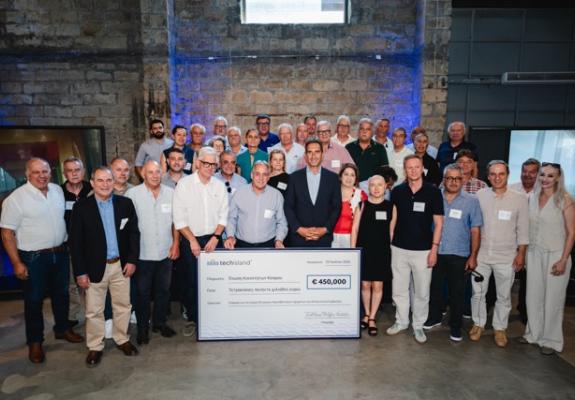
The organization, which represents Cyprus's tech ecosystem, undertook the coordination of a collective effort involving more than fifty tech companies. Among them were internationally recognized businesses such as Wargaming, Exness, payabl., SOFTSWISS, Muse Group, Sumsub, Aleph, Mayflower, AdTech Holding, RoboMarkets, and many more, which chose to operate as a unified network rather than individual donors.
The significance of this specific initiative lay not only in the financial resources mobilized. Interest was directed primarily toward creating a long-term support framework, with an emphasis on community resilience against natural disasters, the utilization of technology for crisis prevention and management, and the enhancement of projects that would leave a permanent footprint on affected areas.
It was a different form of corporate engagement. It was not limited to restoring what was lost, but sought to answer the question of how Cyprus will be better prepared when faced with the next major test.
This approach reflects a broader shift in the way many businesses now perceive their social responsibility. Philanthropy remains important, but it is increasingly supplemented by investments in infrastructure, know-how, innovation, and prevention—in other words, initiatives seeking to reduce the cost of the next crisis before it even unfolds.
The Partnership That Left a Legacy
One year after the fires, most burned homes have not yet been rebuilt, many crops will require years to recover, and nature continues to heal its wounds. What has already been recorded, however, is the experience of an unprecedented collaboration.
The response of the business world was not uniform. Each company contributed differently, depending on its capabilities, infrastructure, and expertise. Some provided food, others fuel, others rooms, others telecommunications services, others financial support or technological solutions. The result, however, was greater than the sum of individual initiatives.
For the first time after a natural disaster of such scale, a broad network of cooperation was formed between the state, Local Government, the Cyprus Red Cross, organized volunteers, charitable organizations, and businesses from almost every sector of the economy.
This experience holds special significance for another reason. Scientists warn that climate change is increasing both the frequency and intensity of extreme weather events in the Mediterranean. Major fires are no longer a rare event, but a risk that societies are called to integrate into their planning.
This means that resilience will not be judged solely by the number of firefighting aircraft or ground forces. It will also be judged by how effectively public institutions, local communities, volunteer organizations, and the private sector can collaborate when conditions demand it.
Beyond Donations
The investigation into the initiatives following the deadly fire of July 23, 2025, leads to a conclusion that transcends the financial figures.
Businesses did not replace the state. They could not, nor was that their role. The primary and decisive responsibility for addressing the crisis lay with civil protection forces, state services, local authorities, and the hundreds of professionals and volunteers on the front lines of the battle with the flames.
What the Cypriot economy demonstrated was something different: that when cooperation mechanisms are activated promptly, the private sector can act as a multiplier of collective effort. It can deploy speed, infrastructure, human resources, organizational experience, and capital where needs shift from hour to hour.
From the first pallets of bottled water arriving in villages to multi-year reconstruction programs worth millions of euros, the trajectory of business mobilization reflects a development that is hard to ignore.
Based on available data, this represents likely the largest and most coordinated mobilization of the Cypriot business world following a natural disaster since the founding of the Republic of Cyprus. Neither the 2013 financial crisis nor the pandemic created quite the same model of cooperation, as those challenges possessed a different character and time horizon. The 2025 fires required an immediate operational response, the simultaneous mobilization of multiple economic sectors, and a commitment to multi-year reconstruction.
The ashes left behind by the fire did not disappear in a few weeks. Upon them, however, something was built that may prove just as important as the physical reconstruction itself: the conviction that when a society is tested, public-private sector cooperation is not merely an act of solidarity. It is a prerequisite for resilience on the day after.
INFOBOX
Corporate Mobilization at a Glance
-
Immediate humanitarian aid: food, water, basic necessities, and fuel.
-
Temporary accommodation: hotels, residences, and health services for fire-affected families.
-
Infrastructure restoration: electrification, telecommunications, and technical support.
-
Financial relief: banking accommodations, insurance settlements, and emergency financing.
-
Major donations: multi-year reconstruction programs and community support.
-
Technology and prevention: joint actions by the TechIsland ecosystem to strengthen resilience against natural disasters.
Key Corporate Initiatives
-
XM: €5M reconstruction program.
-
Coca-Cola HBC Cyprus Foundation: €1M program and immediate bottled water supply.
-
ALPHAMEGA: food supply, essentials, and €1,000 gift vouchers for families losing primary homes.
-
Petrolina: free fuel for firefighting operations and support for SupportCY and KitasWeather.
-
EAC: grid restoration, subsidies up to €500, and suspension of disconnections.
-
Cyta: free communication services for affected individuals.
-
TechIsland: joint mobilization of more than 50 technology companies for reconstruction and resilience projects.