ATA Dispute Settled, Unions Now Eye Expansion of Collective Agreements
Phased return to 100%, GDP growth condition and minimum-wage link win social partner backing.

After nearly nine months of acrimony over the Automatic Cost-of-Living Allowance (ATA), Cyprus’ social partners have accepted the Cyprus ATA agreement proposed by the government, closing a dispute that threatened labour peace across the economy. Employer and union leaders signed an in-principle accord, which they now move to ratify through their internal bodies.
As Brief writes, the government frames the accord as a “permanent solution” that restores the ATA to 100% on a phased schedule, links it to the national minimum wage, installs guardrails to protect macroeconomic stability, and paves the way—via incentives and social-partner dialogue—for wider coverage.
Under the framework accepted by SEK, PEO, DEOK, PASYDY, and the employer federations OEB and CCCI, in the presence of the Labour and Finance Ministers, the Cyprus ATA agreement provides for:
-
Full restoration of ATA to 100% of the annual CPI change, in stages: 80% in January 2026, 90% in July 2026, and 100% from July 2027 onward (calculated each July).
-
Activation trigger: ATA applies only if real GDP growth in the previous year is positive.
-
Inflation safeguard: For ATA calculations, the inflation rate is capped at 4% per year.
-
Risk oversight: The Labour Minister, in consultation with the Finance Minister or upon proposal by the parties, may convene an expanded Labour Advisory Body to reassess emerging macroeconomic risks.
-
Extension pathway: The government will pursue policies and incentives—in concert with social partners—to expand ATA coverage to more workers.
President Christodoulides stressed that the government “inherited ATA at 50%” and now delivers “a permanent agreement that fully restores ATA to 100% within 18 months, links it to the minimum wage, and introduces safeguards on growth and inflation.” He called it a balanced, sustainable outcome that protects social cohesion.

Union leaders welcomed permanence and the path to full restoration, while keeping the pressure on for broader coverage:
-
Sotiroula Charalambous (PEO) said the deal is “important because it is permanent and leads to the full rendering of ATA,” while vowing to continue the push for “ATA for all”, including annual ATA application to the national minimum wage (not every two years) and leveraging the recent EU Court ruling on collective agreements.
-
Andreas Matsas (SEK) called it a “renewed appointment” to extend collective agreements, arguing the now-stabilised ATA sets the base to cover all workers. He noted the mechanism benefits roughly 100,000 private-sector employees and 75,000 in the broader public and local government—and by linking ATA to the minimum wage, a further ~55,000 low-paid workers stand to gain.
-
Stelios Christodoulou (DEOK) called ATA a “bulwark” for workers and pressed for maximum coverage; Stratis Matthaiou (PASYDY) said union goals are largely met, welcoming a permanent deal that gradually returns ATA to 100%.
From the employer side, OEB President George Pantelides described a compromise “with no winners or losers,” one that looks forward and prioritises investment in human capital. He thanked the President for the decisive intervention and praised closer OEB–CCCI cooperation. Former CCCI chief Christodoulos Angastiniotis called the negotiations “long and arduous,” culminating in an agreement that safeguards industrial peace.
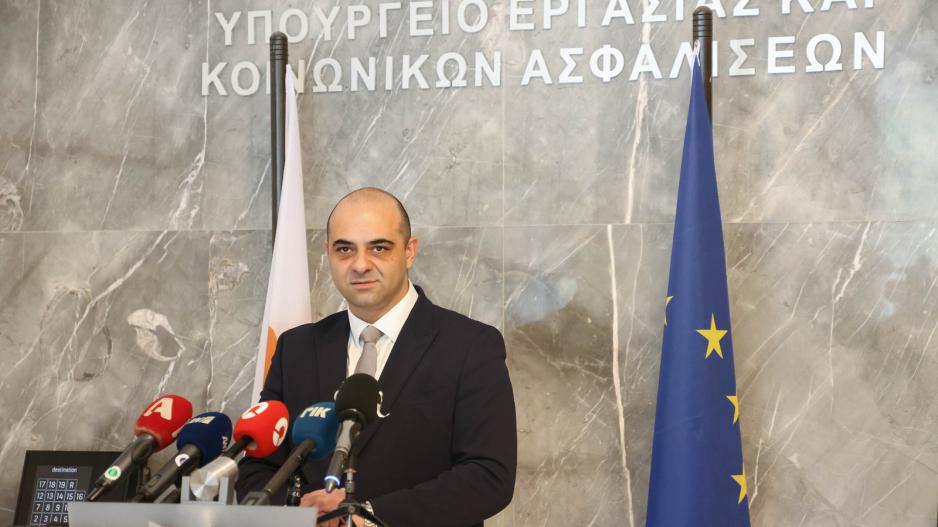
The accord ends years of uncertainty around ATA’s status—what Labour Minister Yiannis Panayiotou termed “a return to stability after 15 years of fluidity.” He said beneficiaries in the private sector rise significantly under the deal and set a government goal: by 2028, wage adequacy should be tangibly felt in people’s daily lives.
For now, the Cyprus ATA agreement restores predictability to wage indexation, anchors expectations with a growth trigger and a 4% inflation cap, and plants markers for future extension through collective bargaining and targeted incentives.
Unions, meanwhile, have made clear their next battleground: expanding coverage—especially where ATA is not yet applied—and tightening its link to the minimum wage.