CERA on GSI: If Costs Rise, Viability Is in Doubt
Parliament briefed on interconnection risks, market challenges and gas-sector delays.
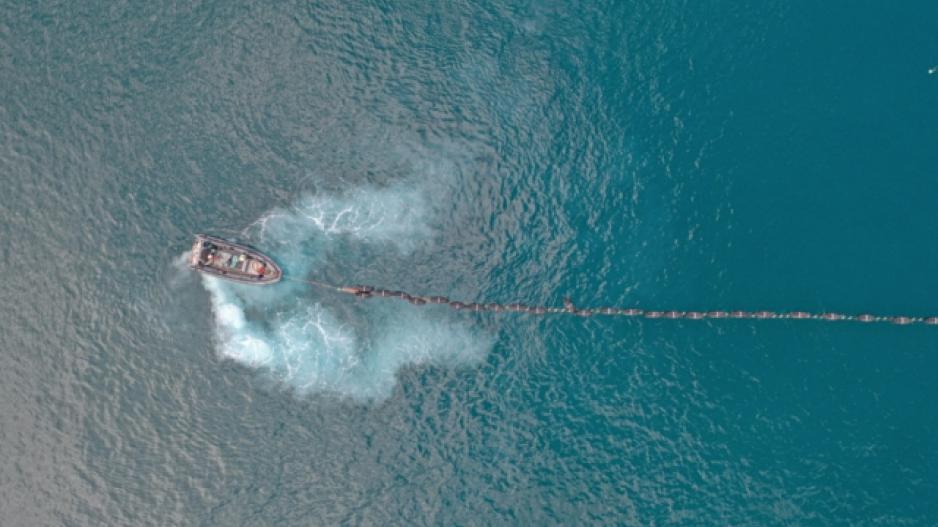
The ongoing deficit in CERA’s budget, along with uncertainty surrounding the final cost and viability of the Cyprus–Greece electricity interconnection project, came to the forefront during the Parliamentary Finance Committee’s discussion on the Cyprus Energy Regulatory Authority’s budget.
CERA President Polivios Lemonaris stated that the Authority’s 2026 budget is in deficit for the sixth consecutive year. Revenue is projected at €3.1 million and expenditure at €5.9 million, leaving a €2.8 million shortfall to be covered by existing reserves, which are expected to drop to €2.2 million by the end of 2026.
Annual fees paid by license holders account for 87% of the Authority’s income, while nearly half of its expenditure (48%) goes to staff remuneration. CERA has already submitted a revised fees list to secure balanced budgets in future years and is awaiting approval from the competent Ministry.
In his remarks on the GSI, CERA Vice President Alkis Philippou explained that projects included in the EU list of Projects of Common Interest receive European funding precisely because they are not financially viable at the initial stages. After the grant, he said, the specific project—estimated at €1.9 billion—is considered viable. However, he noted that if costs increase, its long-term viability cannot be guaranteed.
The CERA President also said that several issues remain unresolved, including the final cost of substations, while seabed studies and cable laying—still pending due to known obstacles—may reveal the need for an additional cable, which would impact overall costs.
AKEL MP Andreas Kavkalias requested clarifications on the viability of the interconnection, both for public finances and consumers.
Lemonaris added that ADMIE has not indicated any change to the project’s completion target of 31 December 2029. As of the latest update on 19 September, 200 km of cable have been produced and a further 81 km are under construction, while production of deep-sea cable segments is also progressing. A new progress report is expected.
He clarified that CERA continues to operate within European regulations and has received no information suggesting suspension or termination of the project.
“The project remains on the EU list of Projects of Common Interest with European support,” he said. He also noted that two approvals are pending on CERA’s side: the contract between ADMIE and the GSI company, and ADMIE’s operational expenditure for 2024–2025. He added that they remain in constant communication with ADMIE to coordinate decisions.
Responding to questions from DISY MP Onoufrios Koullas regarding market liberalization, the CERA President said that the first two months of the competitive model (since 1 October) are too early for firm conclusions.
Currently, two producers, eleven suppliers, nine aggregators and three RES producers are active. Wholesale prices, he noted, remain at similar levels to the previous transitional model, while retail trends will require more time to assess. CERA expects market forces to push prices downward once the new system stabilizes.
Lemonaris also reminded that Cyprus’ energy system exhibits significant seasonal imbalance, with energy supply exceeding demand by 500–600 MW daily for roughly six months, leading to RES curtailments.
On capacity adequacy, CERA warned that Cyprus will face long-term adequacy issues from 2029 if both the natural gas project and the electricity interconnection are not implemented on time.
The system currently includes 169.5 MW of wind energy, 420 MW of photovoltaic parks, 12 MW of biomass, 572 MW of self-consumption PV and 1,482 MW of conventional generation. Despite 40 storage licences issued (totalling 990 MW) and 547 hybrid system licences, no such project has yet been implemented. CERA has already licensed the operator for three central storage systems of 40 MW.
Regarding natural gas, the CERA President stated that “the regulatory framework has been completed following the decision on DEFΑ’s operational unbundling,” adding that the Authority has already issued three licences to DEFA. He reminded that ETYFA does not fall under CERA’s authority and is supervised by other bodies.
CERA is awaiting the critical gap analysis study from the natural gas project operator, which will determine whether discrepancies exist between infrastructure and technical specifications. In the meantime, under its supervisory powers, the Authority has imposed administrative fines totalling €450,000 up to September for delays in processes stipulated under DEFA’s licence. These fines, he noted, are paid to the Ministry of Finance, not to CERA.