Chevron’s Entry into 'Block 10' Touches Upon Cyprus Too
With the acquisition of 70% of the Greek field in the Ionian Sea, the company consolidates its portfolio in the Eastern Mediterranean
A development of decisive importance for the energy map of the Eastern Mediterranean is recorded with the official submission of a request by the American company Chevron and HELLENiQ ENERGY for the participation of the American giant with a 70% stake (as Operator) in the "Area 10" (Block 10) concession in the Kyparissiakos Gulf, as revealed by a report from Energypress.
This move, which comes to add to Chevron's strong presence in the blocks south of Crete and the Peloponnese, is not a piece of news that concerns only Greece's fields. According to sources from the Ministry of Energy of Cyprus, it is directly, strategically, and operationally linked to Cyprus, creating new balances in the wider region.
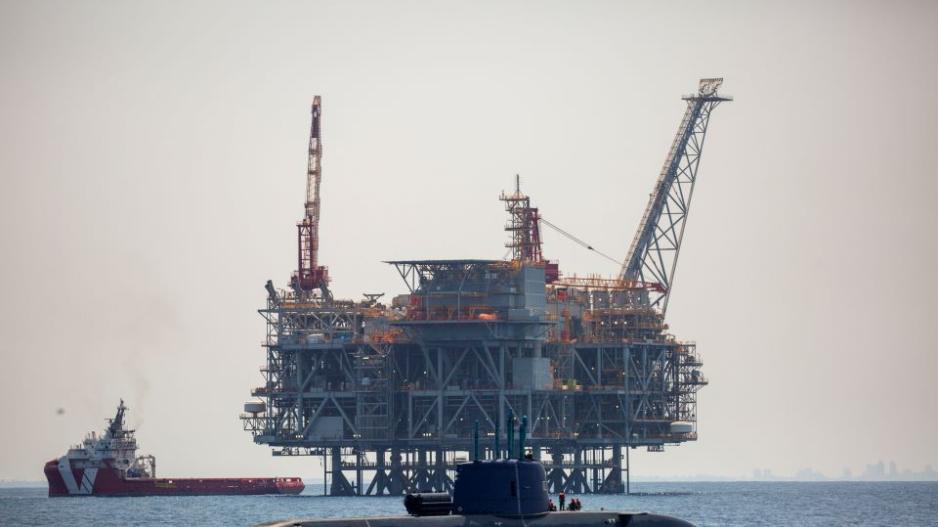
The connection of this development with Cyprus is rooted in the broader regional strategy of American Big Oil. Chevron is no stranger to the Cypriot Exclusive Economic Zone (EEZ). On the contrary, it acts as the operator of the iconic "Aphrodite" field in Cyprus's Block 12, while maintaining a strong interest in the wider geological structures of the Levant.
With the acquisition of 70% of Block 10 in the Ionian Sea, Chevron consolidates its portfolio in the Eastern Mediterranean. The decisions of major oil groups, as analysts point out, are not taken in isolation but with a view toward the overall management of their regional resources. The expertise that Chevron has acquired from deep-water drilling in Cyprus and Israel is transferred intact to Greek waters, allowing the company to function as a connecting link in a single energy corridor that starts from the Ionian Sea, passes through Crete, and concludes in Cyprus.
According to the report by Energypress, the Hellenic Hydrocarbons and Energy Resources Management Company (HEREMA) is already examining a request for an 18-month extension of the second exploration phase in Block 10, so that data from three-dimensional (3D) seismic surveys can be evaluated.
It is worth noting that oil giants use simulation models and geological data from neighboring "basins" to reduce the risk of costly drillings. Chevron's experience from the carbonate systems and structures of the Cypriot EEZ will serve as a "compass" for studying the structures of the Kyparissiakos Gulf, accelerating the processes toward the final investment decision (FID) for drilling.
On a geopolitical level, Chevron's vote of confidence in Greece, at a time when other players (such as ExxonMobil in Crete) are also rearranging their forces, strengthens the Athens–Nicosia axis. The presence of the American factor both west of Greece and east of Cyprus creates a web of security and stability.
Washington, through Chevron, seals its commitment to establishing the Eastern Mediterranean as an alternative source of energy supply for Europe, reducing dependence on traditional suppliers.
Chevron's entry into Block 10 constitutes the next piece of a large energy puzzle in which Cyprus plays a central role. Nicosia sees one of its strategic partners penetrating deeper into Greece, a move that favors future synergies for shared natural gas transport infrastructure to the European market.