The Labour Agenda Heats Up Over Minimum Wage and Pension Reform
National Minimum Wage and pension reform dominate the first meetings with social partners.
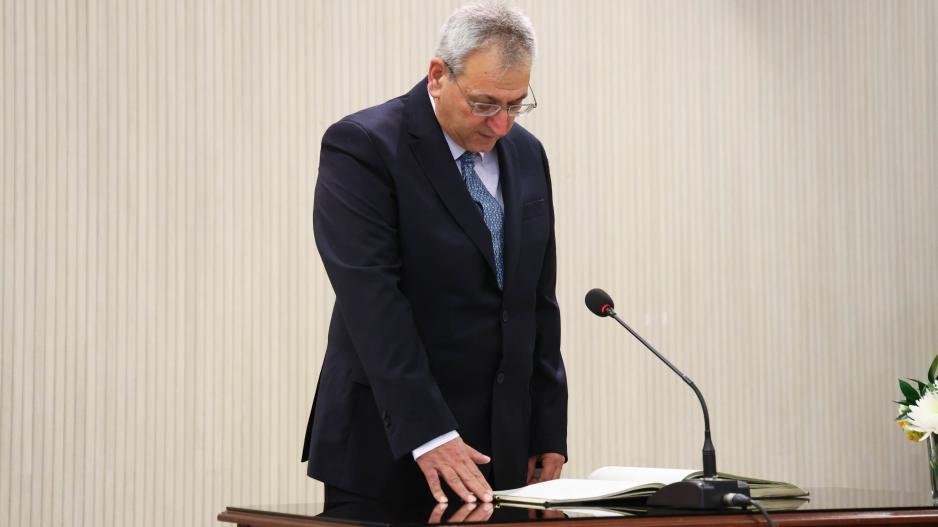
The first meetings scheduled for today and next Wednesday between Marinos Mousiouttas, the new Minister of Labour and Social Insurance, and the two social partners—employers and trade unions—will not be ceremonial, as is usually the case.
The parties are already well acquainted. Both employer organisations and trade unions have worked with Mr Mousiouttas in various capacities: as a senior official at the Ministry of Labour, Secretary of the Nicosia Municipality, senior member of DIKO and later DIPA, and, until recently, as a Member of Parliament and member of the Parliamentary Committee on Labour.
Time is pressing for all members of the tripartite cooperation. Before the end of the year, a decree must be issued on the revision of the National Minimum Wage (NMW). At the same time, Mr Mousiouttas must convene the Labour Advisory Board before submitting his proposal on the NMW to the Council of Ministers.
Immediately afterwards, the major issue of pension reform must move forward.
As he told Brief, the complexity of the issue and the many parameters involved “do not allow for rushed solutions.”
According to Mr Mousiouttas, pension reform will take concrete shape during 2026, a timeline supported by the other two social partners.
Today at 09:00, he meets the leadership of SEK, followed at 10:00 by PEO. On Wednesday, he will meet the leaderships of OEB, CCCI, and DEOK.
It is inevitable that the National Minimum Wage will be at the centre of these initial meetings.
Mr Mousiouttas will already have the report of the National Minimum Wage Review Committee, based on proposals submitted by employers and trade unions.
The nine-member committee includes representatives of the two employer organisations, the three trade unions—SEK, PEO, and DEOK—and two independent members. It is chaired by academic Andreas Charitou.

In their written submissions, the trade unions propose that the National Minimum Wage be calculated using international statistical practices.
They suggest it be set between 58% and 60% of the national median wage, based mainly on final 2024 data and 2025 projections. The final amount should be determined separately and in addition to the Cost of Living Allowance (COLA).
The trade union movement will also press for linking the NMW to hourly pay based on weekly working hours. It argues that a meaningful increase, combined with linkage to inflation and hourly pay, “will enhance workers’ earnings and help reduce poverty.”
As revealed previously, trade unions are seeking an increase from the current €1,000 to between €1,150 and €1,170.
>>Minimum Wage Debate Intensifies as Unions Seek €1,150–€1,170<<
Trade unions are expected to strongly emphasise the protection of free collective bargaining and measures to curb what they describe as the deregulation of labour relations.
They will also request that discussions on pension reform resume early in the new year.
According to commentary in Ergatiki Foni and Ergatiko Vima, they will call on the Minister to initiate social dialogue on implementing the EU Directive to extend collective agreements in the private sector.
Key pension issues—the Social Insurance Fund as the primary pillar and Provident Funds as the second pillar—are also expected to feature prominently.
Trade unions will further raise concerns over what they describe as an “ad hoc” policy on employing workers from third countries and will seek revisions to provisions of the Employment Strategy.

Employer organisations will stress that any revision of the National Minimum Wage must also take into account the difficulties faced by hundreds of businesses operating at the margins.
OEB and CCCI have publicly stated that they accept an upward revision of the NMW. However, they insist that any increase must be “reasonable and not prohibitive for business.”
They argue that raising the NMW to €1,150 or €1,170, as proposed by trade unions, would be “unrealistic” and would harm the competitiveness of businesses and the wider economy.
Employers have submitted to the Review Committee a formula based on 4 macroeconomic indicators: economic growth, productivity growth, inflation affecting the cost of living and purchasing power, and unemployment trends. These reflect the framework of the 2022 decree.
They maintain that the national median wage is not among the indicators provided for in the decree for determining the NMW.
On pension reform, employer organisations argue that sustainable changes are needed to address demographic challenges. They support measures to secure long-term funding, including raising the retirement age and encouraging voluntary supplementary schemes such as private pension funds.
They also call for a balance between benefits and contributions to avoid excessive burdens on businesses and workers, while preserving economic competitiveness.
Finally, employers will propose greater flexibility within the Employment Strategy, particularly in assessing applications from businesses seeking to employ workers from third countries.