Cyprus to Sign Key Natural Gas Agreement with ENI and Total in the Coming Weeks
The new deal on the Cronos field will advance Cyprus’s gas exports to Egypt.
The U.S. interest in achieving zero Russian gas supply to Europe and securing alternative energy sources brings the Eastern Mediterranean back into focus, Cyprus Energy Minister George Papanastasiou told the Cyprus News Agency.
Speaking about the recent revival of the “3+1” format and the discussions held last week in Athens during the 6th Partnership for Transatlantic Energy Cooperation (P-TEC)—organized by the Atlantic Council—Papanastasiou emphasized that the East Med region is now central to Europe’s future energy diversification strategy.
According to the minister, the conference focused on the energy landscape of the Eastern Mediterranean and the development of a vertical gas corridor to supply Northern Europe via an entry point in Alexandroupolis, Greece.
“The main objective is to halt the flow of Russian gas to Europe,” he explained. “Discussions were held, and several agreements were signed that connect the entire supply chain—from the point of entry to the final destination.”
Dialogue also centered on gas fields in the Eastern Mediterranean, particularly in Israel, where officials welcomed the idea of a pipeline linking Israel’s natural gas network with Cyprus.
Papanastasiou said Cyprus highlighted its own gas reserves and the potential for commercial use through the liquefaction of Cypriot gas at Egyptian facilities.
“The overall discussion revolved around the Eastern Mediterranean,” he added. “The primary U.S. interest is to stop any Russian gas flow to Europe and replace it with gas from alternative sources—American LNG and regional gas.”
He explained that Cyprus’s gas fields, along with those of Israel, could provide complementary quantities to fill this energy corridor.
“Essentially, the three countries involved in this gas supply framework—with Alexandroupolis as the entry point—are the United States, Cyprus, and Israel,” the minister said, also noting the significance of recent agreements for drilling in the Ionian Sea.
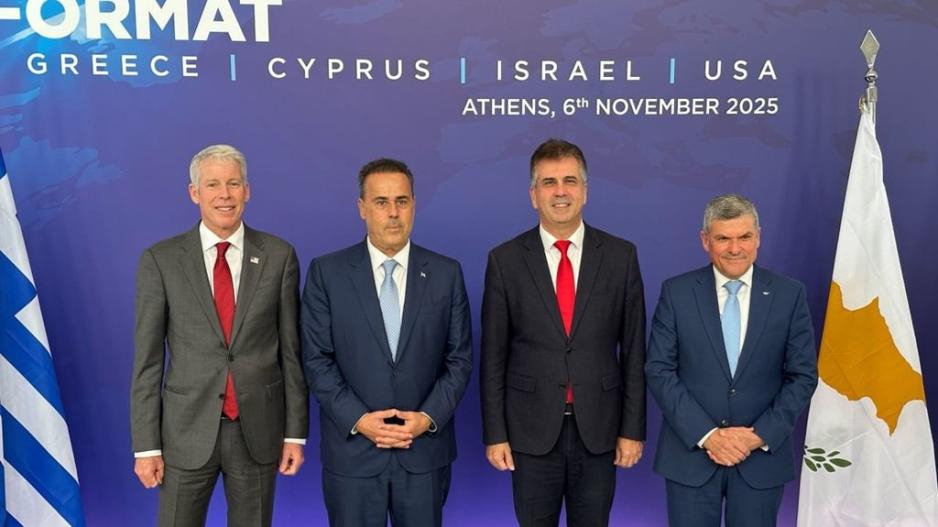
Asked about the 3+1 framework, Papanastasiou underlined the importance of the joint statement issued after the meeting:
“Reading the announcement—and between the lines—it’s clear that several energy projects are being promoted in the region, many of which concern Cyprus and Greece.”
He noted that while not explicitly mentioned, one such project is the Great Sea Interconnector (GSI)—the electricity link between Israel, Cyprus, and Greece—which enjoys the support of all four countries involved in the 3+1 format.
Another proposal discussed was the creation of a regional energy coordination center to oversee, promote, and monitor major energy projects in the Eastern Mediterranean. The minister added that details about its location and structure are still under discussion.
The next 3+1 meeting, he said, is expected to take place in Washington in the second quarter of 2026.
Papanastasiou stressed that Cyprus is already ahead, with confirmed natural gas reserves and active projects such as Aphrodite and Cronos.
“Cronos is already advancing, with commercial agreements signed that outline the transfer of gas from the field to its destination—the Egyptian city of Damietta—for liquefaction,” he said.
He added that technical preparations have begun for the infrastructure connecting Cronos to Egypt’s Zohr field, noting that the project’s proximity to existing infrastructure makes it feasible despite challenges.
“Cronos is a cross-border project with its own difficulties, but the nearby facilities make its development manageable,” Papanastasiou explained. “Cyprus’s gas can realistically be extracted and transported to Damietta for liquefaction.”
The minister said a key commercial agreement between the Cypriot state and buyers ENI and Total is expected to be signed within the coming weeks.
He also referred to the Aphrodite project, for which the development and production plan was signed in February 2025. The company, he said, is implementing its commitments and preparing the techno-economic study, due next year. A final investment decision (FID) is expected by the end of 2026, paving the way for Cypriot gas to reach Egypt’s pipeline network.
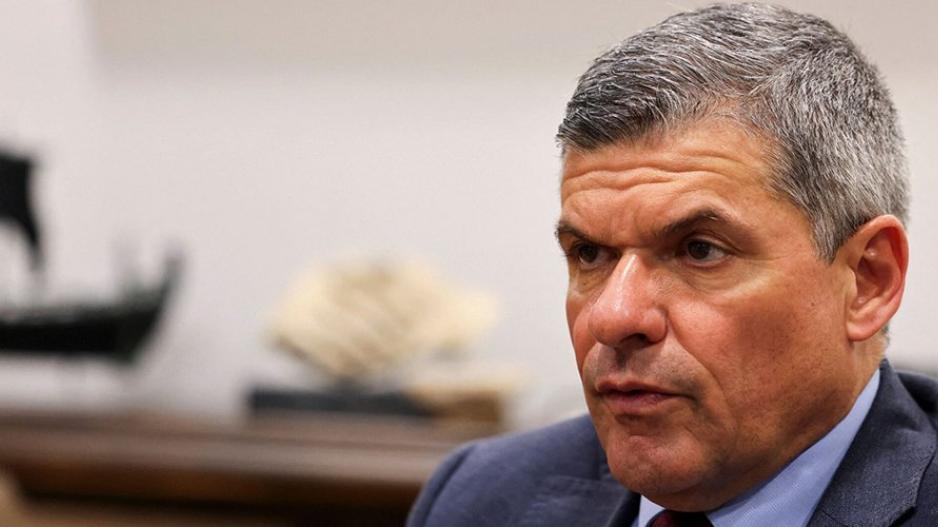
Papanastasiou also commented on remarks by Israel’s Energy Minister, who has publicly supported linking Israel’s gas network with Cyprus to enable bidirectional gas flows between the two countries.
He clarified that these statements were made outside the official conference, during an interview the Israeli minister gave to the Jerusalem Post.
“We discussed these issues within the 3+1 format, but the Israeli minister mentioned them publicly later,” Papanastasiou said.
He also confirmed that Cyprus recently received a letter from an energy company operating in Israel’s Exclusive Economic Zone (EEZ) expressing interest in building a pipeline connecting Israeli gas fields with Cyprus.