Drowning in Aspiration, The High Cost of Cyprus’s Parallel Education Market
August Leisure, Autumn Debt, The Financial Reality of "Free" Schooling for the Squeezed Middle Class
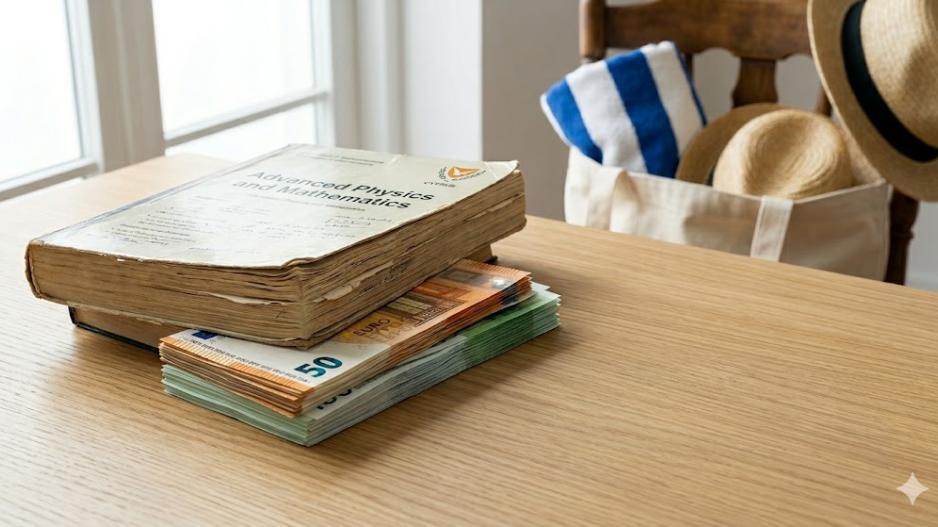
While August looks like a time-lapse of undisturbed Mediterranean leisure, the Cypriot middle class is quietly running a high-stakes financial ledger. Beneath the traditional summer holiday lies the suffocating reality of the autumn curriculum—where "free" public education has transformed into a mandatory parallel economy of afternoon invoices and shadow mortgages. Read the deep dive into the hidden price of aspiration in modern Cyprus.
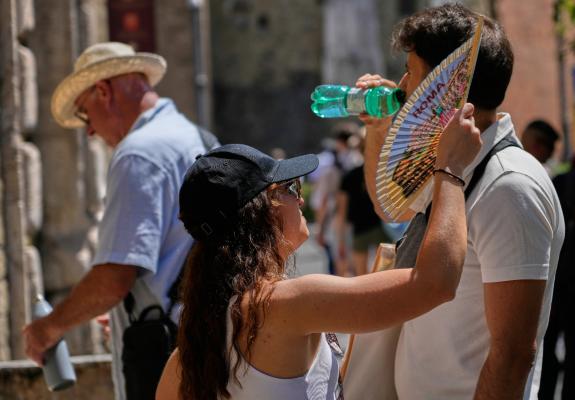
August in Cyprus is traditionally defined by a collective pause, an unspoken cultural mandate to retreat to coastal towns like Protaras or Ayia Napa, shut down operations, and project an image of undisturbed Mediterranean leisure. Yet beneath this carefully maintained surface of seaside family gatherings and iced coffees lies a running financial meter. For most of the Cypriot middle class, the summer break is no longer an entry point to rest; it is the final, tense transition before the academic year forces a deep structural compromise. The core issue is not the luxury of a holiday, but a systemic loop where families must simultaneously absorb peak-season travel costs and advance registration fees for an aggressive autumn curriculum. It exposes the central socio-economic paradox of modern Cyprus: a relentless pressure on households to maintain outward societal expectations at a massive, compounding internal cost.
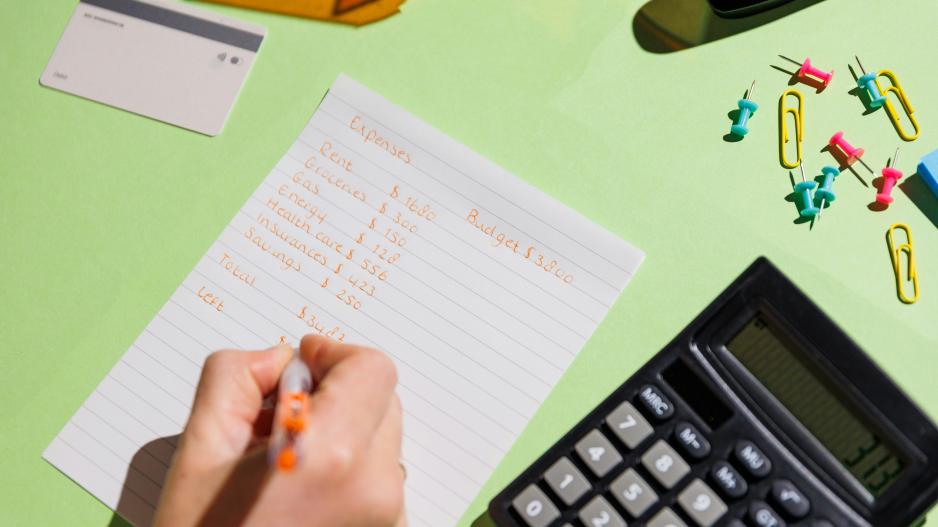
The financial squeeze tightening around middle-class families is driven by a stark bureaucratic trap. Households find themselves earning too much to qualify for state subsidies, student grants, or welfare assistance, yet far too little to comfortably absorb the skyrocketing baseline cost of modern living. While utilities, grocery invoices, and municipal bills escalate against stagnant or slowly moving salaries, the societal expectation to heavily invest in children's development remains completely non-negotiable.
This dynamic transforms free public education into a structural illusion. Because public school curricula are frequently criticized for prioritizing rote learning over advanced analytical skills, the frontisteria (private afternoon institutes) have evolved into a mandatory parallel education system. For a student preparing for competitive Pan-Cyprian Exams or international certifications, individual subject costs range from €70 to €200 per month. When multiplied across mathematics, physics, biology, and languages, the monthly invoice routinely reaches €500 to €800 per child, operating as a shadow mortgage that families must pay for years before university entry even begins.
Compounding this afternoon arms race is the ultimate financial hurdle: the reality of higher education. When students secure placement abroad or move to high-demand local hubs like Limassol or Nicosia, families face immediate, aggressive capital liquidation. The financial footprint of a university degree extends far beyond tuition, swallowing thousands in upfront apartment deposits, inflated rental markets, recurring flights, utility bills, and specialized tech equipment.
Faced with these figures, parents are forced into binary, high-stakes decisions every year. Households are actively sacrificing emergency savings, deferring retirement plans, limiting expenditure on younger siblings, or taking out high-interest personal loans simply to keep their children competitive. Concurrently, the ultimate return on this investment is shifting rapidly; as artificial intelligence, global automation, and oversaturated domestic markets rewrite entry-level industries, families are paying historic premiums for degrees whose career guarantees are eroding in real time.
This environment extracts a heavy psychological toll on both generations. Parents operate under a quiet, exhausting guilt, viewing any financial boundary as a direct limitation on their child’s life path. Students carry an equal weight, understanding that their mock exam percentages directly correlate to the overtime hours their parents work to cover the tutoring bills. While a family may appear comfortable from the outside, owning a home, driving a reliable vehicle, and participating in the mandatory August holiday, internally they are operating in a state of continuous calculation, compromise, and long-term financial postponement.
When access to opportunity becomes fundamentally tied to the capacity to fund a private parallel education and absorb international relocation costs, higher education ceases to function as a social equalizer. It risks becoming an inherited privilege, widening the divide between the wealthy who can comfortably finance the race and the middle class who must break their own financial foundations to stay on the track. As the gap between public school output and market demands continues to widen, society must confront whether it is sustainable to rely so heavily on the private bank accounts of parents. Ultimately, behind every carefully planned summer trip or calculated household expense is a broader systemic crisis: the middle class is carrying the rising cost of hope alone, funding a future that no longer comes with guarantees.