Eastern Mediterranean: What the 5×5 Initiative Is and What It Means for Cyprus
Greece’s proposal for a five-state dialogue tests whether old disputes can give way to structured regional diplomacy.
Greece is moving to test the waters for a new multilateral format in the Eastern Mediterranean that would seat five coastal states—Greece, Cyprus, Egypt, Turkey and Libya—at the same table to discuss five tracks: maritime-zone delimitation, migration, connectivity (including energy), marine environmental protection, and civil protection. For Cyprus, which sits at the heart of many of these files, the proposal could either open a fresh diplomatic channel—or expose old fault lines.
Greek officials describe the idea as a standing forum, not a one-off conference. Foreign Minister George Gerapetritis is expected to sound out counterparts on whether a first meeting is feasible, building on Prime Minister Kyriakos Mitsotakis’ pledge in parliament to invite “all coastal states” to a joint discussion. The agenda would put the long-running quarrels over EEZ/continental shelf at the top, with migration management, grid and cable interconnections, environmental safeguards and disaster response also on the table.
The initiative lands as regional diplomacy accelerates: the MED9 summit convened yesterday in Portorož, Slovenia, with Jordan’s King Abdullah II attending, days after a Middle East truce deal in Sharm el-Sheikh and ahead of the 23 October European Council. It also followed months of behind-the-scenes U.S. activity. Massad Boulos—appointed as a senior adviser on Arab and Middle Eastern affairs and with direct lines to the White House—is reported to have shuttled among Athens, Ankara, Cairo and Tripoli, encouraging a framework to defuse East Med maritime disputes. U.S. interest is not only geopolitical; energy majors such as Chevron and ExxonMobil have tangible stakes in the basin.
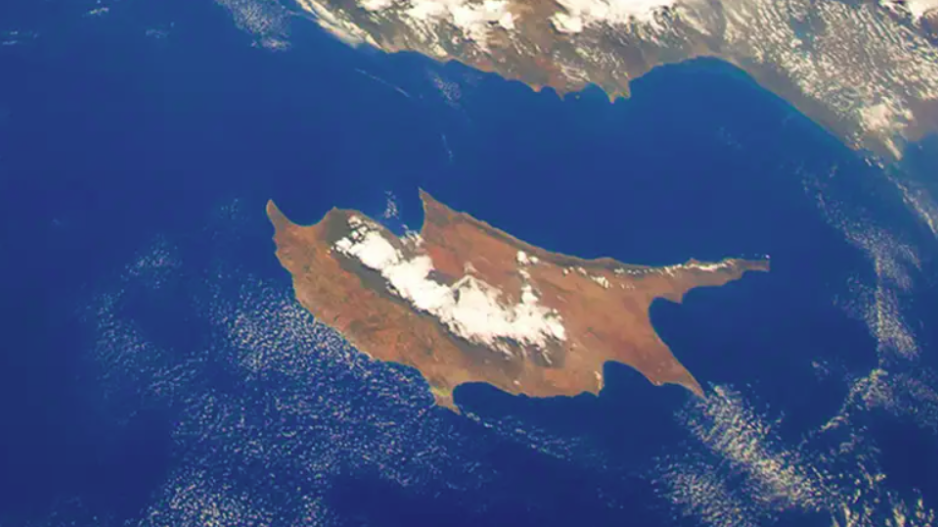
Nicosia is central to any credible East Med architecture. Cyprus already has EEZ agreements with Israel and Egypt; Greece and Egypt have a partial EEZ deal; and the island is a hub for planned electricity and data connectivity. But Turkish non-recognition of the Republic of Cyprus is the immediate procedural obstacle. Ankara signals it could consider a conference if Turkish Cypriots are represented—an arrangement Greece rejects as de facto “two states.” Turkish media commentary has framed Athens’ move as Greece “playing white” on the diplomatic chessboard while warning that any format excluding the north would be “incomplete.”
For Nicosia, the 5×5 offers a venue to reaffirm the Republic of Cyprus as a full participant in regional rule-making on seas, energy and connectivity, and to defend settled EEZ arrangements with neighboring states. Meanwhile, practical files—like the long-planned Greece–Cyprus electrical interconnection and future data cables—could benefit from a deconfliction mechanism if one can be agreed.
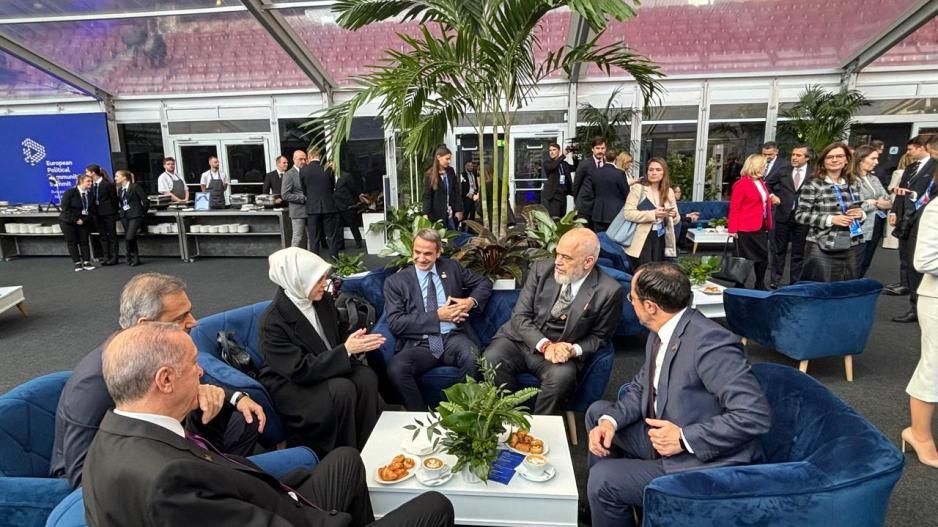
The 5×5 resembles earlier schemes. In 2020, then–European Council President Charles Michel floated a regional conference during a spike in Greece–Turkey tensions. President Recep Tayyip Erdoğan also pitched an East Med gathering at the UN that year, explicitly calling for Turkish Cypriot participation. Washington’s more recent exploratory concept reportedly focused on Greece, Turkey, Egypt and Libya—without Cyprus—aiming to square overlapping claims stemming from the 2019 Turkey–Libya maritime memorandum and the Greece–Egypt partial EEZ.
Even supporters concede chances of rapid success are slim, but they argue a standing forum could internationalise positions and create basic guardrails: prior notification of surveys, cable-laying or other offshore works; a technical committee to coordinate infrastructure like electricity interconnectors and fibre links; and agreed crisis-avoidance procedures at sea. Proponents in Athens also see value in locking all parties into a rules-based conversation anchored to international law of the sea, even if final delimitation remains distant.
Three structural risks loom. First, format: Turkey’s refusal to sit with the Republic of Cyprus and Greek refusal to legitimise the “TRNC” is a near-automatic stalemate. Second, Libya’s fragmentation means any commitment from Tripoli is hostage to militia pressure and rival authorities. Third, Greece–Turkey talks on maritime issues have been frozen since November 2024; restarting them inside a crowded multilateral room may be even harder. Add to this the perception—fair or not—that Washington could force pace in service of energy and stabilisation goals, potentially pushing “creative ambiguities” Cyprus and Greece find unacceptable.
In the bigger picture, Athens’ 5×5 is a bid to seize initiative and signals readiness to talk everything, with everyone, on the record. But its success hinges on the hardest problems first—recognition, representation and Libya’s coherence—before technical cooperation can move.