EU and Cyprus Unite to Eradicate Workplace Fatalities and Boost Economic Resilience
European and Cypriot Officials Highlight Efforts to Enhance Occupational Safety and Curb Human Loss
As thousands of EU workers lose their lives annually, European and Cypriot leaders gather in Nicosia to champion "Vision Zero." Discover how strategic enforcement, falling accident rates, and upcoming legislative milestones are shaping a safer, more competitive, and inclusive European labor market.
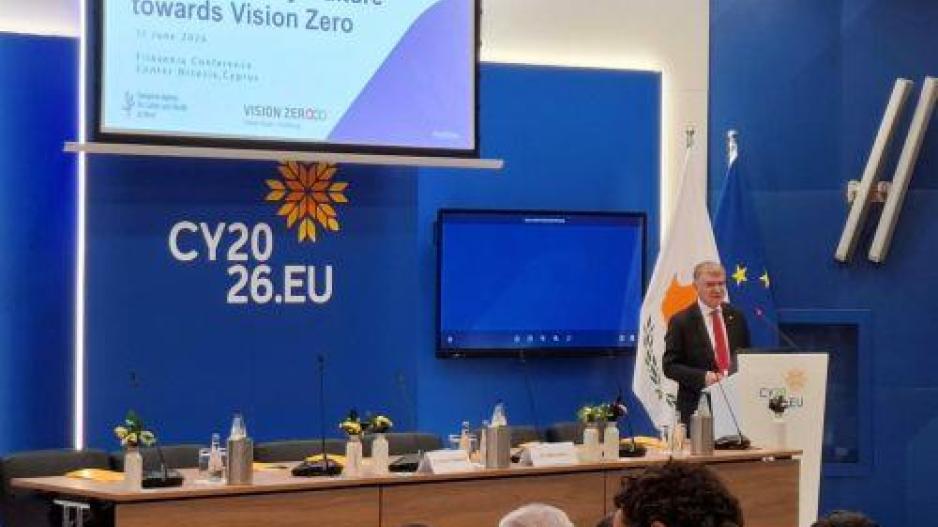
As thousands of workers in the EU lose their life every year in work-related incidents, European and Cypriot officials highlighted on Thursday morning, at a conference, in Nicosia, efforts to enhance occupational safety and health across the bloc. Mario Nava, Director-General of the Commission's DG for Employment, Social Affairs and Inclusion, stressed the need for evidence-based actions, awareness, and for the law to keep apace with change, while William Cockburn, the Executive Director of the European Agency for Safety and Health at Work, noted the very high human cost, as well as the "substantial economic cost" estimated at around 3% of GDP. Stelios Himonas, the Permanent Secretary of the Ministry of Labour and Social Insurance noted that non-fatal accidents fell almost 40% in a decade in Cyprus.
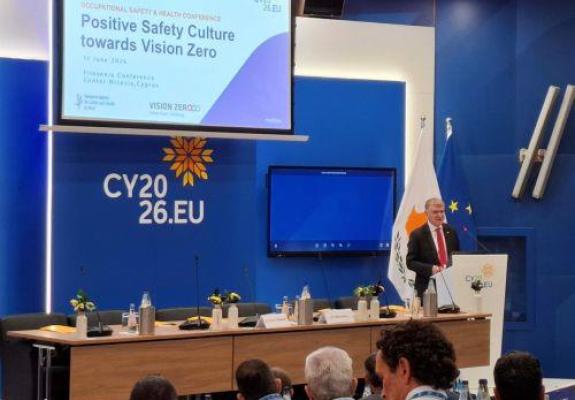
Nava, speaking at the Occupational Safety and Health Conference, titled “Positive Safety Culture towards Vision Zero”, held at the Filoxenia Conference Centre, in the context of Cyprus’ Presidency of the Council of the EU, congratulated the Cyprus Presidency on delivering results and commented on Cyprus’ good examples on health and safety at work.
He stressed the phenomenal progress made over the last 20 years in the EU labour market, with the increase of employment. “Because of that, we really need to seize the momentum for quality jobs” he said, noting that no job can truly be called quality job if it harms the health or endangers the life of the workers. “When workers are protected, businesses thrive, health is preserved, and productivity rises. And when life is safeguarded, families and communities flourish,” he said.
Nava argued that the legal obligation of occupational safety is actually the bedrock of competitive, inclusive and sustainable labour markets. “We are in a world where labour has become a scarce resource”, he said, noting the need for an estimated 90 million more workers worldwide. “That means we need to compete for workers. And if we need to compete for workers, having good health and safety conditions is the bare minimum.”
Quoting data, he said that the fatal accident since 1994 have fallen by 70% in the EU and 70% in Cyprus since 2005.
Nevertheless, he noted that every year in the EU, 3,300 workers lose their life, amounting to 1.6 for every 1,000 employed people. “It’s still a lot. That's the area where we want to work, because behind each statistic there is a human tragedy,” he said.
He noted that challenges are changing, referring to the climate change that affects more EU countries now than 30 years ago, but also digitalization, AI, psychosocial risks, stress, burnout, harassment.
“Vision Zero is the way to respond,” he said, arguing that we need evidence-based actions, awareness, and for the law to keep pace with change.
Nava also mentioned the importance of Carcinogens, Mutagens and Reprotoxic substances Directive (CMRD6) to be discussed on June 23 in a trilogue, noting that it can prevent about 1,700 lung cancers, and about 20,000 other incidents, asking for Cyprus Presidency’s contribution to bring it home.
He also mentioned the Quality Jobs Act, expected to come out at the end of this year.
Additionally, Nava said that there are a lot of good examples to take from Cyprus on the subject, mentioning the focus on fall prevention, the Safepass scheme, the collaboration with trade unions.
Particular mention was also made to Cyprus Presidency’s success on Regulation 883, regarding workers’ mobility in the EU. Nava said that “for us in Brussels, it was an incredible thing”, noting that an agreement “escaped” from the hands of many Presidencies. “Probably the Cypriots didn't know it was impossible, and that's why they did it”, he said.
Concluding, he said that we need to make sure that we achieve an ecosystem which at the same time is a culture of prevention, where safety comes first and not afterwards, with big data guiding action, and with a very strong and bold enforcement to ensure compliance.
On his part, William Cockburn, Executive Director of the European Agency for Safety and Health at Work, said that no loss of life or serious injury is acceptable as a price and that life and health can never be exchanged for other benefits within society.
“Accidents and illnesses are not something that we should accept as a cost of work. Everybody has the right to return home safe and healthy after a day's work,” he said.
Noting that in Europe there still is a very high human cost, he added that there is also “a substantial economic cost,” with estimates putting it at around 3% of GDP.
“We need to communicate the issue more effectively to those who are not in our world. We need to explain that it's an entirely avoidable burden,” he said, adding that we know what measures are successful, mentioning safety culture, leadership commitment, worker engagement, communication, risk assessment and a continuous cycle of learning and making that part of the identity of the organization.
Cockburn said that the Agency’s research is delivering insights for policy and regulation. He noted that significant proportion of mainly very small enterprises don't think about occupational safety and health at all, with the Agency calling them “the avoiders”. There is also another group where they act in response to a trigger, for example, an accident, a visit from the labour inspectorate, and then there's a group of good performers, who are happy to take the tools and guidance and are on the active lookout for best practices.
“But Vision Zero means reaching out to the avoiders. Vision Zero means engaging with all of those small enterprises, not only the good performers,” he said.
In the absence of the Minister of Labour and Social Insurance, Marinos Moushouttas, Stelios Himonas, Permanent Secretary of the Ministry delivered an address. As he said, despite the progress achieved, occupational accidents and diseases continue to have an unacceptable human and economic cost.
“A shared ambition that unites us is the pursuit of Vision Zero,” he said, referring to a future in which occupational accidents and diseases are prevented, and where mental health, well-being, and dignity at work are fully safeguarded and promoted.
Himonas said that the Cyprus Presidency has attached particular importance to strengthening the cultural dimension of occupational safety and health.
Referring to practices in Cyprus on the subject, he said that we promote preventive strategies based on risk assessment and early intervention, we combine effective enforcement with guidance and support for enterprises, we take targeted action in high risk sectors such as construction, agriculture, and manufacturing, and we invest in continuous education and training, especially for small and medium-sized enterprises.
Quoting the data for Cyprus, he said that the progress has been particularly encouraging, with non-fatal accidents falling almost 40% in a decade.
He mentioned that “Vision Zero” is not merely an abstract aspiration, but a tangible and achievable objective, “provided that we act with unity, determination, and shared responsibility.”
He also noted that these efforts align closely with the broader priorities of the Cyprus Presidency in advancing the rights and protection of all workers. “Strong enforcement of occupational safety and health standards is not an isolated objective, but an integral part of a wider commitment to a more resilient and equitable European labour market,” he said, referring to the successful conclusion by the Presidency of Regulation 883 on the coordination of social security systems, that marks an important step forward in facilitating fair and well-regulated mobility across the Union, while safeguarding equal treatment and legal certainty for mobile workers.
“Let us seize the opportunity of the Cyprus Presidency to reaffirm our common commitment deepen our cooperation and accelerate progress towards this shared Vision Zero, transforming this objective from an aspiration into a tangible reality for every worker across Europe,” he concluded.
The Conference continues on Thursday afternoon with an exchange of national initiatives and experiences on health and safety issues, aimed to lead at a Vision Zero environment, with discussions between representatives from Cyprus, the Netherlands, Latvia, Denmark, Finland, and field experts.