EuroMED Days 2026: Cyprus Positions Itself as the Digital Gateway Bridging Europe, MEA, and Asia
Cyprus Promotes Role as a Bridge for Investment-Technology, Speakers at Conference Say
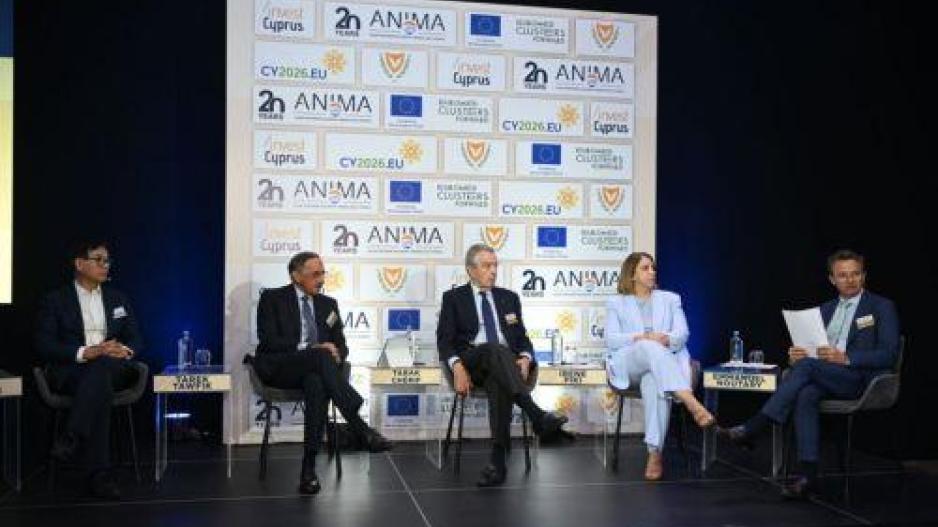
At the EuroMED Days conference in Nicosia, regional leaders and ministers outlined a new era of strategic importance for the Mediterranean, detailing how Cyprus's surging tech sector and geographic edge are transforming it into a vital investment bridge.
The Mediterranean's Evolving Strategic Importance
The need to strengthen economic cooperation, investment flows and technological connectivity between Europe, the Middle East and Africa was highlighted during the EuroMED Days conference, which took place in Nicosia on Monday, in the framework of the Cyprus Presidency of the Council of the European Union.
A common conclusion among participants was that the Mediterranean is entering a new era of increased strategic importance, as geopolitical developments, the reconfiguration of supply chains, the energy transition and the digital economy create both new challenges and significant opportunities for investment, partnerships and sustainable growth.
Cyprus as a Stable Hub for Foreign Investors
Opening the conference, Invest Cyprus Chairman Evgenios Evgeniou noted that Cyprus has historically served as a meeting point for cultures, trade routes and ideas, emphasizing that the country's role as a bridge between Europe, the Middle East, Africa and Asia is becoming increasingly important. He stressed that, in an environment of growing geopolitical uncertainty and shifting economic conditions, investors are increasingly seeking jurisdictions that offer stability, institutional credibility and long-term growth prospects.
Evgeniou highlighted that Cyprus combines full access to the European Single Market with a business-friendly environment and a strategic geographical location that provides access to neighbouring markets. He also pointed out that the country has recorded one of the highest growth rates in the European Union in recent years, while the technology sector has emerged as one of the key pillars of the economy, contributing approximately 14% of GDP.
The Vision for Shared Regional Prosperity
For his part, ANIMA Investment Network President Tarak Chérif underlined that stronger economic ties between Europe, the Middle East and Africa are essential for creating more opportunities for growth and employment, particularly for younger generations. He noted that at a time when international institutions and traditional forms of multilateral cooperation are being tested, maintaining dialogue and building trust-based relationships is more important than ever.
In the same context, BusinessMed President Tarek Tawfik argued that the future of the region should be built on a model of shared production and shared prosperity.
“In a few words, the vision is to produce together and prosper together,” he said, stressing that cooperation across the Mediterranean cannot be one-sided but must create mutual benefits for all parties involved.
According to Tawfik, despite the considerable potential that exists, economic integration across the Mediterranean remains fragmented, both between the northern and southern shores and among Southern Mediterranean countries themselves. He referred to initiatives such as the East Mediterranean Energy Hub, energy interconnections between Egypt, Greece, Tunisia and Morocco, as well as circular migration agreements, describing them as successful examples of regional cooperation that can serve as building blocks for a more integrated Mediterranean economic ecosystem.
Four Core Investment Priorities for the Cyprus Presidency
Particular emphasis was placed on the role of the Mediterranean in the evolving geopolitical and economic landscape by Deputy Minister to the President Irene Piki, who participated in a panel discussion and stressed that the region is becoming increasingly significant for the European Union, especially in light of recent global developments.
She noted that from the outset, the Cyprus Presidency sought to place the Mediterranean at the centre of European discussions, not only from a political perspective but also in terms of economic development, energy security and regional cooperation.
The Deputy Minister identified four priority areas for future investment and policy cooperation across the Mediterranean region.
The first, she said, concerns energy, with a focus on electricity interconnections, renewable energy sources, energy storage solutions and infrastructure that can enhance regional energy security.
The second relates to digital connectivity and technological infrastructure, which she described as a fundamental driver of economic growth and competitiveness.
The third involves transport, logistics and the emerging trade corridors linking Europe, the Middle East and Asia, creating new opportunities for regional integration and economic development.
The fourth, and equally important, area is human capital. Piki stressed that the global competition for talent is intensifying and that the Mediterranean has significant potential to become a hub for attracting highly skilled professionals, researchers and entrepreneurs.
Shifting toward a Tripolar Economic Model
Dr James X. Zhan, President of the World Investment Conference, analysed the ongoing shift from global value chains to more regionalised production ecosystems. He explained that geopolitical developments, sustainability requirements and technological transformation are driving the emergence of shorter and more regional supply chains.
According to Dr Zhan, a new “tripolar” economic model is gradually taking shape, centred around three major economic blocs: Asia, led by China; the Americas, led by the United States; and the wider European-Mediterranean region. Within this evolving framework, the Mediterranean is gaining prominence as a regional hub for production, investment and trade.
Securing European Technological Sovereignty
In his remarks, Deputy Minister of Research, Innovation and Digital Policy Dr Nicodemos Damianou, focused on the concept of technological sovereignty and the growing importance of digital infrastructure in the global economy.
He noted that Europe continues to depend heavily on non-EU providers for critical digital technologies, making it essential to strengthen European technological autonomy in areas such as artificial intelligence, cloud computing, semiconductors, data centres and connectivity infrastructure.
Dr Damianou stressed that technological sovereignty does not mean isolation but rather the development of strong and trusted partnerships. In this context, he described the Mediterranean as a critical space for digital connectivity and strategic cooperation, highlighting Cyprus’ potential to serve as a reliable digital gateway between Europe, the Middle East and Africa.
Urban Centers as Living Laboratories
Nicosia Mayor Charalambos Prountzos highlighted the role of cities as key drivers of economic development and investment attraction. He noted that the majority of the population and economic activity is concentrated in urban areas, making cities critical actors in the success of any investment strategy.
Prountzos argued that smaller cities such as Nicosia can serve as ideal “living laboratories” for testing innovative technologies and solutions in areas such as energy, water management, mobility, data utilisation and logistics before scaling them to larger markets. At the same time, he referred to the challenges cities face in attracting investment capital for smaller-scale infrastructure projects, stressing the need for new financing instruments tailored to the realities of European urban centres.