European Markets Open Slightly Lower Despite Wall Street and Asia Rally
Investors Remain Cautious Ahead of Key U.S. Inflation Data Due Wednesday.
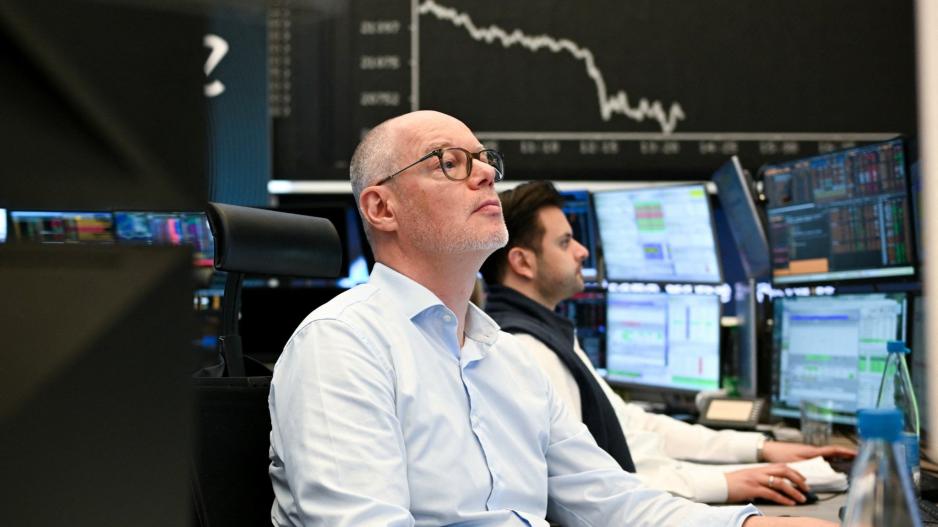
Most European markets opened in negative territory, as investors continued to closely monitor developments in the Middle East with caution. Although Israel and Iran announced that they would temporarily halt attacks against each other, both sides warned that clashes could resume, while the prospect of a final agreement mediated by the United States remains uncertain. At the same time, investors remain cautious ahead of key U.S. inflation data due on Wednesday.
At the start of trading, Germany’s DAX fell by 0.31%, France’s CAC 40 posted losses of 0.25%, while the UK’s FTSE 100 moved 0.17% lower. By contrast, the pan-European Euro Stoxx 50 remained essentially unchanged.
The resumption of missile attacks between Israel and Iran over the previous weekend had intensified concerns over further destabilization in the region. However, sentiment improved after statements by U.S. President Donald Trump, who called for an “immediate ceasefire” and said that talks were underway to end hostilities.
Trump also said that Washington was in the “final stages” of an agreement with Tehran, creating expectations for further de-escalation.
Despite these statements, markets remain cautious, as both Israel and Iran have warned that they will respond forcefully in the event of new attacks.
Investor sentiment was strengthened by the rebound in technology stocks in the United States.
The S&P 500 closed up 0.3%, while the Nasdaq 100 rose by 1.6%, supported by a strong recovery in the semiconductor sector. By contrast, the Dow Jones edged down by 0.2%.
Intel was in focus, rising more than 11% after a report said that Alphabet had ordered more than three million artificial intelligence processor units for production in 2028.
The improvement in sentiment also carried over to Asia. In Japan, the Nikkei rose almost 2%, led by technology and semiconductor stocks. In China, the CSI 300 advanced by 1.2%, as investors reacted positively to strong foreign trade data from the country.
Despite the improvement in investor sentiment, analysts estimate that the market continues to lack strong catalysts that could provide a clear direction.
With corporate news flow remaining limited in both Europe and the United States, attention is turning almost exclusively to inflation data in the United States.
The data is considered crucial for the Federal Reserve’s next decisions, as markets try to assess whether further interest rate hikes will follow during the year.
The partial easing of geopolitical fears led to an increase in government bond yields.
The yield on the U.S. 10-year Treasury returned above 4.55%, while the equivalent German Bund yield rose by 2.5 basis points, exceeding 3.06%, as investors price in another interest rate hike by the European Central Bank at its upcoming meeting.
In the foreign exchange market, the euro rose by 0.12% against the dollar, reaching 1.1545, as the prospect of tighter monetary policy in the eurozone supported the common currency.
Meanwhile, oil prices declined as fears of further escalation in the Persian Gulf crisis eased. Brent slipped toward $93 per barrel, while U.S. WTI fell by 1.5% to $89.9. Both benchmarks remain significantly below their April highs, when they had exceeded $120 and $110 respectively.
Source: newmoney.gr