Everything Agreed at the 3rd Greece–Cyprus Intergovernmental Summit
GSI, Energy, the Cyprus Issue, and Multi-Level Cooperation Across a Range of Other Sectors
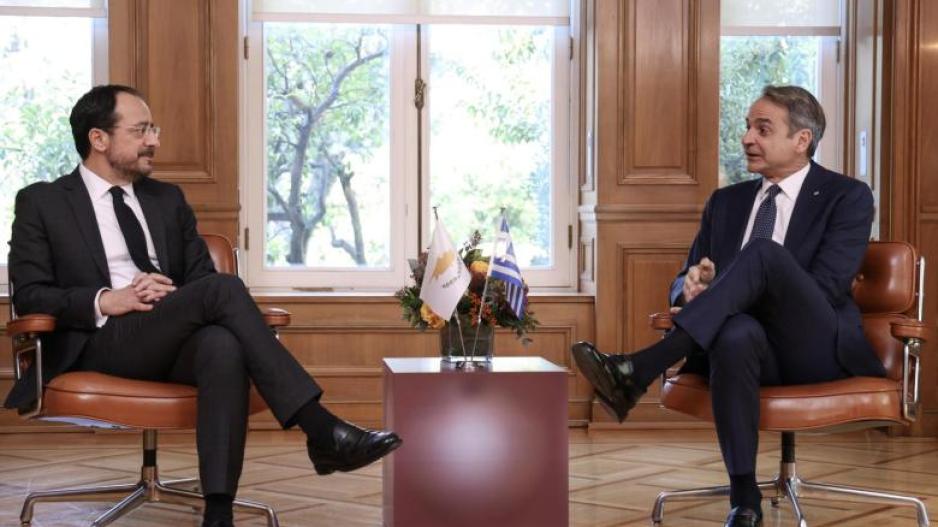
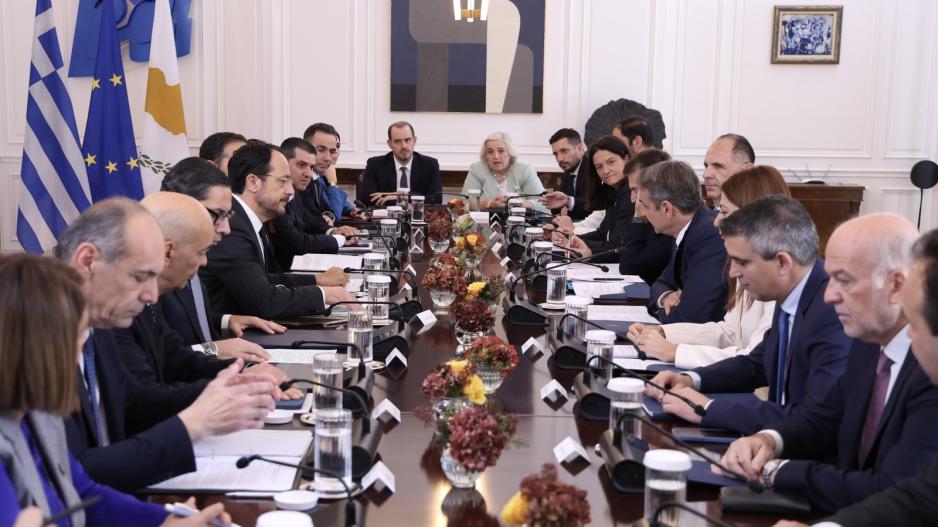
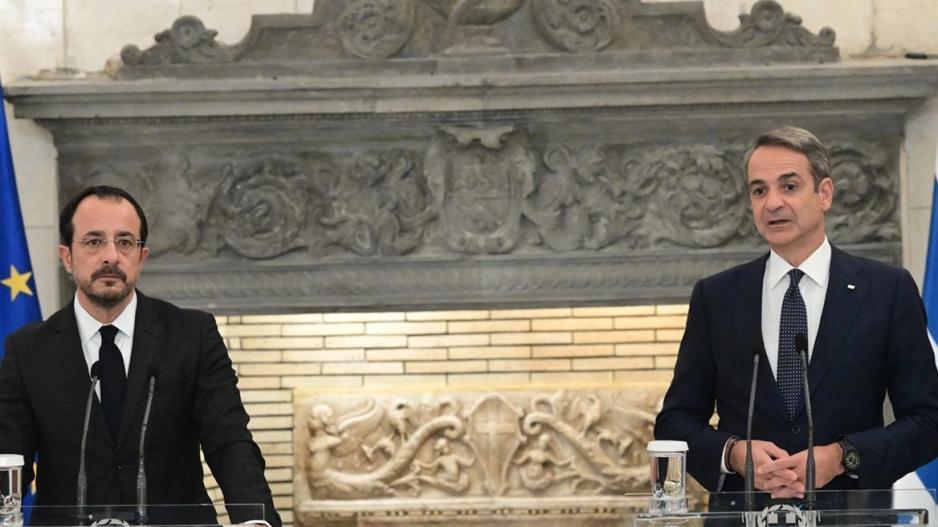
Cyprus and Greece moved decisively on Wednesday to update the techno-economic parameters of the Cyprus–Greece electricity interconnection, a step designed to make the flagship cross-border cable bankable and attractive to new, heavyweight investors. The announcement came in joint statements by Cyprus President Nikos Christodoulides and Greek Prime Minister Kyriakos Mitsotakis after the 3rd Intergovernmental Summit between the two countries in Athens.
Both leaders framed the project as a cornerstone for energy security and regional resilience, linking it to a wider agenda of connectivity, green transition, and geopolitical weight for the Eastern Mediterranean.
Christodoulides said the institutionalized summit format is already delivering “significant progress” in coordinating strategies across a broad policy spectrum, adding that Athens–Nicosia alignment remains a pillar of stability in a turbulent neighborhood. Mitsotakis stressed that Greece and Cyprus are “pillars of stability and reliability,” noting recent energy agreements involving U.S. companies and reiterating that fresh investment is in everyone’s interest.
The two leaders highlighted the 3+1 energy format (Greece–Cyprus–Israel plus the United States) as a key vehicle for cooperation that has been “reactivated” at ministerial level. Mitsotakis underlined Greece’s next steps on exploration activity in the Ionian, arguing that leveraging domestic resources alongside the green transition is prudent policy.
On the Cyprus issue, both sides reaffirmed their common line: a push to restart UN-framed talks for the reunification of the island, with Mitsotakis saying it is now up to others to prove they genuinely want to reengage. The leaders also emphasized the need for an active EU role—including through the EU Special Envoy—within the UN process.
Beyond the Cyprus–Greece electricity interconnection, the summit produced a dense list of joint initiatives with direct impact on citizens:
-
Schengen visas: Greece will represent Cyprus in issuing Schengen visas in 19 third countries, smoothing the path towards Cyprus’s full Schengen entry. Foreign ministers signed a Joint Declaration in Athens.
-
Civil protection: The countries advanced plans for the Cyprus Regional Aerial Firefighting Station—an EU Eastern Regional hub—and deeper cooperation in aerial firefighting operations, fleet management and EU rescEU mechanisms.
-
Water resilience: Recognizing water scarcity as a top regional threat, Athens and Nicosia will co-develop actions on reclaimed water use, large-scale desalination know-how transfer, and protection of critical water infrastructure such as dams.
-
Health systems: Cooperation will cover preventive screening, antimicrobial resistance training (MoU between EODY and Cyprus’s Health Ministry), and hospital/ER performance, including electronic tracking, patient-satisfaction tools, and fast-track clinics.
-
Education: The sides will exchange best practices on linking education to the labor market, inclusive education, support for children with disabilities, and anti-bullying policies.
-
Transport: Coordinated action aims to strengthen road safety in line with the EU 2021–2030 framework and the “Vision Zero” horizon for 2050.
-
Justice & security: Joint work will accelerate justice reform, promote alternative dispute resolution, and build a united front against economic crime—including a bilateral police cooperation team focused on organized crime and improved information-sharing (e.g., SIS).
-
Housing: Collaboration will target affordable, social housing with shared technical standards, pilots in high-need zones, and exchange of lessons from Greece’s “Spiti Mou” programs.
-
Risk mapping: New digital risk tools—including AI-powered models for fires, floods and earthquakes—will be shared, alongside an integrated national knowledge base approach pioneered in Greece.
-
Digital policy & AI: Deeper ties in public digital services, interoperability, cybersecurity and innovation, Cyprus’s participation in the AI Gigafactories initiative, and common EU positioning on AI Act implementation, child protection and digital wellbeing (e.g., age verification and parental-control tools like Kids Wallet).
-
Space: Two MoUs in space technology and programs are planned.
-
EU agenda: With Cyprus presiding over the Council of the EU in H1 2026 and Greece in H2 2027, the countries will coordinate closely on the New Mediterranean Pact, enlargement, and a broader EU policy slate.
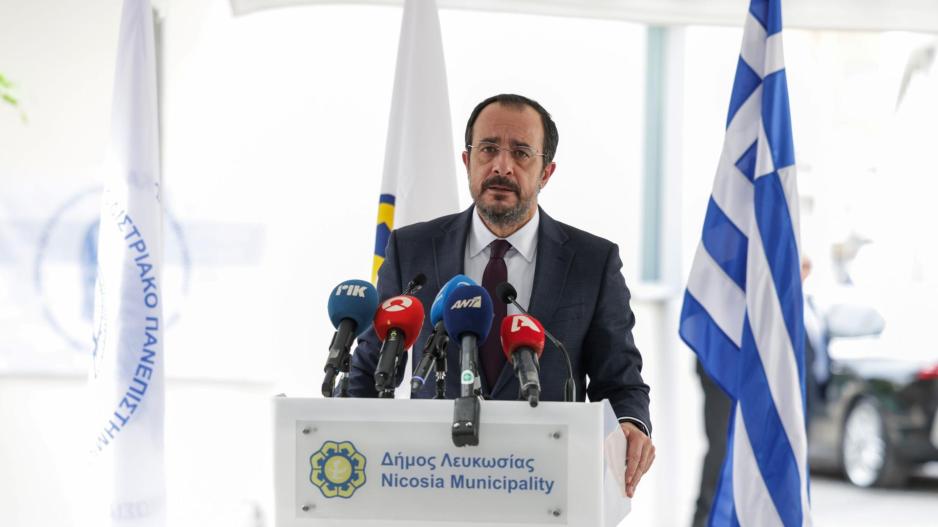
Moreover, speaking at the 3rd Greece–Cyprus Business Forum in Athens, President Christodoulides pitched Cyprus as a gateway for investment into both Europe and the wider Middle East, extending to India following high-level contacts. He pointed to Cyprus’s solid macro picture—growth near the top of the euro area, public debt below 60%, unemployment under 5%, and steady inflows of quality FDI—as a platform for expanding two-way Greek–Cypriot investment and technology transfer.