GSI: President Denies Government Double-Speak. Former Energy Minister Says Otherwise.
Papanastasiou openly challenges government handling of the electricity interconnection.
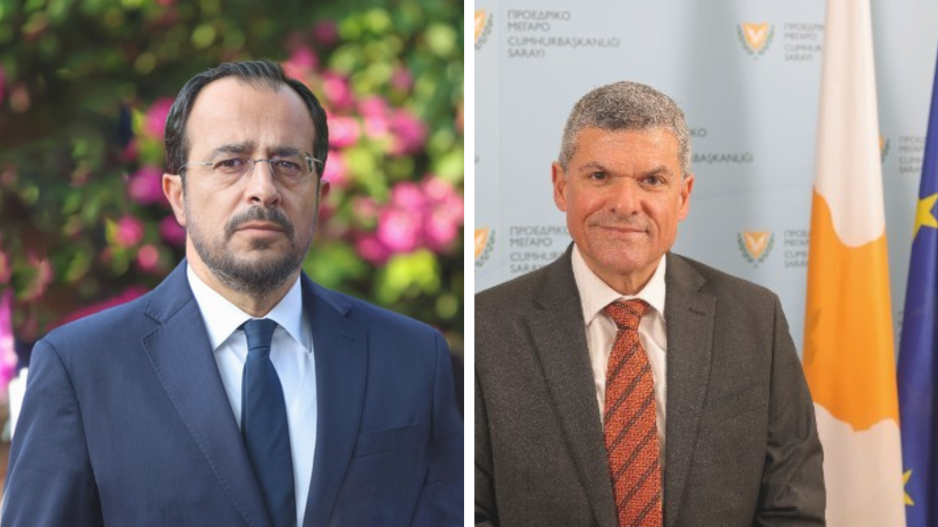
The Cyprus government is attempting to contain political fallout over the Greece–Cyprus electricity interconnection (GSI), with President Nikos Christodoulides insisting there has never been any government double-speak. However, public interventions by former Energy Minister Giorgos Papanastasiou suggest that internal disagreements over the project remain very much alive.
Speaking on Sunday, President Christodoulides categorically rejected Friday's accusations by DIKO President Nikolas Papadopoulos that the government is sending mixed signals on GSI, describing the government’s position as “clear” and unequivocally in favour of the project.
“There is no double-speak by the government—there never has been,” the President said, stressing that the electricity interconnection with Greece is one of the three pillars of Cyprus’ energy strategy.
Yet statements by the former Energy Minister to Kathimerini Cyprus paint a different picture, openly challenging key government decisions and reinforcing claims that the project is being assessed through a narrow financial lens rather than its strategic value.
The controversy erupted after Nikolas Papadopoulos warned that mismanagement of GSI could lead to the project’s collapse, calling such an outcome a major geopolitical defeat for Cyprus and a strategic win for Turkey.
On Saturday, the government responded through Victor Papadopoulos, Director of the President’s Press Office, who stressed that Cyprus follows a single policy line, shaped by decisions announced jointly by President Christodoulides and Greek Prime Minister Kyriakos Mitsotakis after their recent intergovernmental summit in Athens.
That line was reinforced by the President himself, who revisited the joint decision with Greece to modernise the project’s viability study, citing responsibility, cost considerations and growing interest from third countries.
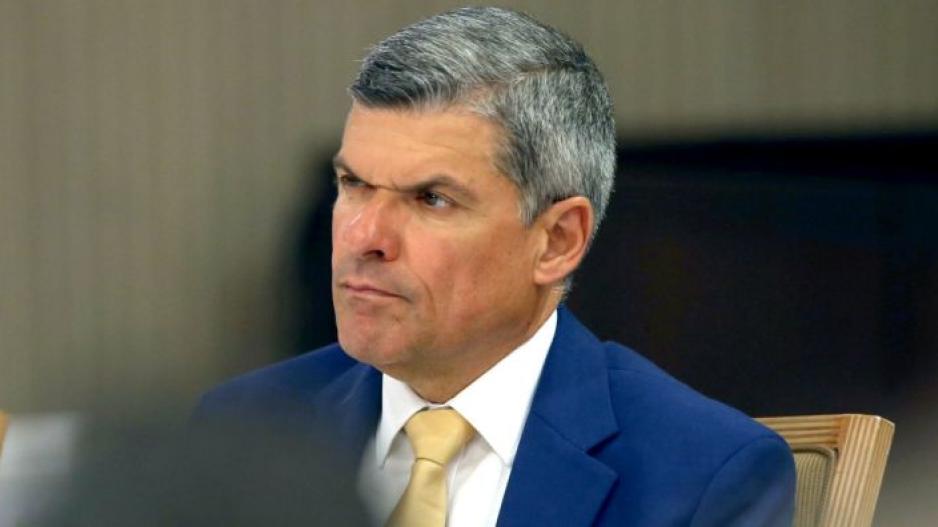
In sharp contrast, former Energy Minister Giorgos Papanastasiou, now speaking without the constraints of office, openly questioned the logic underpinning the government’s approach.
Without naming individuals, he argued that viewing GSI purely through investment-return criteria risks missing its strategic significance.
“If someone looks at the project in isolation, focusing only on investment and returns, it may appear non-viable,” Papanastasiou said. “But what is the value of a project that ends the energy isolation of an EU member state like Cyprus?”
He posed a series of pointed questions about energy security, the absence of sufficient local electricity generation, and the importance of channeling cheaper electricity to Cyprus—before concluding that some projects are strategic and cannot be subjected to strict viability assessments.
Papanastasiou was even more direct on the issue of the €25 million payment from Cyprus to ADMIE, the project’s implementing body, which remains frozen despite approval from the Cyprus energy regulator.
“For such a project, a member state cannot decide unilaterally not to pay,” he said, stressing that GSI falls under the EU framework for Projects of Common Interest, governed by regulatory rules, memoranda of understanding and binding obligations.
His remarks implicitly challenge the government’s decision-making, suggesting that Cyprus cannot act alone on a project anchored in European agreements.
The former minister also distanced himself from the joint Christodoulides–Mitsotakis decision to update the project’s economic parameters.
While acknowledging that states contributing financially may seek updates, Papanastasiou said he aligns with the European Commission’s position that such an update is not necessary, once again exposing divergence between the President’s line and his former minister’s assessment.
At the same time, Papanastasiou made clear that responsibility does not rest solely with governments. He cautioned that manufacturing the cable alone does not prove project progress, pointing to delays in seabed surveys, which are critical for laying the interconnection.
“My personal view is that producing the cable alone is not evidence that the project is advancing,” he said.
While President Christodoulides is clearly attempting to downplay claims of government double-speak, the public positions taken by both DIKO’s leader and his former Energy Minister suggest that the debate over GSI is far from settled.