Keravnos Joins Eurogroup and ECOFIN Meetings For Critical Economic Policy Talks
Finance Minister in Brussels for Eurogroup and Ecofin Meetings
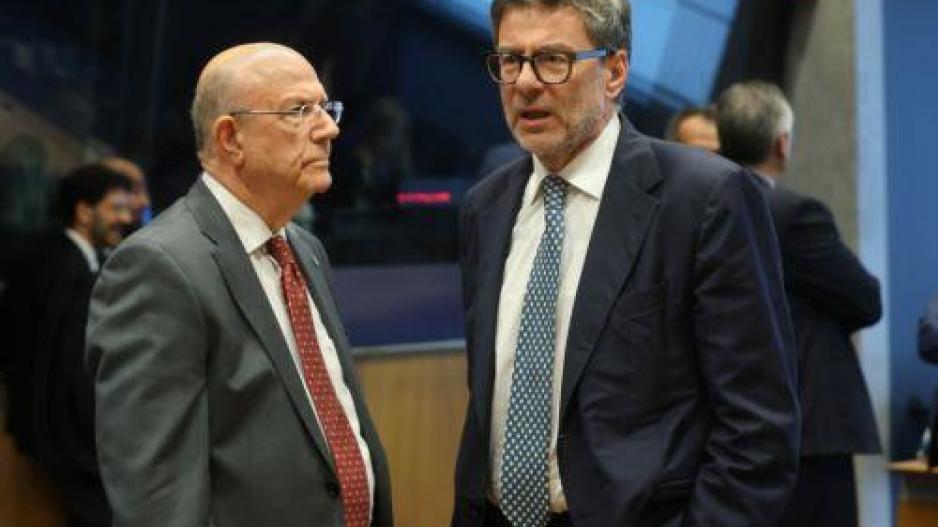
Finance Minister Makis Keravnos travels to Brussels for crucial Eurogroup and ECOFIN meetings. Key agenda items include shaping the 2027 eurozone fiscal policy stance, addressing AI risks in banking, and securing approval for Cyprus' revised Recovery and Resilience Plan.
Eurogroup Preparation for 2027 Fiscal Policies
Finance Minister Makis Keravnos will travel to Brussels on Wednesday, July 8, to participate in the Eurogroup meeting on July 9 and the ECOFIN Council meeting on July 10.
According to a Ministry statement, on Thursday, July 9, Keravnos will participate in the Eurogroup meeting, during which ministers will exchange views on fiscal developments in the eurozone and the appropriate fiscal policy stance for 2027, in preparation for the drafting of national budgets, based on a relevant presentation by the European Commission and the European Fiscal Board; in addition, they will exchange views on the international role of the euro, based on the ECB’s annual report.
Digital Finance and AI Implications in Banking
Subsequently, in an expanded session with the participation of all EU member states, the ministers will exchange views on the impact of emerging technologies on the financial sector, with a particular focus on the implications of artificial intelligence for cybersecurity.
Later, the Eurogroup is expected to adopt a statement on digital finance, which will reflect the ministers’ views and aspirations regarding support for the development of digital finance in the EU.
ECOFIN Market Integration and Global Impact Debates
It is also noted that on Friday, July 10, the Minister of Finance will participate in the ECOFIN Council, during which there will be a discussion on the package of proposals for market integration and supervision (Market Integration and Supervision Package), based on a guidance document prepared by the Irish Presidency. This package of legislative proposals aims to deepen the single market in the financial services sector, which is expected to contribute significantly to improving the competitiveness of the European economy.
The Irish Presidency will then present its priorities and work program in the area of economic and fiscal affairs for the coming six months. Furthermore, the ministers will exchange views on the economic and fiscal impact of the Russian invasion of Ukraine.
Approval of National Recovery Plans and European Semester Updates
The ECOFIN Council is then expected to approve the revised Recovery and Resilience Plans of Lithuania, Cyprus, Finland, Luxembourg, Germany, Latvia, Slovenia, the Netherlands, and Hungary.
Next, as part of the 2026 European Semester, which serves as the mechanism for coordinating the economic policies of EU member states, the Council is expected to adopt the Country-Specific Recommendations (CSRs) and approve the conclusions regarding the in-depth review of the Macroeconomic Imbalance Procedure.
Fiscal Governance and International Representation
Afterwards, as part of the implementation of the economic governance framework, the Council is expected to adopt Recommendations for the approval of the Netherlands’ revised Medium-Term Fiscal and Structural Plan, as well as for the initiation of an Excessive Deficit Procedure for Bulgaria.
Following this, the finance ministers will exchange views on the Convergence Reports, following their presentation by the European Commission and the European Central Bank. Finally, the Council will approve the terms of reference for the European Union’s representation at the meeting of G20 finance ministers and central bank governors, to be held on August 31 and September 1.
Working Dinner on Energy Security and Resilience
On the evening of Thursday, July 9, at the invitation of the President of the Eurogroup, the ministers will attend a working dinner focusing on the link between energy security, competitiveness, and economic resilience, in the presence of the Finance Ministers of the United Kingdom and Norway, the statement concludes.