New Coordinating Body Unites Cyprus Public Sector Unions
Trade unions and associations join forces to coordinate policy and labour action.
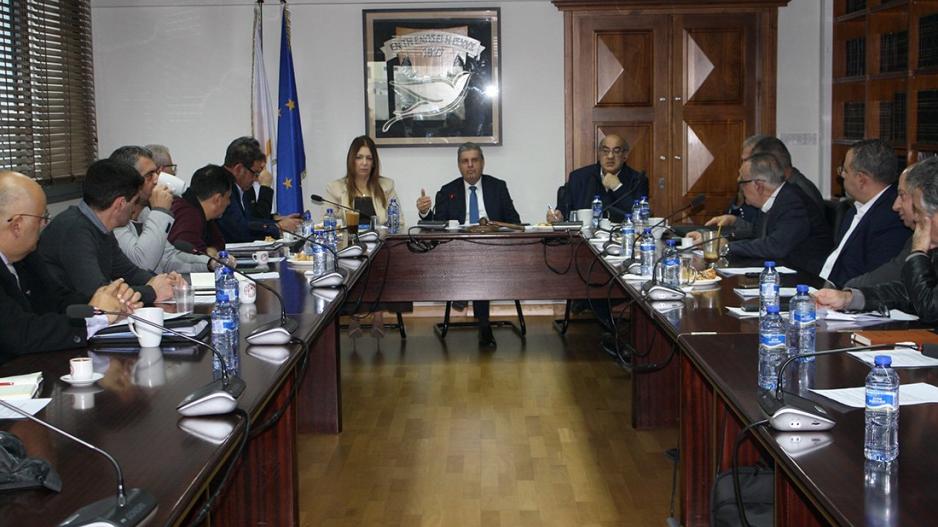
Trade union organisations and professional associations active in the public sector will now speak with a single, unified voice through a pioneering institutional body.
Following months of consultations among the leaderships of the participating organisations—aimed at strengthening the voice of public sector employees and, in particular, safeguarding their hard-earned rights—a Coordinating Body was formally established yesterday.
The Body, which will have an institutional character while fully respecting the autonomy of each participating organisation, will include PASYDY, POED, OELMEK, OLTEK, as well as the Associations of Senior Police Officers of Cyprus (SAAAK), Cyprus Police Officers (SAK), and Cyprus Firefighters (SYPUK).
The Associations of Officers of the Cyprus Army (SAKS) and Non-Commissioned Officers of the Cyprus Army (SYKS) will also cooperate with the Coordinating Body.
Stratis Matthaiou, General Secretary of PASYDY—which will assume the coordinating role within the Body—described, in statements to Brief, the signing day of the Body’s founding agreement as historic for trade union organisations and associations in the public sector.
“The establishment of the Body, which aims to ensure a single, unified voice on critical and high-level labour issues affecting workers in the public sector, was an absolute necessity,” noted the General Secretary of PASYDY.
He emphasised that the Body will be governed by collective decision-making, respect for the views of every member, and above all, “responsibility and moderation, which have characterised us in recent years.”
According to Mr Matthaiou, collective action in addressing key issues affecting employees—at a time when pressures linked to a “deficit in social dialogue” are intensifying—makes unity within the trade union movement a necessity.
He clarified that each trade union organisation, whether in education or representing specific groups of employees such as police officers, military personnel, and firefighters, will retain its full autonomy.
“The organisations will continue to have their own leadership and competent bodies. They will follow the same decision-making procedures to protect the interests of their members,” Mr Matthaiou added.
The General Secretary of PASYDY acknowledged that the negotiating power of the trade union movement within the public sector will be strengthened, while stressing that the elements of responsibility and moderation—what he described as an established “culture within public sector trade unionism”—will also be reinforced.
In recent years, PASYDY has not engaged in any dynamic industrial action, with the exception of a three-hour work stoppage, which was, in any case, a decision of the Pan-Trade Union Conference involving all workers, excluding the banking sector.
“The public servant’s mandate is to serve the citizen, and this is what we consistently do,” stressed the General Secretary of PASYDY, adding:
“The state is our employer. However, it is also our partner in creating the best possible conditions for the taxpayer at all levels—service delivery, payment of social benefits, pension disbursements, provision of security, and the delivery of essential public services.”
According to a joint statement issued yesterday by the members of the Body, the primary objective of establishing the entity under the name SYFOKY is to institutionalise cooperation among public sector organisations and associations on a planned and coordinated basis.
A key goal is the formulation of a common policy and the promotion of collective action on professional matters of general interest, such as tax reform and pension reform.
It is further noted that the Body will ensure mutual support through the exchange of views and coordinated action, particularly in the handling and management of labour issues that affect the members of each organisation or association.