Mousiouttas Heard OEB’s Positions on the National Minimum Wage in an Hour-Long Meeting
OEB rejects median wage link as DEOK pushes for 60% benchmark.
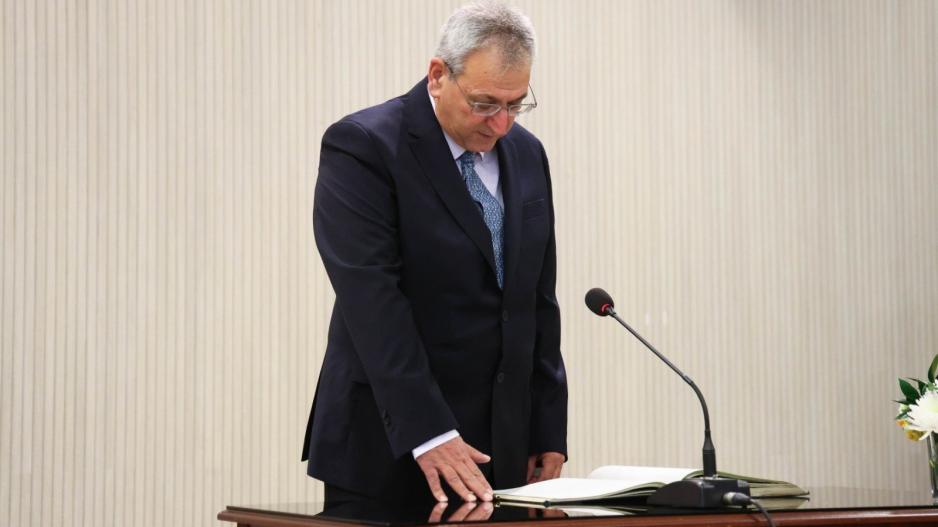
During the 60 minutes of its customary meeting yesterday morning with Minister of Labour and Social Insurance Marinos Mousiouttas, the leadership of the Cyprus Employers and Industrialists Federation (OEB) focused exclusively on the contentious issue of the National Minimum Wage (NMW).
According to information obtained by Brief, OEB presented to Mr Mousiouttas the formula it has already submitted to the Minimum Wage Review Committee.
The proposed formula is based on the economic data provided for in the relevant 2023 decree, under which the National Minimum Wage was set at €1,000.
One of the key criteria included in the formula is inflation, which generally reflects increases in the prices of goods and services.
According to OEB, this component is already sufficiently covered through the permanent Cost-of-Living Allowance (COLA – ATA) agreement.
The employers’ side maintains that inflation, as a macroeconomic criterion, is addressed through the application of the cost-of-living adjustment covering the previous two years.
The remaining criteria included in the formula concern, among other factors, the rate of growth in productivity and fluctuations in unemployment levels.
OEB’s leadership explained to the Labour Minister the rationale behind the employers’ position, stressing that there is no provision in the National Minimum Wage decree—as they argue—that establishes any relationship or correlation with the national median wage.
According to OEB, discussing such a linkage is misguided, as it is not foreseen in the relevant decree.
Both sides also noted that other pressing labour issues will be discussed at a future meeting with a specific agenda, allowing sufficient time for the new Labour Minister to familiarise himself fully with all matters through briefings from his technical advisors.
The Labour Minister also met yesterday with the leadership of DEOK, which raised five pressing labour issues that, according to the union, require timely advancement—starting with the National Minimum Wage.
In the memorandum submitted to Mr Mousiouttas, and specifically in its reference to the minimum wage, DEOK proposes that it be set at 60% of the median wage, plus the Cost-of-Living Allowance (COLA), as previously agreed.
DEOK also calls for the establishment of an hourly minimum wage, with a timetable based on a 38-hour working week.
Regarding the upcoming pension reform, DEOK argues that due to the complexity of the issue, more time should be allocated for consultation.
The union urges the Labour Minister to make the draft legislation available to the trade union movement, in order to enable a clearer understanding of the forthcoming changes.
In particular, on the issue of actuarial reductions in pensions for those retiring at the age of 63, DEOK believes that social dialogue should continue in order to address what it considers an injustice.
DEOK also raises concerns in its memorandum about the prolonged and increasing deregulation of collective agreements, calling on the Labour Minister to accelerate the implementation of the EU directive on the extension of collective agreements.
With regard to the Employment Strategy for Third-Country Nationals, DEOK argues that the current situation is creating labour dumping among workers and, at the same time, unfair competition between businesses.
The memorandum also refers to the need to combat illegal and undeclared work, as well as income underreporting, and proposes expediting procedures for the implementation of the “Ergani 2” information system, which is expected to enhance both oversight and transparency.