Oil Stabilizes With Upward Momentum Near $95 as Markets Balance Optimism and Uncertainty
How Trump’s Comments On US-Iran Talks And The Unclear Outlook For An Israel-lebanon Ceasefire Are Influencing Brent And WTI Prices.
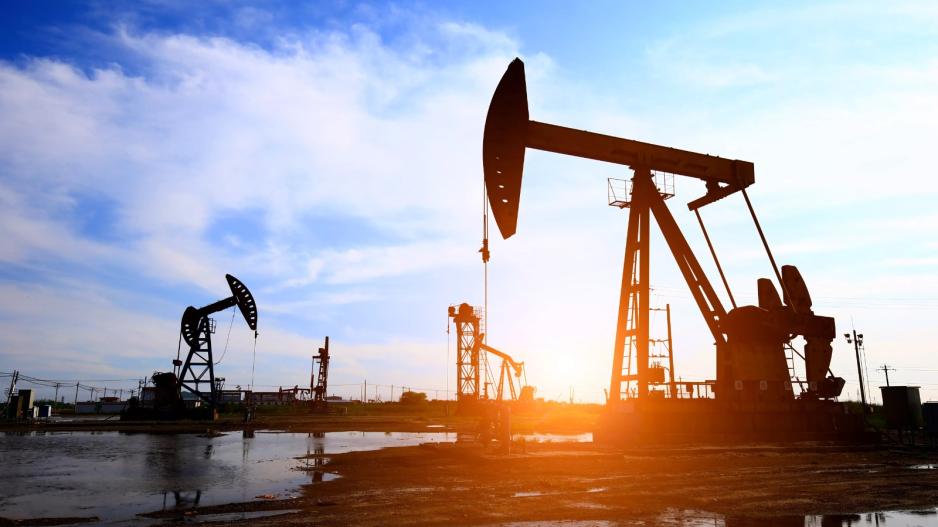
Oil prices were broadly stable with a slight upward bias on Friday morning, following their first weekly decline of the week, as optimism surrounding progress in talks between the United States and Iran was offset by ongoing uncertainty over a potential ceasefire agreement between Israel and Lebanon.
Brent crude was trading up 0.32% near $95 per barrel after falling 2.8% on Thursday, while US West Texas Intermediate (WTI) crude hovered around $93 per barrel. US President Donald Trump said talks with Iran were progressing positively, despite the Iran-backed Hezbollah rejecting a ceasefire proposal between Israel and Lebanon that had been mediated by Washington.
Despite Thursday’s pullback, WTI remains up more than 6% on a weekly basis. The gains have been attributed to renewed doubts surrounding the direction of negotiations, limiting the optimism that had emerged earlier over a potential agreement that could lead to the full restoration of energy flows through the Strait of Hormuz.
The strategic waterway remains a critical artery for global energy markets, carrying roughly 20% of global crude oil and liquefied natural gas trade during normal operating conditions.
Despite the recent rebound, oil futures remain approximately 20% below levels seen in early April, when the United States and Iran reached a ceasefire agreement that ended more than five weeks of conflict.
Raymond James analyst Pavel Molchanov noted that WTI’s decline from levels above $110 per barrel before the ceasefire to the current low-$90 range largely reflects market relief that a broader regional war was avoided and that key energy infrastructure remained largely intact.
According to Molchanov, the next phase for oil prices will depend heavily on whether maritime transport and exports through the Strait of Hormuz return to normal operations.
Despite Trump’s comments, there have been no clear signs of meaningful progress in negotiations between the United States and Iran. One of the main obstacles remains Israel’s ongoing military operations in Lebanon.
Asked by reporters in the Oval Office about Hezbollah’s rejection of the ceasefire proposal, the US president argued that the group had not personally rejected American initiatives and added that communication had taken place regarding discussions on a possible halt to hostilities.
At the same time, Trump stated in a social media post that negotiations to end the conflict with the Islamic Republic of Iran were in their “final stages,” although he did not provide further details on the substance of the discussions.
Additional concern emerged after reports indicated that Oman’s main crude oil export terminal at Mina Al Fahal was experiencing loading delays following an explosion that affected port operations.
The terminal lies outside the Strait of Hormuz and has been regarded as one of the few remaining alternative export routes available to Middle Eastern producers during the regional conflict.
Charu Chanana, Chief Investment Strategist at Saxo Markets in Singapore, said that conflicting signals surrounding peace talks are not yet exerting significant downward pressure on oil prices. According to Chanana, investors may remove part of the geopolitical risk premium when news flow is encouraging, but as long as there is no tangible progress on the ground, markets will continue to price in a substantial level of geopolitical risk.
Source: newmoney.gr