Pension Reform Fast-Tracked as Unions Push Back on Minimum Wage
Government targets 2026 for pension overhaul amid disputes over wages and social insurance.
The government aims to accelerate pension system reform within 2026, despite the fact that significant unresolved issues remain for the social partners.
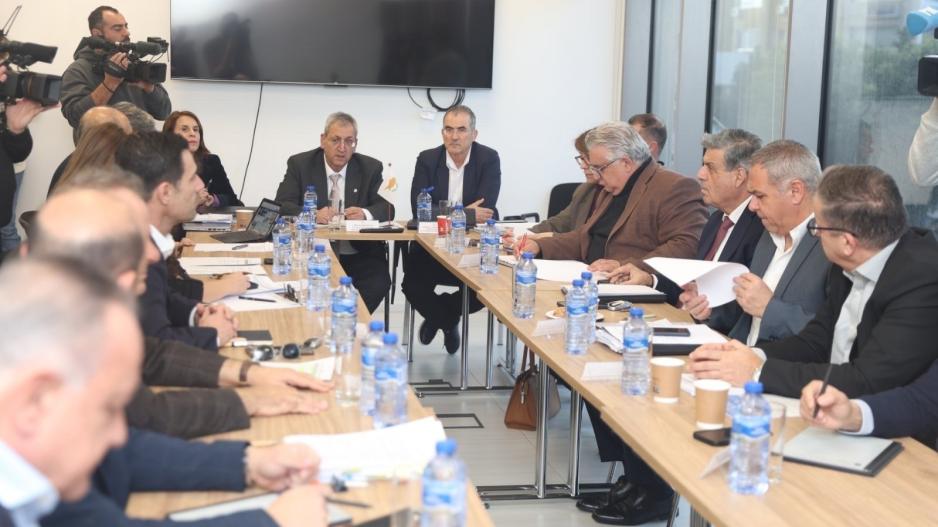
Pension reform was the main topic of discussion during the first meeting of the Labour Advisory Board (LAB) for 2026, chaired by Marinos Mousiouttas.
The meeting lasted almost two and a half hours. In addition to pension reform, the agenda included the amending decree on the National Minimum Wage (NMW), the decree regulating the employment of third-country nationals and students, as well as the promotion of the EU directive on extending collective agreements in the private sector concerning the adequacy of minimum wages.
In statements following the conclusion of the LAB meeting, the Minister of Labour and Social Insurance referred to the pension reform process, noting that LAB members were briefed by an actuary from the International Labour Organization on the progress of ongoing procedures related to the reform.
He added that it was decided to continue discussions either bilaterally or with the participation of all social partners “in order to proceed through all stages of the reform as quickly as possible.”
According to information obtained by Brief, the Minister and social partners raised serious issues related to the pension system, including the reserve fund of the Social Insurance Fund, the promotion of a new investment policy, the advancement of the second pension pillar involving provident funds, and the state’s contribution to the Social Insurance Fund.
Mr Mousiouttas noted that the initial plan is for discussions on pension reform to be completed within 2026, with the ultimate goal of implementation in 2027.

With regard to the National Minimum Wage, trade unions reiterated their demand for the withdrawal of the decree and informed Mr Mousiouttas that they are awaiting the scheduling of a meeting with President Nikos Christodoulides.
The three trade unions SEK, PEO, and DEOK sent a letter to President Christodoulides approximately ten days ago, requesting a meeting to discuss the contentious issue of the minimum wage.
During the LAB meeting, Andreas Charitou, Chair of the Technical Committee for the Revision of the National Minimum Wage, explained to members the methodology followed by the Committee, experts, the Ministry of Labour, and the Council of Ministers in determining the level of the minimum wage.
Regarding the controversial issue of hourly productivity in relation to the National Minimum Wage, Mr Mousiouttas stated that the Ministry of Labour proposed—and the Council of Ministers approved—that the Minimum Wage Adjustment Committee continue its work throughout 2026. This will include discussions on matters such as defining procedures, conducting impact studies on how minimum wage levels affect economic growth, and examining the need to establish a linkage with hourly productivity.
In relation to the bill on adequate minimum wages, which falls under an EU directive, the Minister of Labour stated that discussions will continue promptly within the competent committee “so that we can reach a conclusion and submit the bill to the House of Representatives.”
The LAB also examined the decree concerning the employment of students who are nationals of third countries.
The Minister of Labour requested that all parties submit their views to him in writing, based on which the Ministry will decide whether, how, and to what extent the existing decree should be amended.
Mr Mousiouttas praised the role played by the Labour Advisory Board and stressed that the institution will continue to operate without interruption, “so that this body remains a forum for ongoing dialogue on issues affecting employers and employees, with the primary goal of maintaining labour peace, improving workers’ living standards, and strengthening entrepreneurship.”