Red Light From Parliament on Landfill Waste Tax - Loss of €23 Million From RRP
The Plenary of the Body With 19 Votes in Favor and 28 Against Voted Down the Legislative Bills Included in the Prerequisites of the National Recovery and Resilience Plan.
-
Rejection of bill: The Plenary of Parliament rejected the imposition of a new tax on the final disposal of municipal waste in landfills.
-
Loss of funds: The rejection of the legislation, as a prerequisite of the National Recovery Plan, leads to the deprivation of European funding amounting to 23 million euros.
-
Opposition reactions: The parties that voted against cited the absence of a comprehensive strategy and an unfair horizontal burden on citizens without the necessary recycling infrastructure.
-
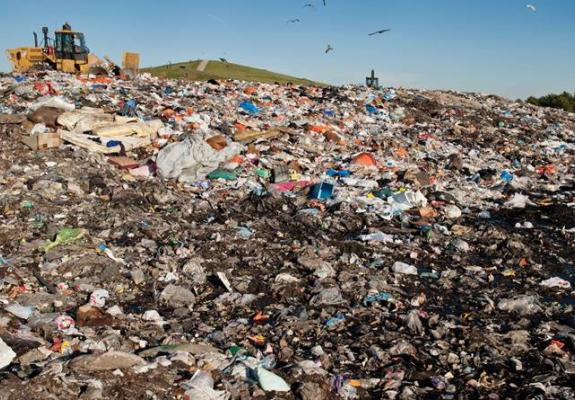
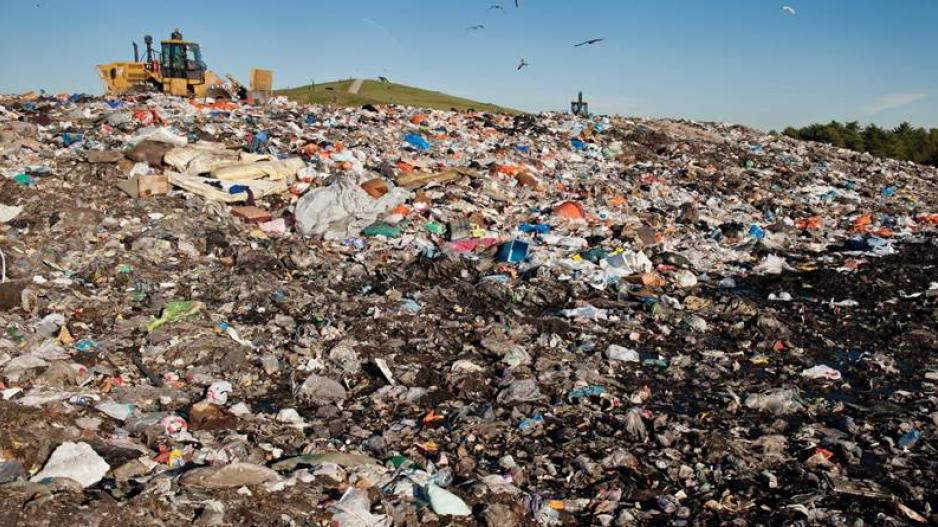
Environmental targets: Today 68% of waste in Cyprus ends up in landfills, while the European target mandates a reduction to 10% by 2035.
-
Government dissatisfaction: The Ministry of Agriculture characterized the development as negative, stressing that the decision deprives local authorities of critical resources and burdens society.
Amid intense reactions from MPs over the chronic mismanagement of waste by the state, the Plenary of Parliament voted down a bill and regulations for the imposition of a new tax on the final disposal of municipal waste ending up in landfills.
Specifically, the Plenary of the body with 19 votes in favor and 28 against voted down the legislative bills included in the prerequisites of the National Recovery and Resilience Plan, which must be completed by the end of August at the latest.
More specifically, 13 MPs from DISY and 6 from DIKO voted in favor of the legislative bills, while 12 MPs from AKEL, 6 from ELAM, and 4 each from ALMA and Direct Democracy voted against.
It is recalled that the legislative bills in question constitute a national legislative initiative, which has been set as a priority within the framework of the green tax reform and falls under the Republic's commitments within the National Recovery and Resilience Plan, which provides for the introduction of a municipal waste landfill tax through national legislation.
From the adoption of the legislative bills, it was estimated that an amount of €23 million would be disbursed through the Recovery and Resilience Facility, which would be added to the €25 million already committed under the "THALIA" cohesion policy program for the implementation of source separation and separate waste collection systems by local government authorities through the application of the "Pay-As-You-Throw" system.
It is noted that the percentage of municipal waste ending up for disposal in landfills in Cyprus stands at approximately 68% of total municipal waste, while, according to the relevant European target, this percentage must be limited to 10% by the year 2035.
It is worth noting that in the event of the legislative bills being voted in, a tax of €10 per ton of municipal waste ending up for disposal in landfills would have been imposed on citizens until December 31, 2027.
Subsequently, from January 1, 2028 and thereafter, the tax in question would increase annually by €5 per ton of municipal waste, until it gradually reached the maximum amount of €70 per ton.
ELAM: Waste management strategy in September
The Chairman of the Environment Committee, ELAM MP Linos Papagiannis, stated that Parliament is called upon to decide on the imposition of a new waste tax, recalling that the relevant bill had been submitted last February, was withdrawn, and returned under urgent procedures shortly before the end of Parliament's session.
As he said, ELAM disagrees with the imposition of the tax, arguing that a comprehensive review of the waste management strategy must precede it, warning that in September the Environment Committee will call on all competent bodies to present an integrated strategy.
DISY: "Pay-As-You-Throw" system first
The Parliamentary Representative of DISY, Dimitris Dimitriou, acknowledged that the country has failed overall in waste management, but noted that the current Government has been in power for three years without promoting substantial solutions, citing as an example that the plan for Koshi was ready since 2023 without being implemented.
At the same time, he stated that DISY faces a particular difficulty in voting down bills linked to the Recovery and Resilience Fund due to its European identity, responding, as he said, to references by the President of the Republic questioning the party's European path.
The MP from the same party, Andreas Constantinou, stated that before the imposition of any taxation, the "Pay-As-You-Throw" system should have been implemented, which, as he said, was scheduled to come into force as of 2024, giving citizens the ability to reduce their waste through source separation, yet only the Municipality of Aglantzia proceeded with its application.
AKEL: Pitch black tax instead of green
The Parliamentary Representative of AKEL, Giorgos Loukaidis, stated that the responsibility for the loss of European funds cannot be shifted to Parliament, while noting that a similar situation already exists with emissions revenues, which, as he said, instead of being directed to special funds for creating infrastructure, end up in the General Fund.
As Mr. Loukaidis stated, the proposed regulation imposes a horizontal burden without changing behaviors, and that is why he characterized the proposed taxation not as "green," but as "pitch black."
The MP of AKEL, Nikos Kettiros, also expressed his opposition to the bill, saying that he deeply regrets the situation for the residents of Paphos, who, as he mentioned, are called upon to pay a tax without having the ability to implement source separation.
He argued that the proposed burden should be called the "Government's incompetence tax" and not a green tax, noting that whether it is imposed or not, Cyprus will continue to bury its waste.
DIKO: Approval of bill and review of tax
The President of DIKO, Nicolas Papadopoulos, acknowledged that there was delay, contradictory statements, and incomplete briefing from the Government, noting at the same time that historically all governments share responsibility for the current situation in waste management.
He stated that taxpayers will be called upon to pay the cost of the necessary infrastructure whether the regulations are approved or not and warned that, in case of rejection, the cost for citizens will be even greater, as the country will lose the €23 million of the Recovery Fund and will need to fully finance projects of around €40 million from national resources.
He stressed that, despite the mistakes and poor handling of the past, Parliament must approve the bill today and subsequently review the amount and method of tax imposition so that it becomes fairer.
The MP from the same party, Chrysanthos Savvides, stated that the State historically operates in a "fire-fighting" and not preventative manner, noting that the necessary infrastructure for waste management is expected to be completed only in 2030, whereas it should have been implemented years ago.
He added that in Paphos the entirety of waste continues to be buried and that the situation at the Paphos landfill is highly dangerous.
Direct Democracy: Concern over cost ambiguities
Direct Democracy MP Yiannis Laouris criticized the government once again for submitting the bill under urgent procedures, arguing that a clear, long-term strategic plan for waste management was not presented.
He also expressed concern over the ambiguity regarding the actual cost and the burdens that households and businesses would be called upon to shoulder. He said his party would vote down the bill and called on the Government to return with an integrated five-year strategic plan and fair, reciprocal charges.
ALMA: Failure of Environment Department
The President of ALMA, Odysseas Michaelides, argued that the discussion is not simply about imposing a landfill fee, but constitutes, as he said, proof of the collapse of the national waste strategy and the failure of the Department of Environment to manage the issue.
He referred to the history of waste management, saying that the initial design provided for the creation of treatment plants in various districts, but subsequently the Department of Environment decided that the Koshi plant was sufficient to serve the entire country.
He also referred to the continuous operation of the Koshi plant with continuous extensions of the contract after 2020, characterizing the situation as scandalous. He noted that with the proposed system, a citizen who does not produce waste and one who does not recycle would be burdened the same.
Ministry of Agriculture: Highly negative development
Meanwhile, in an announcement, the Ministry of Agriculture characterizes the voting down of the legislative bills as "a highly negative development," something which, as it emphasizes, makes the disbursement of €23 million in European funding impossible.
Recalling that the government took over the waste management sector with accumulated problems, the Ministry states that it "succeeded in reducing the fee from €35 to €10 per ton, meaning less than €1 per month per household, as well as pushing back its implementation to the furthest possible point in time. At the same time, it secured additional funding for Municipalities."
It also adds that "a plan exists, it is specific, has been presented to Parliament, and is already underway, with the assistance of specialized consultants, including JASPERS," mentioning further that "within 2027 the management of the Pentakomo waste treatment plant is scheduled to be assumed by a new contractor."
"Today's rejection does not cancel the government planning. It strips Local Authorities of resources they themselves requested, limits the tools for modernizing waste management, and once again shifts the cost of inaction onto society and the environment," the announcement continues.
It concludes that "the Government will continue the implementation of its planning. Those who chose to vote down the reform must now explain to Local Authorities and citizens why they deprived the country of €23 million in European funding and total available resources of approximately €48 million."