Scope Ratings: Cyprus and Greece Vulnerable Due to Oil Dependence
The Duration and Intensity of the Conflict Will Determine the Scale of the Impact.
Scope Ratings estimates that the war involving the United States, Israel, and Iran is not expected, for now, to trigger an immediate, widespread shock to the creditworthiness of EU member states. However, the economies of countries such as Cyprus and Greece, which rank among those with particularly high dependence on oil and natural gas, are highly vulnerable to economic risks.
According to the agency, the duration and intensity of the conflict will determine the magnitude of the economic and fiscal consequences.
Scope Ratings is considered one of the leading credit rating agencies in Europe and is the only European rating agency recognized by the European Central Bank for the purposes of its monetary policy operations.
The agency notes that in a scenario involving a short and relatively contained military confrontation, the macroeconomic consequences would be manageable, and central banks would likely choose to look through temporary inflationary pressures.
However, the risk profile changes significantly if the military operation develops into a prolonged and broader regional conflict.
In such a case, according to Scope, the most exposed countries are:
(a) countries directly involved or geographically close to the operations,
(b) economies with high exposure to international and Middle Eastern oil and natural gas supply chains,
(c) states with limited fiscal buffers to absorb the social and economic costs of stagflationary pressures.
The agency stresses that systemic risk arises mainly from transport routes and infrastructure.
More than 30 percent of global seaborne oil shipments pass through the Strait of Hormuz, including exports from Saudi Arabia, the United Arab Emirates, Iraq, and Kuwait.
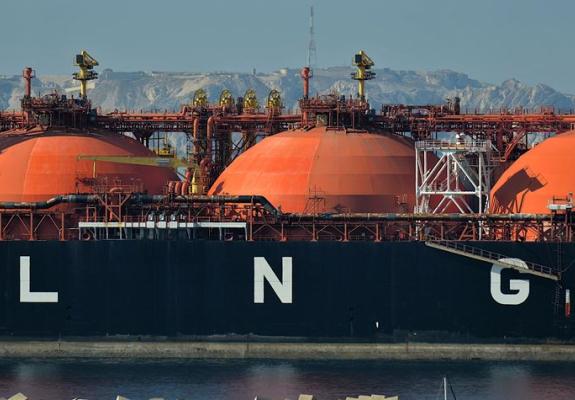
At the same time, approximately 20 percent of globally traded LNG originates from Qatar and the United Arab Emirates.
Regarding Cyprus and Greece, the agency notes that at the European level roughly 20 percent of oil and petroleum product imports come from Middle Eastern countries directly affected by the current conflict.
It highlights that vulnerability differs significantly between countries depending on their energy mix.
Scope ranks Malta, Cyprus, Ireland, the Netherlands, and Greece among the countries with particularly high dependence on oil and natural gas, which account for around 80 percent of their total energy mix.
When also taking into account the energy dependence of economic activity, meaning how strongly production relies on fossil fuels, the countries most vulnerable to a prolonged increase in oil and gas prices are Cyprus and Greece, together with Central and Eastern European countries such as Poland and Bulgaria.
Among the four largest economies of the EU, Scope notes that Italy, Spain, and Germany have similar exposure due to their energy mix and energy intensity, while France appears less exposed thanks to its large nuclear energy fleet.
However, the margin for fiscal response differs significantly between countries, a factor also reflected in Scope’s ratings.
According to the agency, a prolonged disruption to export facilities, energy infrastructure, or passage through the Strait of Hormuz, combined with increased instability in the region, could trigger a negative supply shock, leading to higher oil and natural gas prices, with potential consequences for economic growth, public finances, and even political stability worldwide.
Source: Brief